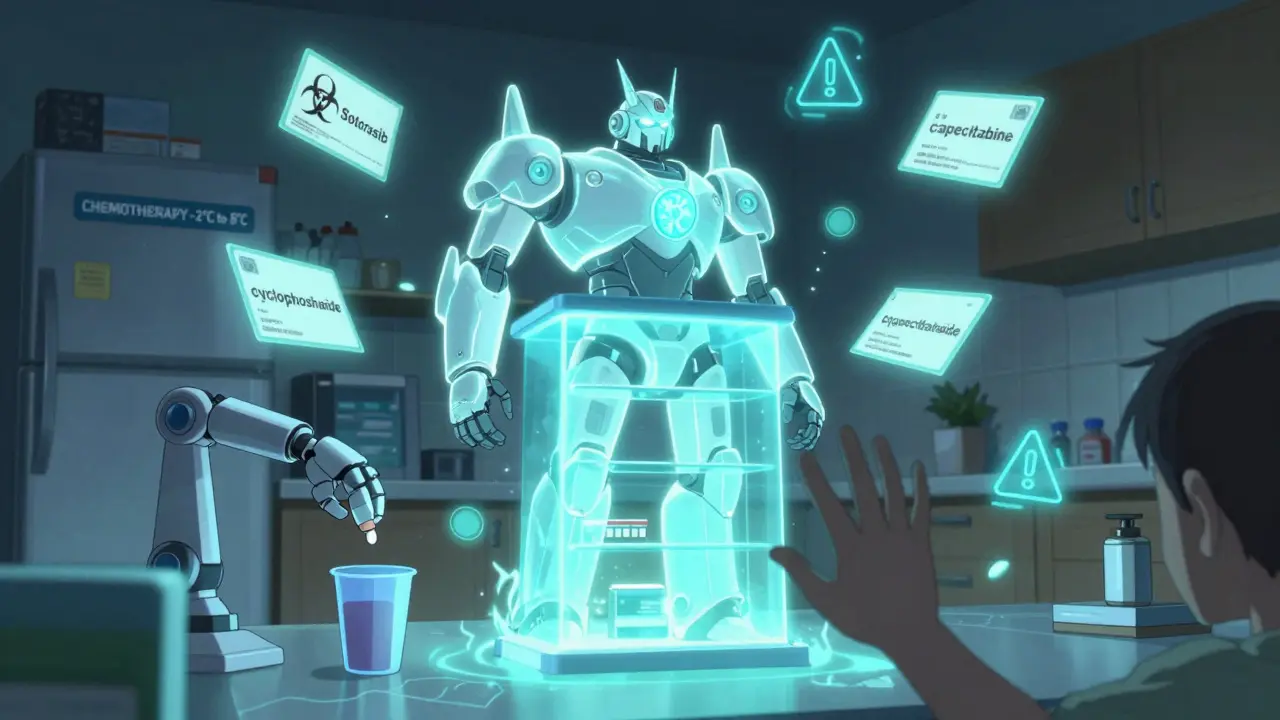
Chemo at Home: Safe Handling, Storage, and Exposure Prevention
More than half of cancer patients now receive part of their treatment at home. It’s convenient. It’s less stressful. But it also means chemotherapy is sitting on your kitchen counter, in your bathroom cabinet, or even in your purse. And that’s not just a medical fact-it’s a safety emergency waiting to happen if you don’t know how to handle it.
Chemotherapy drugs aren’t like regular pills. They’re designed to kill fast-growing cells. That’s great for tumors. But they don’t care if they hit your skin, your lungs, or your child’s hands. Even tiny amounts left on a pill bottle or in toilet water can cause burns, nausea, or long-term damage. And most people have no idea.
You don’t need to be a nurse to keep your family safe. But you do need to know the rules. Here’s what actually works-based on the latest guidelines from the CDC, Oncology Nursing Society, and major cancer centers.
What Counts as Chemo? It’s More Than You Think
When people say "chemo," they usually mean the old-school IV drugs like doxorubicin or paclitaxel. But today, nearly a third of all outpatient chemo is oral-pills, capsules, liquids. And that’s just the start.
Targeted therapies like sotorasib, hormone blockers like letrozole, even immunotherapies like dostarlimab are now common at home. The CDC updated its list of hazardous drugs in 2023 to include 297 medications. That’s up from 270 just two years ago. If it’s prescribed for cancer and taken at home, assume it’s dangerous unless your nurse says otherwise.
Don’t rely on how it looks. A small white pill can be just as toxic as a bright orange liquid. The color, smell, or size means nothing. Only the label and your care team tell you the risk.
Storage: Lock It, Label It, Keep It Cold (or Not)
Where you store chemo matters as much as how you take it.
Some drugs need refrigeration-between 2°C and 8°C (36°F-46°F). That’s your fridge, not the door. Temperature swings can make them useless or unsafe. Others stay at room temperature, between 15°C and 30°C (59°F-86°F). Check the package insert. If you don’t have it, call your pharmacy. Don’t guess.
Never leave chemo on the counter, in a drawer, or in a purse where kids or pets can reach it. Store it in a locked box or cabinet. A child’s curiosity can turn a simple mistake into a hospital trip. Use a lockbox meant for medicines, or even a small padlocked toolbox. Make sure everyone in the house knows it’s off-limits.
Label it clearly: "CHEMOTHERAPY-HAZARDOUS. DO NOT TOUCH." Use bright tape or a sticker. Don’t rely on memory. Even your partner might forget.
Handling Oral Chemo: No Bare Hands, No Crushing, No Sharing
Swallowing a pill seems simple. But if you handle it bare-handed, you’re exposing yourself.
Always wear gloves. Not kitchen gloves. Not latex. Nitrile gloves, at least 5 mil thick. That’s the standard. They block chemicals. Latex doesn’t. Your nurse should give you a pair-or two. Keep extras in the same cabinet as the meds.
Never crush, cut, or chew pills. Ever. Crushing turns the drug into dust. That dust can float in the air. You breathe it in. You get it on your skin. You contaminate the kitchen. Some drugs, like capecitabine, are especially dangerous this way.
Use a dedicated cup or spoon to pour pills out. Don’t tip them into your hand. Don’t share the cup with anyone else. Wash it after each use with hot water and soap. Keep it separate from your other dishes.
And avoid grapefruit. Seriously. It changes how your body breaks down chemo. Even one glass can make your dose too strong-or too weak. Your pharmacist will tell you if your drug is affected. Write it down.
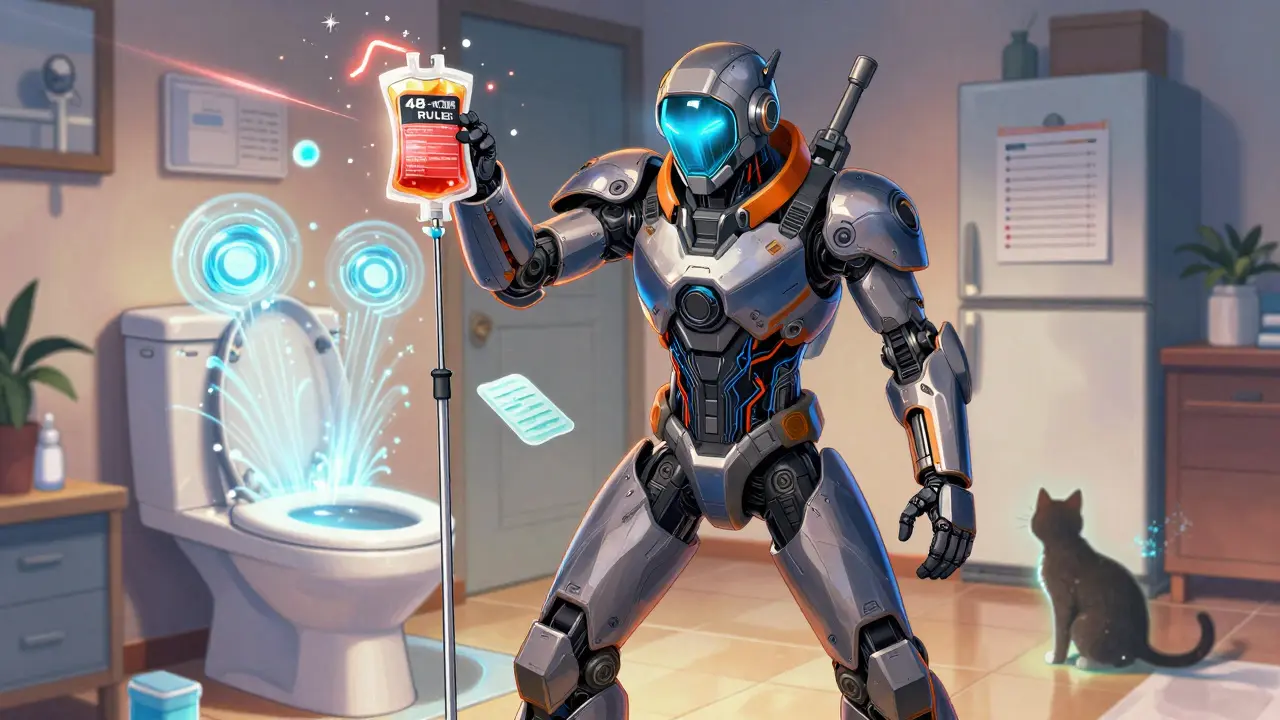
IV Chemo at Home: Bags, Pumps, and Spills
If you’re getting chemo through an IV pump at home, the rules are even stricter.
Always wear gloves when touching the IV bag, tubing, or pump. Even if it looks clean. Residue can be invisible. Don’t adjust the drip rate yourself unless your nurse showed you how. Mistakes here can overdose you or stop the treatment.
Keep a chemo spill kit nearby. It should include:
- Two pairs of nitrile gloves
- Absorbent pads (not paper towels)
- Forceps or tongs
- Sealable plastic bags labeled "Hazardous Waste"
- Disposable gowns or aprons (if available)
If a bag leaks, don’t panic. Put on two pairs of gloves. Use the forceps to pick up the bag. Lay absorbent pads over the spill. Let it sit for five minutes. Then wipe it up. Put everything in the sealed bag. Don’t rinse it down the sink. Don’t throw it in the regular trash unless your nurse says it’s safe.
Most home chemo spill kits are provided by your cancer center. If you don’t have one, ask. They cost about $50. It’s not optional.
The 48-Hour Rule: Your Body Is Still Dumping Chemo
This is the most overlooked rule. And it’s the most dangerous.
For 48 hours after you take or get chemo, your body is still getting rid of it. In your pee. Your poop. Your sweat. Your saliva. Even your semen or vaginal fluid.
That means:
- Flush the toilet twice after each use-with the lid down.
- Wash your hands for 20 seconds every time you use the bathroom.
- Wear gloves when cleaning up vomit, diarrhea, or blood.
- Wash your laundry separately, in hot water (140°F or 60°C), with regular detergent. Wash it twice.
- Use separate towels, sheets, and washcloths. Don’t share them.
Some drugs, like cyclophosphamide, need 72 hours. Your nurse will tell you. Keep a "chemo diary"-write down when you took your last dose. That’s your timer.
And if you’re pregnant, trying to get pregnant, or breastfeeding-avoid all contact. Chemo can cross into breast milk. Studies found traces up to 72 hours after treatment. Even holding your baby after a dose could be risky. Talk to your oncologist before you touch anyone.
Disposal: What Goes in the Trash? What Doesn’t?
Here’s a big myth: You need special medical waste containers.
For home use? No. You don’t. The CDC and ASCO say you can throw used gloves, empty pill bottles, and absorbent pads in your regular trash-after you seal them in a plastic bag.
But here’s what you must do:
- Don’t flush pills down the toilet unless the label says to. Most don’t.
- Don’t pour liquids down the drain.
- Don’t recycle pill bottles unless your pharmacy takes them back.
- Keep unused pills in the original container. Don’t transfer them.
For leftover meds you won’t use? Don’t keep them. Don’t give them away. Call your pharmacy. They have take-back programs. Or ask your cancer center. Some offer mail-back envelopes.
A 2021 Mayo Clinic survey found 37.5% of patients were confused about disposal. That’s a lot of people risking their neighbors’ safety.
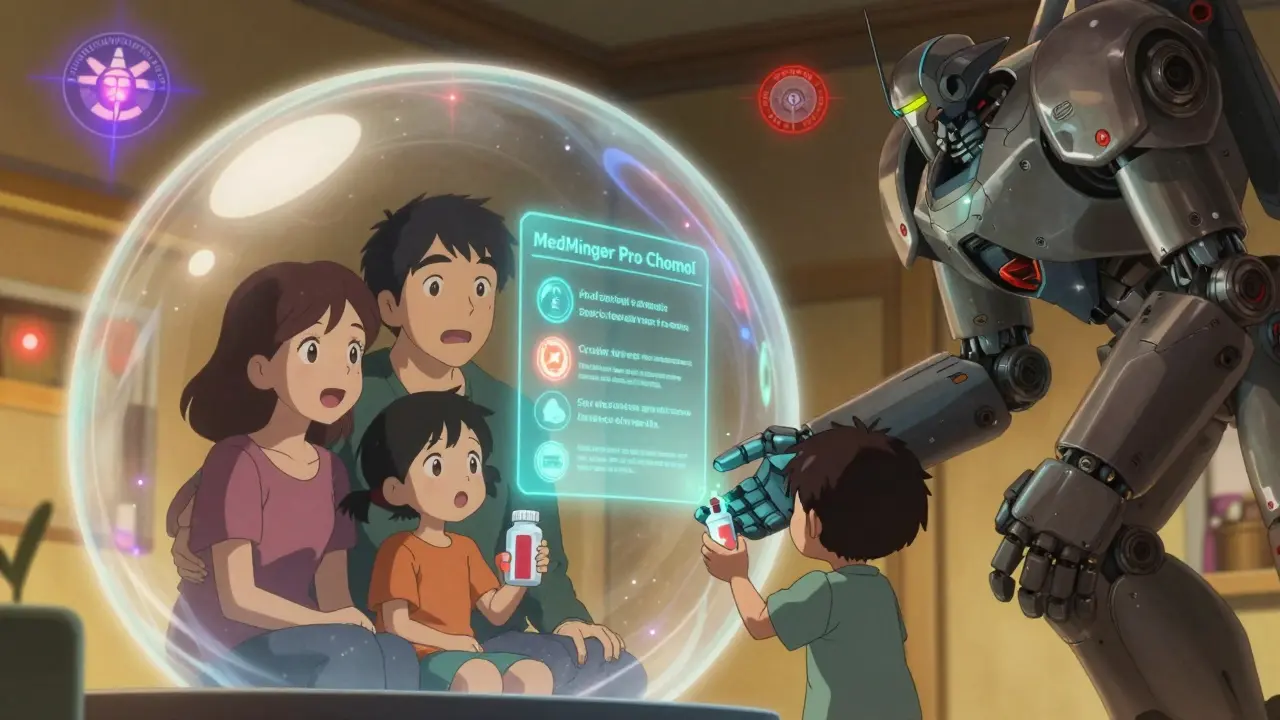
Protecting Your Household: Distance, Hygiene, and Training
It’s not just about you. It’s about everyone else.
For the first 24 hours after an IV dose, keep at least 6 feet away from others-especially kids and pregnant people. The risk is low, but it’s not zero. Airborne particles can settle on surfaces.
Wipe down surfaces daily. The sink, toilet handle, fridge door, phone-anywhere you touched after handling meds. Use regular household cleaner. No need for bleach unless you’re cleaning up a spill.
Everyone who helps you needs training. Not a 5-minute chat. A full 2-3 hour session with an oncology nurse. Most cancer centers offer this for free. If yours doesn’t, call the Oncology Nursing Society’s 24/7 hotline: 1-866-877-7851. They’ll walk you through it.
And if you live in a rural area? You’re not alone. Only 58% of rural patients know about the 48-hour rule. Urban patients? 82%. That gap is deadly. Ask for printed materials. Download the CDC’s free "Home Chemo Safety Checklist." It’s been downloaded over 87,000 times. Use it.
Technology Is Helping-But Don’t Rely on It Alone
There’s a new smart pill dispenser called MedMinder Pro Chemo. It beeps when it’s time to take your pill. It reminds you to wear gloves. It logs every dose. About 12,000 people are using it now.
But tech doesn’t replace training. It doesn’t replace gloves. It doesn’t replace flushing twice.
Use it as a backup. Not a replacement. Your brain still has to be in charge.
What Happens If You Make a Mistake?
You’re not alone. Mistakes happen. You drop a pill. You forget gloves. You touch your face.
If you get chemo on your skin: Wash it off immediately with soap and water for at least 15 seconds. Don’t scrub. Just rinse. Call your oncology nurse. They’ll tell you if you need to come in.
If you inhale dust from a crushed pill: Go outside. Breathe fresh air. Call your doctor. Don’t wait for symptoms.
If a child or pet gets into the meds: Call Poison Control immediately. 1-800-222-1222. Don’t wait. Don’t Google it.
Most exposures don’t cause serious harm-but they can. And they should never happen.
Final Reminder: You’re Not Alone
Home chemo is growing fast. By 2030, 8 out of 10 cancer treatments will happen at home. That’s not a trend. It’s the new normal.
But safety hasn’t caught up. That’s why you need to be the expert in your own home. Know the rules. Follow them. Teach your family. Keep the checklist on the fridge. Keep the gloves near the meds.
It’s not about fear. It’s about control. You’re taking charge of your treatment. And that means protecting everyone around you.
Can I touch my pet after taking chemo at home?
Avoid close contact with pets for 48 hours after taking chemo. Their fur can pick up traces of the drug from your skin or sweat. If you pet them, wash your hands first. Don’t let them lick your hands or face. Clean their bedding separately in hot water if they’ve been near you during treatment.
Do I need to wear gloves when taking oral chemo pills?
Yes. Always wear nitrile gloves (at least 5 mil thick) when handling any chemotherapy pills, even if they’re sealed in blister packs. Your skin can absorb the drug through contact. Never transfer pills with your bare hands. Use a clean cup or spoon instead.
How long do chemo drugs stay in my body after treatment?
Most chemotherapy drugs remain in bodily fluids for 48 hours after the last dose. Some, like cyclophosphamide, can stay active for up to 72 hours. During this time, your urine, sweat, vomit, and other fluids can still be hazardous. Always flush the toilet twice and wash your hands after using the bathroom.
Can I share a bathroom with others while on chemo?
Yes, but with precautions. Flush the toilet twice with the lid down after each use. Wipe down the sink, faucet, and toilet handle daily with regular cleaner. Wash your hands for 20 seconds every time. Use separate towels and washcloths. Avoid sharing toothbrushes or razors.
Is it safe to be around children or pregnant people while on chemo?
Minimize close contact for 48 hours after each dose. Avoid hugging, kissing, or sharing food. Don’t hold babies or toddlers right after treatment. Pregnant people should avoid all contact with chemo meds and contaminated items. Breastfeeding is not safe during treatment-discuss alternatives with your oncologist.
What should I do if I spill chemo at home?
Put on two pairs of nitrile gloves. Use absorbent pads to soak up the spill. Don’t wipe-it spreads the drug. Use forceps to pick up broken glass or containers. Place all contaminated materials in a sealed plastic bag labeled "Hazardous Waste." Wash the area with soap and water. Call your oncology nurse if you’re unsure.
Can I reuse gloves after handling chemo?
No. Never reuse gloves that have touched chemo medication or contaminated surfaces. Dispose of them in a sealed plastic bag with your regular trash. Always use fresh gloves for each handling task.
Do I need to throw away my dishes after chemo treatment?
No. Wash your dishes normally with hot water and soap. There’s no need to throw them away. But use a separate cup or glass for taking pills, and don’t share it. Wash it after each use. Avoid using the same sponge for chemo cups and regular dishes.
Holly Robin
January 29, 2026 AT 19:08And don't even get me started on pets. My neighbor let her dog lick her husband's hand after chemo. The dog threw up for three days. That's not a pet. That's a biohazard walking on four legs.
KATHRYN JOHNSON
January 30, 2026 AT 23:38Kelly Weinhold
January 31, 2026 AT 07:40It’s not scary when you know what to do. You’ve got this. And if you’re reading this and you’re scared? You’re not alone. We’re all in this weird, messy, beautiful fight together.
Kimberly Reker
February 1, 2026 AT 05:49But please-stop hoarding unused chemo pills. I had a patient keep five months’ worth in a drawer because she "might need them later." That’s not bravery. That’s a poison hazard. Call your pharmacy. They’ll take it. No judgment.
Eliana Botelho
February 1, 2026 AT 08:44And yet the CDC keeps adding drugs to the list like it’s a horror movie sequel. What’s next? Are we supposed to wear hazmat suits to the grocery store? Maybe the real danger is the anxiety these guidelines create. Not the drugs.
Rob Webber
February 2, 2026 AT 14:15Stop scaring people into thinking they’re living in a biohazard zone. You’re not protecting anyone-you’re just making cancer patients feel like monsters in their own homes.
calanha nevin
February 3, 2026 AT 14:22Do not rely on anecdote. Do not minimize. Your family’s health is not a debate. Follow the guidelines. Period.
Lisa McCluskey
February 5, 2026 AT 09:35But I also know people who got sick from following every rule. It’s not about perfection. It’s about awareness. And kindness. Don’t shame people for living their lives.
Niamh Trihy
February 6, 2026 AT 04:39Jason Xin
February 6, 2026 AT 12:18Double standards are the real toxin here.
Blair Kelly
February 7, 2026 AT 02:18Then they wonder why their water supply is contaminated.
It’s not hard. It’s not expensive. It’s not optional.
If you don’t know how to handle it, don’t take it at home. Go to the clinic. That’s what it’s for.
Gaurav Meena
February 8, 2026 AT 12:46Yes, the guidelines are ideal. But we do what we can with what we have.
Don’t shame us. Support us. Send gloves. Send education. Don’t just post articles and walk away.
Beth Beltway
February 9, 2026 AT 23:04You’re not safe. You’re just lucky. And your ignorance is putting others at risk.
Natasha Plebani
February 10, 2026 AT 00:04This is not merely a matter of hygiene-it is an epistemological crisis in home-based oncology. The lay caregiver, armed with a PDF and a pair of nitrile gloves, is expected to perform the epistemic labor of a clinical pharmacist while simultaneously managing grief, fatigue, and the existential weight of mortality.
Who bears the burden of this ontological displacement? Not the pharmaceutical industry. Not the hospital system. Not the policymakers. The patient. Always the patient.