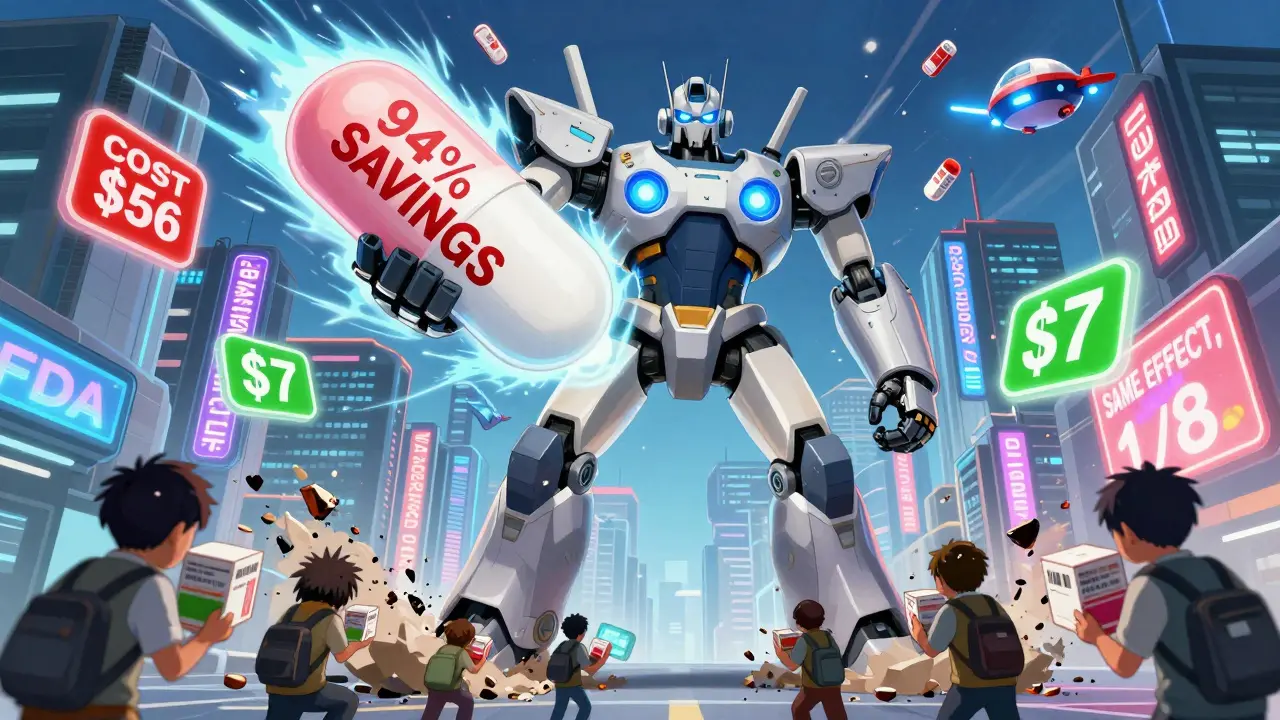
Imagine needing a daily pill to manage your blood pressure or cholesterol. The brand-name version costs $56 a month. The generic? Just $7. That’s not a typo. It’s the reality for millions of Americans, and it’s the difference between taking your medicine and skipping it because you can’t afford it.
Why Generics Are the Secret to Lower Drug Costs
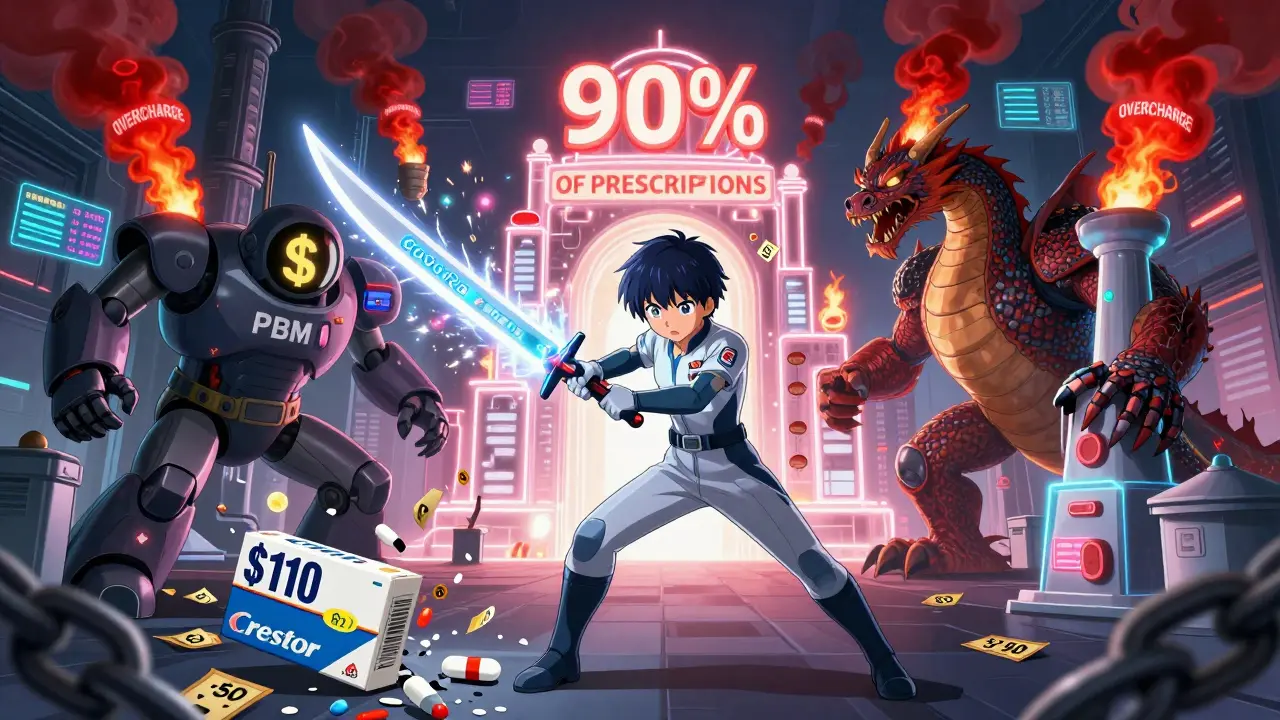
Generic drugs aren’t cheap copies. They’re the exact same medicine as the brand-name version-same active ingredient, same strength, same way it works in your body. The only differences? The color, shape, or inactive fillers. And the price. Generics cost a fraction because they don’t need to repeat expensive clinical trials. The FDA requires them to prove they’re bioequivalent, meaning they work just as well.In 2023, generics made up 90% of all prescriptions filled in the U.S., but they accounted for only 13.1% of total drug spending. That’s the power of generics. For every dollar spent on prescription drugs, just 13 cents went to generics-even though nine out of ten pills were generic.
The numbers don’t lie. The average out-of-pocket cost for a generic prescription in 2023 was $7.05. For a brand-name drug? $27.10. That’s nearly four times more. Some cases are even starker. Sildenafil (the generic for Viagra) dropped from $49.90 to $3.07 per pill. Emtricitabine/tenofovir (for HIV prevention) fell from $20.46 to $2.13. That’s a 90%+ drop. One drug, efavirenz/emtricitabine/tenofovir, saved patients $131 million in a single year after generics hit the market.
What Happens When You Don’t Use Generics
Without generics, the financial burden would be unbearable for most people. A 2021 analysis of 1.4 billion Medicare Part D claims found that 93% of generic prescriptions cost $20 or less. Nearly 83% were under $20. Only 1.2% cost more than $50. That’s not a stretch-it’s the norm.Now compare that to brand-name drugs. In 2022, the average copay for a brand-name drug hit $56.12. For specialty drugs-like those for cancer or autoimmune diseases-it can be hundreds or even thousands per month. Many patients skip doses, split pills, or stop entirely because they can’t pay. That’s not just inconvenient. It leads to hospitalizations, worse outcomes, and higher long-term costs.
One study showed that when patients switched from brand to generic, their adherence rates jumped by 20%. Why? Because they could actually afford to keep taking it.
Where the System Still Fails You
Here’s the ugly truth: even when generics are available, you might still be overpaying.Insurance plans often put generics on higher cost tiers-sometimes even higher than brand-name drugs. That’s right. Your plan might charge you $40 for a generic, but only $30 for the brand. Why? Because insurers and pharmacy benefit managers (PBMs) get kickbacks from brand-name companies. They make more money if you pay more. That’s not a bug-it’s a business model.
Between 2011 and 2019, shifting generics to higher tiers increased patient spending by 135%, even as overall drug prices fell by 38%. You’re paying more because the system is rigged to profit from confusion.
And then there’s Medicare Part D. In 2018, Medicare spent $2.6 billion more than it needed to on prescriptions. Why? Because it paid more than Costco. For 90-day fills, Medicare overspent by 29.4%. That means if you didn’t have insurance, you might have paid less than someone who did.
How to Save Even More on Generics
You don’t have to pay retail price. You don’t even have to pay your pharmacy’s price.Direct-to-consumer (DTC) pharmacies like HealthWarehouse, MCCPDC, and Blink Health offer the same generic pills-same FDA approval, same manufacturer-for far less. A 2023 NIH study found these pharmacies cut costs by 75% on average.
Here are real examples:
- Pantoprazole 20mg (generic for Protonix): $9.20 at DTC vs. $44 at Albertsons (79% savings)
- Rosuvastatin 5mg (generic for Crestor): $7.50 at DTC vs. $110 at Walgreens (93% savings)
- Metformin 500mg (for diabetes): $4.50 at DTC vs. $42 at CVS
These aren’t rare deals. They’re standard. And they’re legal. The pills are identical. You’re just cutting out the middlemen.
Use tools like GoodRx or SingleCare to compare prices before you pay. Ask your pharmacist: “Is there a lower-cost pharmacy nearby?” Many don’t volunteer that information.
Why the System Keeps Overcharging
The real issue isn’t the cost of making generics. It’s the lack of transparency. List prices are inflated. Rebates are hidden. Insurers and PBMs negotiate secret deals that don’t benefit you. You’re paying the sticker price, but the real cost is buried in complex contracts.Between 2019 and 2023, the total value of U.S. generic sales dropped by $6.4 billion-even as more people bought them. That’s called “severe deflation.” Prices are falling, but your out-of-pocket costs aren’t falling with them. Why? Because the savings are going to intermediaries, not patients.
Research from the USC Schaeffer Center found patients overpay by 13-20% on generics because of “lack of price transparency and supply chain inefficiencies.” You’re paying more because the system is designed to let others profit from your confusion.
What You Can Do Today
You don’t need to wait for policy changes. You have power right now.- Always ask if a generic is available. Even if your doctor prescribes a brand, they can often switch it.
- Check GoodRx, SingleCare, or Blink Health before filling your prescription.
- Ask your pharmacy if they’ll match a DTC price. Many will.
- Consider 90-day fills. They’re cheaper per pill and reduce trips to the pharmacy.
- If you’re on Medicare, compare your plan’s prices to Costco’s. You might be better off paying cash.
And if your insurance puts a generic on a high tier, call them. Ask why. Challenge it. Sometimes, they’ll move it down-especially if you’re a long-term customer.
The Bigger Picture
Over the last decade, generic and biosimilar drugs saved the U.S. healthcare system $445 billion. That’s money that went back into people’s pockets, into businesses, into lives saved because people could afford their meds.But the savings aren’t automatic. They’re only real if you know how to access them. The system is built to make you feel like you have no choice. You do. You just need to look beyond the pharmacy counter.
Generics aren’t a compromise. They’re the standard. And if you’re paying more than $20 for a generic, you’re not being smart-you’re being exploited.
Are generic drugs as safe and effective as brand-name drugs?
Yes. The FDA requires generic drugs to meet the same strict standards as brand-name drugs. They must contain the same active ingredient, work the same way in the body, and be manufactured under the same quality controls. The only differences are in inactive ingredients like fillers or dyes, which don’t affect how the drug works. Millions of people take generics every day with the same results as brand-name drugs.
Why do some pharmacies charge more for generics than others?
Pharmacies set their own prices, and many don’t pass along the true wholesale cost. Retail chains often charge inflated prices because they rely on insurance reimbursements and don’t compete on price. DTC pharmacies, like HealthWarehouse or Blink Health, operate with lower overhead and pass savings directly to you. A 2023 NIH study found DTC pharmacies save patients an average of 75% compared to traditional retail.
Can I use GoodRx if I have insurance?
Yes. GoodRx often shows prices lower than your insurance copay. Always compare both. Sometimes paying cash with a GoodRx coupon is cheaper than using your insurance. You can’t combine them, but you can choose the lower price. Many pharmacies will honor the GoodRx price even if you have insurance.
Why does Medicare sometimes cost more than paying cash?
Medicare Part D plans have complex pricing structures. They often pay more than the actual cost of the drug because of rebates, formulary tiers, and pharmacy network deals. In 2018, Medicare overspent by $2.6 billion on prescriptions compared to what Costco charged. For 90-day fills, patients sometimes paid less out-of-pocket at Costco than through their Medicare plan. Always check the cash price before letting insurance handle it.
Are there any generics that aren’t worth switching to?
For almost all medications, generics are a safe and effective switch. There are rare exceptions-like certain seizure medications or thyroid drugs-where tiny differences in absorption might matter. But these are exceptions, not the rule. If your doctor is hesitant, ask why. Demand evidence. Most of the time, it’s habit, not science. If you’re switching and feel different, talk to your pharmacist or doctor. But don’t assume the brand is better.
Sawyer Vitela
January 23, 2026 AT 13:41Generics aren't magic-they're just unbranded. The FDA doesn't care if you call it Lipitor or atorvastatin. Same molecule. Same results. The only thing changing is the price tag and the corporate logo on the bottle.
Chloe Hadland
January 24, 2026 AT 23:09i just switched my blood pressure med to generic last month and my wallet actually stopped crying 😅
Amelia Williams
January 25, 2026 AT 02:11OMG YES. I was paying $80 for my antidepressant until I found GoodRx-it dropped to $12. I cried in the pharmacy. Like, actual tears. Not because I was sad, but because I realized I’d been overpaying for YEARS. Why doesn’t anyone tell you this stuff?!
Viola Li
January 26, 2026 AT 07:57So you’re just saying we should all be taking counterfeit meds? Because that’s what this sounds like. Who says these generics aren’t just watered down crap from some factory in China?
Dolores Rider
January 27, 2026 AT 20:17they're watching you through your pill bottle. the pharma companies put trackers in generics. i know someone who got a text from 'wellcare' saying 'your blood pressure meds are working too well, we're adjusting your premiums'. it's not a coincidence. 🕵️♀️💊
venkatesh karumanchi
January 28, 2026 AT 08:11In India, generics are the norm. We don’t even think about brand names. My father takes generic metformin for 20 years-no issues. The science is the same. It’s the profit system that makes people doubt.
Darren Links
January 28, 2026 AT 13:17One thing people forget: generics are often made in the same factories as brand-name drugs. The only difference is the label. The FDA inspects them the same way. If your doctor says 'brand is better', ask them where they got that data. Most times, they’re just repeating what the rep told them.
Kevin Waters
January 30, 2026 AT 02:05Just used GoodRx for my rosuvastatin. Paid $6.50. My insurance copay was $42. I showed my pharmacist the receipt. She said 'we can match that if you ask'. Why don’t more people know this? It’s not a secret-it’s just buried under 17 layers of corporate BS.
Kat Peterson
January 31, 2026 AT 20:44OMG I just realized I’ve been paying $120 for my thyroid med when I could’ve been paying $8?? I feel so manipulated. Like, why does my insurance even exist if Costco is cheaper?? 😭 #pharmabrothers
Jamie Hooper
February 1, 2026 AT 15:37bruh i paid £30 for my generic omeprazole last week. went to the chemist down the road and they did it for £5.50. no joke. i felt like a genius. why do we let these places rip us off like this?
Husain Atther
February 2, 2026 AT 16:46The global accessibility of affordable generics is one of the most significant public health achievements of the 21st century. In low- and middle-income countries, generics have dramatically reduced mortality from chronic diseases. The challenge in the U.S. is not the drug, but the pricing architecture.
Izzy Hadala
February 3, 2026 AT 15:55According to the Congressional Budget Office (CBO), the average savings from generic substitution is approximately 80% per prescription. However, systemic misalignment between payer incentives and patient outcomes results in suboptimal adoption. Structural reform is necessary to align formulary design with cost-effectiveness metrics.
Sawyer Vitela
February 5, 2026 AT 04:01And yet the same people who scream about 'big pharma' still buy brand-name insulin. You don’t get to be mad at the system and still pay retail. Wake up.