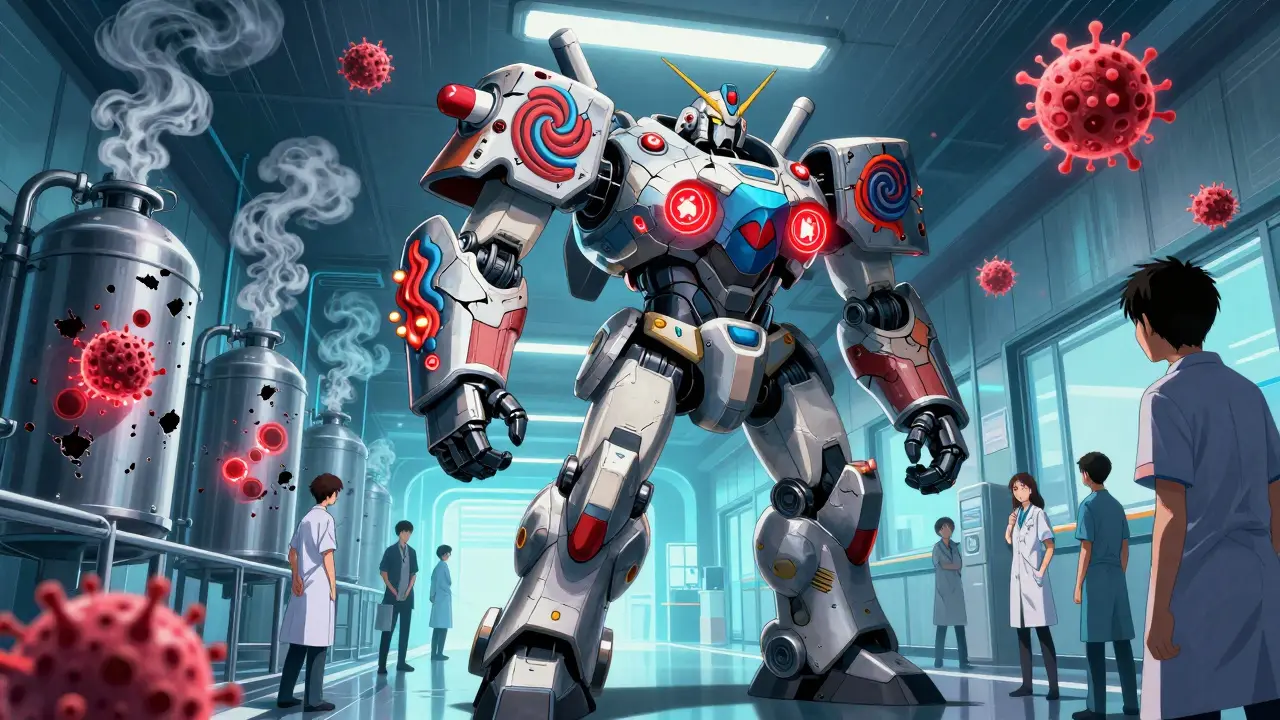
Every time you take an antibiotic when you don’t need it, you’re not just helping yourself-you’re helping bacteria become stronger. That’s the harsh truth behind antibiotic overuse. It’s not a distant threat. It’s happening in clinics, hospitals, and homes right now. And it’s making common infections deadly again.
What Happens When Antibiotics Don’t Work?
Antibiotics are powerful tools-but they’re not magic pills. They kill bacteria, not viruses. That means they do nothing for colds, flu, or most sore throats. Yet, in many places, patients still walk out with prescriptions for these drugs. Doctors sometimes give them to avoid conflict. Patients expect them. And when antibiotics are used too often-or when they’re used wrong-they stop working.
This is called antimicrobial resistance (AMR). It’s when bacteria evolve to survive the drugs meant to kill them. The World Health Organization’s 2025 report found that one in six bacterial infections worldwide are now resistant to standard treatments. That’s not a future prediction. That’s today’s reality.
Some of the most worrying patterns show up in common infections. For urinary tract infections caused by E. coli, one in five cases no longer respond to ampicillin or co-trimoxazole-the go-to drugs for decades. Methicillin-resistant Staphylococcus aureus (MRSA) is found in 35% of cases across 76 countries. And when last-resort antibiotics like carbapenems start failing? That’s when doctors have nothing left to offer.
C. difficile: The Hidden Cost of Antibiotics
One of the most dangerous side effects of antibiotic overuse isn’t resistance-it’s what happens after the antibiotics kill off the bad bacteria. They also wipe out the good ones. Your gut is full of trillions of helpful microbes that keep harmful ones in check. When antibiotics destroy that balance, a dangerous intruder can move in: Clostridioides difficile, or C. difficile.
C. difficile doesn’t cause trouble unless the gut environment is disrupted. That’s why it’s almost always linked to recent antibiotic use. Once it takes hold, it causes severe diarrhea, fever, and abdominal pain. In serious cases, it leads to colon damage, sepsis, and death. While exact numbers for 2025 aren’t available yet, CDC data from 2017 showed nearly half a million C. difficile infections in the U.S. alone-with 29,000 deaths tied to it. Those numbers have likely grown since.
What makes C. difficile even scarier is how hard it is to treat. The infection often comes back after treatment. Some patients need multiple rounds of antibiotics. Others end up with fecal microbiota transplants-essentially, giving them healthy gut bacteria from a donor-to survive.
Why Is This Getting Worse?
The problem isn’t just about people taking too many pills. It’s systemic. In hospitals, patients are often given broad-spectrum antibiotics before tests even confirm if bacteria are present. In nursing homes, residents get antibiotics as a preventive measure, even when they’re not sick. In outpatient clinics, doctors prescribe them for viral infections because patients demand them-or because there’s no time to explain why they won’t help.
And it’s not just humans. In agriculture, antibiotics are fed to livestock to promote growth and prevent disease in crowded conditions. That’s a major source of resistant bacteria entering the food chain and environment. A 2025 WHO report confirmed that resistance patterns in human infections closely mirror those found in farm animals in high-use regions.
The COVID-19 pandemic made things worse. As hospitals scrambled to treat viral cases, antibiotics were thrown at patients-even those without bacterial infections. In the U.S., resistant infections that had dropped 18% between 2012 and 2019 spiked back up by 20% during the pandemic. Prevention programs stalled. Handwashing dropped. Isolation protocols broke down. And resistance crept back in.

What’s at Stake?
Think about routine surgeries. C-sections. Hip replacements. Chemotherapy. These procedures rely on antibiotics to prevent deadly infections. If antibiotics stop working, these procedures become far riskier. A simple cut could turn into a life-threatening infection. A urinary tract infection could lead to sepsis. A child’s ear infection could spiral out of control.
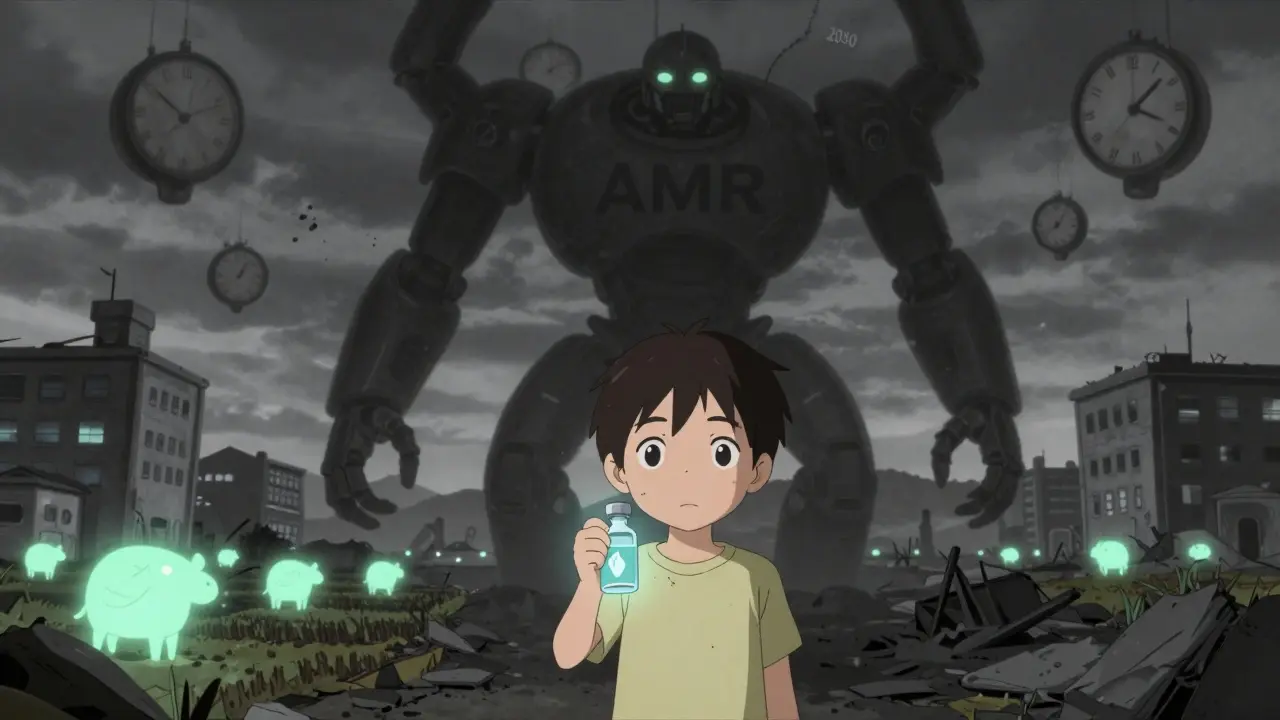
Experts warn that by 2050, antibiotic resistance could cause 10 million deaths per year-more than cancer. The economic cost? Up to $100 trillion in lost global output. That’s not science fiction. It’s what happens if we keep doing nothing.
Doctors like Dr. Kelly Dooley from Vanderbilt say we’re already seeing cases where patients have no effective treatment left. “Sometimes we don’t have anything to offer,” she says. “That’s a terrible position to be in-for the patient and the doctor.”
What Can You Do?
You don’t need to be a policymaker to make a difference. Here’s what actually works:
- Don’t ask for antibiotics. If your doctor says it’s a virus, trust them. Ask what else you can do to feel better.
- Never share or use leftover antibiotics. A partial course teaches bacteria to survive. Always finish the full prescription-only if it was prescribed for a confirmed bacterial infection.
- Ask about testing. If you have a persistent infection, ask if a culture or rapid test can confirm the cause before treatment.
- Practice good hygiene. Wash your hands. Stay home when sick. These simple steps stop the spread of resistant bugs.
- Support responsible farming. Choose meat and dairy from farms that don’t use antibiotics for growth. Look for labels like “no antibiotics ever” or “raised without antibiotics.”
The Bigger Picture
Fixing this crisis isn’t just about individual choices. It’s about health systems, global policy, and economic incentives. Pharmaceutical companies aren’t investing heavily in new antibiotics because they don’t make enough money. A new drug might be used for just a few weeks before being saved as a last resort. That’s not a profitable business model.
Programs like CARB-X, which has funded over 100 antibiotic development projects since 2016, are trying to bridge that gap. But funding is still too low. Only 25 antibiotics are considered critically important by the WHO-and shortages exist in 64% of countries.
Meanwhile, surveillance is improving. More than 100 countries now report data to the WHO’s global system. But without better diagnostics, especially in low-resource settings, doctors still guess. And guessing means overtreating.
It’s Not Too Late-But Time Is Running Out
Antibiotic resistance isn’t inevitable. We’ve seen progress before. In the early 2000s, Australia and the Netherlands slashed hospital-acquired MRSA through strict hygiene and antibiotic controls. Their infection rates dropped by more than 70%.
But that progress is fragile. If we stop paying attention, we’ll go backward. The next time you’re prescribed an antibiotic, ask: Do I really need this? Is there a better way? Because every pill you take without a clear reason is another step toward a world where even a scratch can kill.
Can I get C. difficile from someone else?
Yes. C. difficile spreads through spores that stick to surfaces like doorknobs, toilets, and medical equipment. If someone with the infection doesn’t wash their hands properly, they can spread it. That’s why hand hygiene is so important in hospitals and care homes. You can also get it after taking antibiotics, even if you didn’t come into contact with someone infected.
Are natural remedies effective against antibiotic-resistant infections?
No. While some natural products like honey or garlic have mild antibacterial properties in lab settings, none can reliably treat serious infections caused by resistant bacteria. Relying on them instead of proven medical treatment can delay care and lead to life-threatening complications. Always consult a doctor for bacterial infections.
Why aren’t there more new antibiotics being made?
Developing new antibiotics is expensive and unprofitable. A new drug might be used only for a few days in emergencies, unlike medications for chronic conditions like diabetes or high blood pressure, which patients take for years. Pharmaceutical companies focus on drugs that generate steady revenue. Without government incentives or funding models that reward public health impact, the pipeline remains dangerously thin.
Do I need antibiotics for a sinus infection?
Most sinus infections are caused by viruses and will clear up on their own in 7-10 days. Antibiotics are only needed if symptoms last longer than 10 days, get worse after initial improvement, or are severe with high fever and pus. If your doctor prescribes one, ask if testing confirms a bacterial cause.
How do I know if I’m part of the problem?
If you’ve taken antibiotics for a cold, flu, or sore throat without a confirmed bacterial infection, you’ve contributed to the problem. Even if you took them exactly as prescribed, using them when unnecessary adds to the overall pressure on bacteria to evolve resistance. The key is to use antibiotics only when they’re truly needed.
What Comes Next?
The fight against antibiotic resistance isn’t over-but it’s entering a critical phase. We have the knowledge. We have the tools. What we’re missing is consistent action. It’s not enough to blame big pharma or lazy doctors. Each of us plays a role. Your choices matter. The next time you’re handed a prescription, pause. Ask questions. Push back gently. Because the antibiotics we have now may be the last ones we ever get.
Aisling Maguire
February 27, 2026 AT 12:21Okay but like, I just got prescribed amoxicillin last week for what my doctor said was a "sinus thing"-turned out it was just allergies. I took the whole bottle because I didn’t want to risk it. Now I feel guilty AF. Why do we even have these prescriptions if no one’s really checking if they’re needed?
Brandie Bradshaw
February 27, 2026 AT 13:28Antibiotic overuse is not a public health issue-it's a systemic failure of medical education, pharmaceutical incentives, and patient expectation loops. The WHO report is not surprising; it's the inevitable outcome of profit-driven medicine. We treat symptoms, not systems. And until we restructure reimbursement models to reward stewardship-not volume-we're just rearranging deck chairs on the Titanic.
Sophia Rafiq
March 1, 2026 AT 13:22Bro C. diff is wild. I had it after a round of clindamycin for a tooth infection. One minute I’m fine, next minute I’m in the ER with 12 bowel movements a day. They gave me vancomycin. It worked. But then it came back. Had to do the poop transplant. Yeah. That’s a thing. And it saved my life. No joke.
Martin Halpin
March 2, 2026 AT 22:21Let me tell you something nobody else will admit-the real problem isn’t patients asking for antibiotics, it’s that doctors are terrified of liability. If you don’t prescribe, and the patient gets worse? You get sued. If you do prescribe and they’re fine? No one says thank you. So the system is rigged to overprescribe. It’s not ignorance-it’s legal self-defense dressed up as medicine. And don’t even get me started on how insurance companies won’t pay for rapid diagnostics. It’s all about cost shifting. The patient pays the price in gut flora.
Ajay Krishna
March 4, 2026 AT 16:58I come from a rural village in India where antibiotics are sold over the counter without prescription. I’ve seen people take them for fever, for cough, for headaches. But I’ve also seen grandparents who never used them unless absolutely necessary. It’s not about being anti-medical-it’s about being wise with it. We need community education, not just top-down policy. Grandmas know more than you think.
Noah Cline
March 6, 2026 AT 04:20Anyone who takes antibiotics for a viral infection is a public health liability. You’re not just harming yourself-you’re weaponizing evolution. MRSA, VRE, carbapenem-resistant Enterobacteriaceae-these aren’t sci-fi terms. They’re real, and they’re multiplying because of people like the one who just said they took amoxicillin for allergies. Stop being lazy. Get tested. Or don’t take it. There’s no middle ground.
Vikas Meshram
March 6, 2026 AT 14:08You people don’t understand. Antibiotics were never meant for casual use. I have a PhD in microbiology. I know what happens when you disrupt microbiomes. You think C. diff is bad? Wait until you see the rise of pan-resistant Acinetobacter. And yes-I’ve seen it. In my lab. In 2023. The CDC numbers are understated. The real crisis is hidden in the data gaps. And nobody’s talking about it because it’s too scary. But I will. Because someone has to.
Jimmy Quilty
March 7, 2026 AT 16:01They say antibiotics are overused… but what if the whole thing is a scam? What if Big Pharma and the CDC are exaggerating resistance to push us toward synthetic alternatives? I mean, why else would they ban natural remedies like colloidal silver while pushing expensive IV drugs? And why is fecal transplant not FDA-approved as standard care? Something smells off. I’ve read the studies. They’re funded by pharma. Coincidence? I think not.
Miranda Anderson
March 8, 2026 AT 17:01I work in a hospital pharmacy. I’ve seen the same thing over and over. A patient comes in with a cough. Doctor says no antibiotics. Patient says, "But I paid for this visit." So the doctor gives them a prescription anyway. I’ve held those scripts in my hands. I’ve watched patients leave with them, smiling. And then I’ve watched them come back two weeks later with C. diff. It’s heartbreaking. We’re not just treating bodies-we’re treating fear. And fear doesn’t care about science.
Gigi Valdez
March 8, 2026 AT 17:10While individual behavior is important, the structural barriers to change are immense. Diagnostic infrastructure in low-resource settings remains inadequate. Without point-of-care testing, empirical prescribing remains the default. Furthermore, global supply chains for essential antibiotics are fragile. In many countries, the only available option is a broad-spectrum agent because narrower alternatives are unavailable or unaffordable. Policy must address access, not just restraint.
Full Scale Webmaster
March 10, 2026 AT 14:09LET ME TELL YOU ABOUT THE NIGHT I GOT SEPTICEMIA FROM A TOOTH INFECTION BECAUSE I DIDN’T TAKE ANTIBIOTICS BECAUSE I BELIEVED IN "NATURAL HEALING"-I WAS IN THE ICU FOR THREE WEEKS. MY KIDNEY FAILED. I LOST HAIR. I HAD TO RELEARN HOW TO WALK. AND THEN I FOUND OUT THE DOCTOR HAD PRESCRIBED ME AMOXICILLIN AND I JUST LEFT IT ON THE COUNTER. I’M NOT JUST A SURVIVOR-I’M A WARNING. DON’T BE A HERO. DON’T BE A MYTHOLOGIST. TAKE THE DRUG WHEN IT’S PRESCRIBED. AND DON’T TAKE IT WHEN IT’S NOT. THIS ISN’T A CHOICE. IT’S A SURVIVAL RULE.
Angel Wolfe
March 11, 2026 AT 22:18Who’s really behind this? China and the EU are flooding the market with cheap antibiotics. They’re dumping them in Africa and South Asia. Then they blame us for overuse. Meanwhile, they’re hoarding the new drugs for their own military and elites. This isn’t a health crisis-it’s a geopolitical power play. And we’re being played. The real solution? Stop importing antibiotics from countries that don’t regulate them. Build our own. Protect our supply. Sovereignty isn’t a slogan-it’s a survival tactic.
Eimear Gilroy
March 13, 2026 AT 10:21So if I get a sore throat and the doc says "wait and see," how long am I supposed to wait? I mean, I’ve got a kid who can’t eat. My throat is on fire. Do I go back? Do I ask for a rapid strep test? Do I risk being called "that person"? It’s exhausting. I just want to know what’s going on. Why does it feel like I’m fighting the system just to get a straight answer?
Charity Hanson
March 14, 2026 AT 12:00My aunt in Lagos took antibiotics for a fever for 3 days, then stopped because she felt better. Now she’s got a superbug that no local hospital can touch. We had to fly her to South Africa. It cost us everything. But here’s the thing-I told her story at her church last Sunday. Over 20 people came up to me afterward saying "me too." We’re not just patients-we’re storytellers. And stories change behavior better than pamphlets.
Lisa Fremder
March 15, 2026 AT 17:42Why are we even talking about this? If you can’t handle a little bacteria, maybe you shouldn’t be alive. Evolution is real. The weak die. The strong survive. Let the resistant strains take over. The planet will reset. We’re not special. We’re just another species that outlived its usefulness. Maybe we deserve this.