When the first generic version of a popular brand-name drug hits the market, it doesn’t just mean a cheaper option-it means a seismic shift in how millions pay for medicine. This moment, called first generic approval, is one of the most powerful levers in the U.S. healthcare system for driving down drug costs. But few patients, pharmacists, or even doctors fully understand what it actually means-or why it matters so much.
What Exactly Is First Generic Approval?
First generic approval happens when the FDA approves the very first generic version of a brand-name drug after its patent expires. It’s not just any generic. It’s the first one to file a complete application with the FDA, and it comes with a special reward: 180 days of exclusive rights to sell that generic before anyone else can enter the market.
This system wasn’t always in place. Before 1984, generic drug makers had to run full clinical trials to prove their version was safe and effective-even though the brand-name drug had already been proven. That made generics too expensive and rare. The Hatch-Waxman Act is a 1984 law that created a faster, cheaper path for generic drugs by allowing manufacturers to rely on the brand-name drug’s existing safety data. It was designed to balance innovation with access. Today, over 90% of prescriptions in the U.S. are filled with generics, saving the system an estimated $1.7 trillion since 1984.
Why Does the 180-Day Exclusivity Matter?
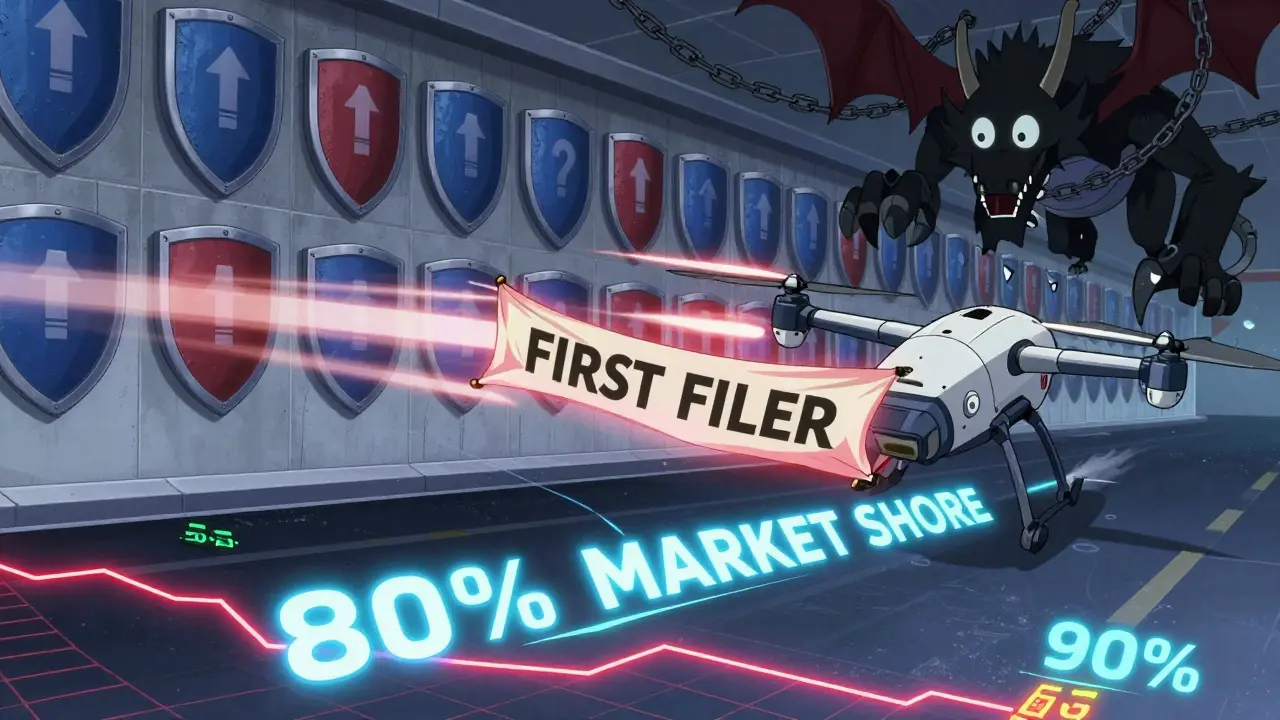
The 180-day exclusivity period is the engine behind the whole system. When a company files first and successfully challenges a patent (called a Paragraph IV certification), they get to be the only generic seller for half a year. During that window, they can price their drug 15-20% below the brand name-and because there’s no competition, they capture 70-80% of the market.
For blockbuster drugs like Humira or Eliquis, which cost over $7,000 per year, that exclusivity window can mean $100-500 million in extra profits for the first generic maker. That’s why companies invest millions in legal teams and bioequivalence studies just to be first.
But here’s the catch: if two companies file on the same day, they both get the exclusivity. That’s called a "multiple first filer" situation-and it happens in about 10% of cases. When that happens, the exclusivity gets split. No one gets the full advantage. That’s why timing, legal strategy, and patent analysis are everything.
How Is a Generic Proven to Work the Same?
Before the FDA approves any generic, it must prove it’s bioequivalent to the brand-name drug. That means it delivers the same amount of active ingredient into the bloodstream at the same rate. The standard? The 90% confidence interval of the test drug’s absorption (AUC and Cmax) must fall between 80% and 125% of the brand’s.
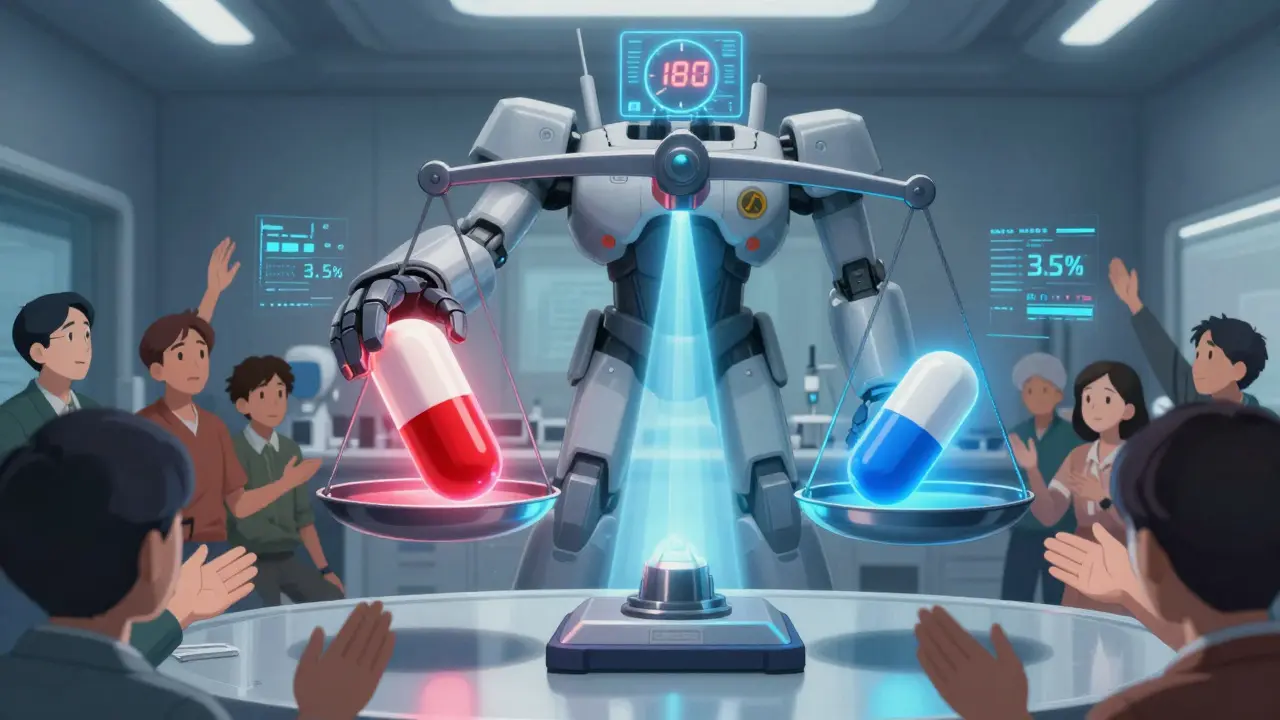
That might sound strict, but real-world data shows generics are even closer. A study of over 2,000 FDA bioequivalence trials between 1996 and 2007 found the average difference in absorption between brand and generic was just 3.5%. That’s less than the variation between two different batches of the same brand-name drug.
Patients notice this. On Drugs.com, first generics have an average rating of 4.2 out of 5.0, based on over 14,500 reviews. The most common comments? "Same effect, half the price" and "No side effects I didn’t already have with the brand."
What Makes First Generic Approval So Powerful for Prices?
Price drops after generic entry are dramatic-and they’re fastest after the first generic.
Within six months of the first generic launch, prices for the drug typically fall 70-90%. Compare that to after multiple generics enter: prices only drop 30-40%. Why? Because the first generic shatters the brand’s pricing power. Once patients and insurers switch, the brand has no choice but to lower its price or lose market share.
Take Humira. When Amgen’s first generic launched in September 2023, it entered the market at 40% below the brand price. Within 90 days, it held 42% of the market. Within six months, the brand’s price dropped by 75%.
The same pattern repeats. When the first generic for Eliquis arrived, prices fell 80% almost overnight. That’s not coincidence-it’s the direct result of the exclusivity model.
Who Benefits? Who Loses?
Patients win. Pharmacies win. Insurers win. Medicare and Medicaid save billions.
A 2024 survey of 1,200 U.S. pharmacists found that 87% said first generics significantly improved patient access. Seventy-three percent reported better medication adherence-patients stick with their treatment when it’s affordable.
But there are losers too.
Brand-name companies fight hard to delay first generics. They file dozens of patents-sometimes 7 or more-for one drug. This is called a "patent thicket." They also use legal tactics like "pay-for-delay" deals, where they pay a generic company to hold off on launching. Between 2010 and 2020, these delays blocked first generics in 42% of cases.
Another problem? Authorized generics. These are the brand-name company’s own drug, sold without branding, right when the first generic launches. They can undercut the first generic’s price and steal market share. Between 2015 and 2022, this happened in 38% of first generic cases.
And then there’s the cost of getting there. Preparing a first generic application takes 18-24 months and costs $50-100 million. Bioequivalence studies alone run $2-5 million. Only companies with deep pockets and legal teams can play.
What’s Changing in 2026?
The landscape is shifting. In 2023, the FDA approved 112 first generics-up from 98 in 2022. Why? Because more blockbuster drugs are losing patents. Drugs worth $156 billion in annual sales are set to go generic by 2028.
The FDA is also adapting. In 2023, it approved 17 first generics for complex drugs-like inhalers and topical creams-that were once considered too hard to copy. These used to take years to approve. Now, the process is faster.
The 2022 Inflation Reduction Act also changed the rules. It stopped the clock on the 180-day exclusivity for drugs with certain safety restrictions (called REMS). That means first generics can’t be delayed by paperwork anymore.
But challenges remain. Biologics-like Humira-are harder to copy than traditional pills. Biosimilars (the equivalent of generics for biologics) have only seen 43 approvals since 2010. And manufacturing delays still happen. When the first generic for Eliquis had a production issue in 2023, prices spiked for 90 extra days because no one else could fill the gap.
What’s Next?
First generic approval isn’t perfect. It’s a system built on legal battles, corporate strategy, and regulatory nuance. But it works. It’s the reason your $1,200 prescription now costs $30. It’s why a diabetic can afford insulin. It’s why millions of Americans take their meds without choosing between food and treatment.
The real question isn’t whether first generic approval matters-it’s whether we’ll protect it. Patent abuse, authorized generics, and legal delays still threaten its power. The FDA is trying to fix it. Congress is debating reforms. But the truth is simple: the first generic is the most effective tool we have to make medicine affordable. And if we lose it, prices will climb again.
What is the difference between a first generic and any other generic?
A first generic is the very first generic version of a brand-name drug to be approved by the FDA. It gets 180 days of market exclusivity, meaning no other generics can enter during that time. Other generics come later and face immediate competition, which drives prices down faster but gives them less profit potential. The first generic has the biggest financial upside-and the biggest responsibility to deliver affordable access.
Why do some first generics never launch even after approval?
Some companies delay launching after approval to extend exclusivity, especially if they’re waiting for a patent lawsuit to resolve. Others face manufacturing problems or supply chain delays. The FDA requires a company to market the drug within 75 days of approval-or they lose their exclusivity. But enforcement is inconsistent, and some companies exploit loopholes, leading to shortages or price spikes.
Do first generics work as well as brand-name drugs?
Yes. The FDA requires first generics to prove they’re bioequivalent, meaning they deliver the same amount of active ingredient into your bloodstream at the same rate as the brand. Studies show the average difference is just 3.5%. Patient reviews and pharmacist surveys confirm no meaningful difference in effectiveness or side effects. The only difference is the price.
Can a brand-name company sell its own generic?
Yes. This is called an "authorized generic." The brand-name company can license its own drug to a generic manufacturer and sell it without the brand name-often at the same time as the first generic. This can cut into the first generic’s market share by 20-30%. It’s legal and common, and it’s one reason why the 180-day exclusivity doesn’t always translate to full market control.
How long does it take to get first generic approval?
The FDA aims to review first generic applications in 10-12 months-faster than the 14-18 months for standard generics. But the preparation takes much longer. Companies spend 18-24 months gathering data, running bioequivalence studies, and preparing legal challenges before even submitting the application. If there’s a patent lawsuit, approval can be delayed up to 30 months.
Which companies get the most first generic approvals?
Teva and Hikma Pharmaceuticals lead the pack. In 2023, Teva got 14 first generic approvals, and Hikma got 11. These companies specialize in complex drug development and patent litigation. Smaller firms sometimes win too, especially for niche drugs, but it takes serious resources to compete consistently.