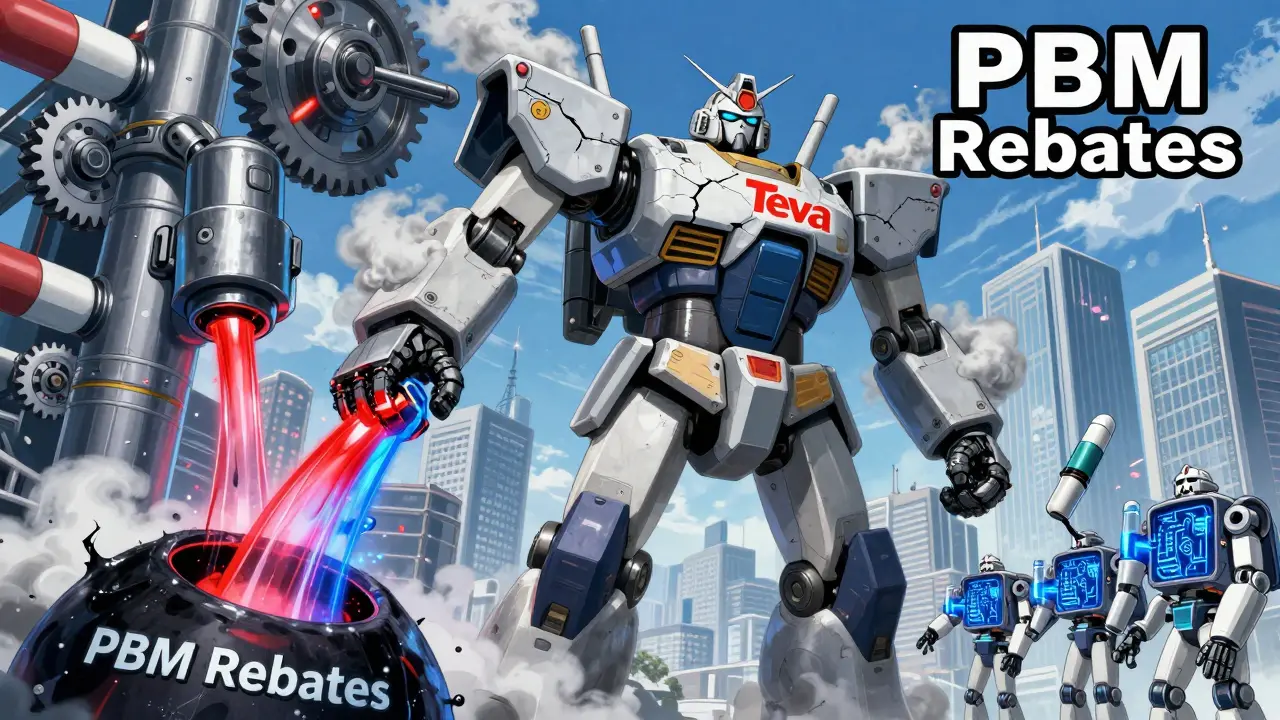
Generic drugs make up 90% of prescriptions filled in the U.S., but they only cost 10% of what brand-name drugs do. That sounds like a win for patients - and it is. But behind those low prices is a manufacturing industry under serious strain. Companies that produce these affordable medicines are struggling to stay profitable. Some are losing money. Others are barely breaking even. And if they can’t make a living, who will keep making the drugs millions of people rely on?
The Profitability Crisis in Simple Generics
The easiest generics to make are the ones that have been around for decades: antibiotics, blood pressure pills, pain relievers. These are called commodity generics. They’re cheap to produce, but the competition is brutal. Dozens of manufacturers can make the same drug. When one company lowers its price by a penny, everyone else has to follow. Margins that used to be 50-60% in the 2000s have collapsed to under 30% - and sometimes below 10%. Teva Pharmaceutical, once a giant in this space, reported a -4.6% profit margin in 2025. That means for every $100 in sales, they lost $4.60. Meanwhile, smaller players like Mylan (now part of Viatris) managed a modest 4.3% margin by avoiding the worst of the price wars. The difference? Strategy. Teva was still chasing volume in low-margin drugs. Viatris had already started pulling out. Why does this matter? Because when profit disappears, production stops. There are over 16,000 generic drugs on the market. But about 200 of them - many essential, like chemotherapy agents or insulin analogs - have faced shortages in the past five years. Why? Manufacturers simply can’t afford to keep making them. The cost to run a compliant factory, pay for FDA approvals, and manage global supply chains often exceeds what they can charge.The Rise of Complex Generics
Not all generics are created equal. Some drugs are hard to copy. They might need special formulations, tricky delivery systems, or require precise manufacturing conditions. These are called complex generics. Examples include inhalers, injectables, topical creams with multiple active ingredients, or extended-release tablets. These aren’t easy to make. It takes years of R&D, specialized equipment, and deep regulatory knowledge. And because fewer companies can produce them, competition is limited. That means pricing power. Margins on complex generics can hit 40-50% - close to what brand-name drugs used to earn. Teva’s turnaround in 2024 didn’t come from selling more generic aspirin. It came from selling more lenalidomide for multiple myeloma and Austedo XR for movement disorders - both complex generics. Their R&D spending jumped to $998 million in 2024, focused on these higher-value products. It’s not about being the cheapest anymore. It’s about being the only one who can do it right.The Contract Manufacturing Shift
Another path out of the profit trap? Don’t make your own brands. Make other people’s. The contract manufacturing segment - where companies produce drugs for branded pharma or other generic makers - is growing fast. It’s projected to hit $90.95 billion by 2030, up from $56.53 billion in 2025. Why? Because even big drug companies don’t want to run expensive, regulated factories anymore. They outsource. Companies like Egis Pharmaceuticals launched dedicated contract services in 2023. Smaller generic makers are doing the same. Instead of competing in a crowded market, they become a supplier. They build expertise in sterile filling, biologics, or high-potency APIs. Their clients pay for reliability, not the lowest price. This model reduces risk. You don’t need to market the drug. You don’t need to fight PBMs (pharmacy benefit managers) for shelf space. You just need to make it well, on time, and to exact standards. And with global demand rising, especially in Europe and Asia, there’s plenty of work.
Why the U.S. Market Is Broken
The U.S. is the biggest market for generics - and the most broken. Why? Pharmacy Benefit Managers (PBMs). These middlemen negotiate drug prices between insurers and pharmacies. But they don’t care about patient cost. They care about rebates. PBMs often push manufacturers to offer deep discounts in exchange for preferred placement on formularies. The more you cut your price, the more likely your drug gets picked. But the rebate doesn’t go to the patient. It goes to the PBM. So the patient still pays a high copay. The manufacturer gets squeezed. The PBM profits. And the system keeps running. This isn’t just unfair. It’s unsustainable. A 2024 study found that banning “pay-for-delay” deals - where brand companies pay generics to hold off launching - could save $45 billion over 10 years. But even if those deals vanished, the underlying structure remains: low prices, high volume, no room to breathe.Global Differences Matter
Outside the U.S., things look different. In Europe, governments set drug prices directly. There’s less competition on price per unit. Margins are higher. In India and China, manufacturing costs are lower, so even commodity generics can be profitable. But there’s a catch: regulatory uncertainty, currency swings, and political pressure can wipe out gains overnight. Emerging markets are growing. But they’re risky. A company might make good money in Brazil one year, then lose everything when the peso crashes or the government suddenly caps prices. That’s why smart players are diversifying. They don’t bet everything on the U.S. They spread production across regions. They build relationships with local regulators. They don’t chase the lowest price - they chase stable demand.
The Cost of Entry Is Sky-High
Want to start a generic drug company today? Good luck. Getting FDA approval for one drug - one ANDA - costs about $2.6 million. Building a cGMP-compliant factory? At least $100 million. Hiring staff with regulatory experience? That’s another $5-10 million a year. And it takes 18-24 months just to get your first product approved and on pharmacy shelves. McKinsey found that over 65% of new entrants focused on commodity generics fail within three years. Why? They run out of cash before they get to scale. The ones that survive are either backed by private equity, have deep industry ties, or pivot fast to complex products or contract manufacturing.What’s Next? Sustainability Through Strategy
The old model - make lots of cheap pills, sell to PBMs, hope for volume - is dead. The future belongs to companies that can do one of three things:- Make complex generics that others can’t easily copy
- Offer contract manufacturing services with high technical expertise
- Focus on global markets with better pricing structures
Can the System Be Fixed?
Some experts say yes. If PBMs were required to pass rebates directly to patients, if the FDA streamlined approvals for complex generics, if governments stopped forcing price cuts on essential medicines - then margins could recover. But that’s not likely soon. So the industry is fixing itself. By shifting away from the race to the bottom. By investing in science, not just scale. By realizing that sustainability isn’t about making more pills - it’s about making the right pills, the right way, for the long term. The patient wins when generics are cheap. But the system only works if the makers can keep making them. That’s the real challenge - and the real opportunity - for the next decade.Why are generic drug profits so low?
Generic drug profits are low because of intense competition. Once a brand-name drug’s patent expires, dozens of manufacturers can produce the same medicine. They compete by lowering prices, often below the cost of production. Pharmacy benefit managers (PBMs) also push for deep discounts in exchange for shelf space, but those savings rarely reach patients - they go to the PBMs. This squeezes manufacturers’ margins, sometimes to under 10%.
What’s the difference between commodity and complex generics?
Commodity generics are simple, off-patent drugs like metformin or amoxicillin that many companies can make easily. They have very low margins. Complex generics involve harder-to-copy formulations - like inhalers, injectables, or extended-release tablets. These require advanced technology, more R&D, and regulatory expertise. Fewer companies can make them, so competition is lower and margins are higher - often 40-50%.
Can contract manufacturing save generic drug companies?
Yes. Contract manufacturing lets companies produce drugs for other brands or generic makers instead of selling under their own label. This reduces marketing costs, regulatory risk, and price pressure. Companies like Egis and others are expanding into this space because demand is rising - especially from big pharma companies that want to outsource production. Margins are better, and the work is more stable.
Why are there drug shortages in generic medicines?
Many essential generic drugs are made by just one or two manufacturers. When those companies can’t profitably produce them - because prices are too low or raw materials are too expensive - they stop making them. With no backup suppliers, shortages happen. This is especially common with older, low-margin drugs like chemotherapy agents or antibiotics.
Is the global generic drug market growing?
Yes, but not everywhere. The U.S. market is shrinking due to pricing pressure. But globally, the market is expected to reach $600 billion by 2033. Growth is coming from Asia, Europe, and emerging markets where demand for affordable medicines is rising. Companies are shifting production overseas and focusing on complex products to stay profitable.
How much does it cost to start a generic drug company?
It costs at least $100 million to build a compliant manufacturing facility and another $2.6 million per drug to get FDA approval. Add in staffing, regulatory expertise, and supply chain setup, and total startup costs can exceed $150 million. Most new companies fail within three years unless they focus on complex generics or contract manufacturing.
vishnu priyanka
January 14, 2026 AT 08:44Man, in India we make these generics like it's nothing. But you know what? The government keeps slashing prices every year. One month you're profitable, next month you're paying workers with hope. Still, we keep making insulin because someone's kid needs it. No one's cheering us, but we're here.
Kimberly Mitchell
January 15, 2026 AT 01:55The entire system is a rigged casino. PBMs get rich while patients pay copays that could buy a month of groceries. And the manufacturers? They're the suckers holding the bag. No wonder factories are shutting down. This isn't capitalism-it's corporate vampirism.
Pankaj Singh
January 16, 2026 AT 19:51Let’s be real-most of these so-called 'complex generics' are just repackaged old drugs with a fancy delivery system. R&D? More like legal loophole engineering. The real innovation is in how they game the reimbursement system, not in science.
Anny Kaettano
January 18, 2026 AT 12:42There’s hope here-if we stop treating medicine like a commodity and start treating it like a human right. Contract manufacturing isn’t just a business pivot-it’s a lifeline. Companies that invest in technical excellence, not just cost-cutting, are the ones who’ll survive. And honestly? We need more of them.
jefferson fernandes
January 20, 2026 AT 10:38Let me be blunt: if you're still chasing volume in commodity generics, you're not a manufacturer-you're a corpse walking. The market has moved. The FDA approvals are a nightmare, sure-but the real barrier is mindset. Stop thinking like a bulk supplier. Start thinking like a solutions provider. Or get out.
John Pope
January 21, 2026 AT 19:25We've turned healthcare into a math problem: cost per pill, rebate per unit, margin per batch. But what happens when the math says someone's life isn't worth the cost? The real tragedy isn't the profit margin-it's that we've forgotten that medicine isn't a product. It's a promise. And we're breaking it. Slowly. Quietly. With spreadsheets.
Alan Lin
January 23, 2026 AT 07:39For anyone who thinks this is just about business: consider this-over 200 essential drugs have vanished from shelves because no one could profitably produce them. That’s not a supply chain issue. That’s a moral failure. The industry must evolve-not because it’s trendy, but because people are dying while we debate pricing models.
Gregory Parschauer
January 23, 2026 AT 09:40Oh, here we go again-the noble manufacturer narrative. Spare me. Teva’s CEO made $18 million last year while cutting R&D for life-saving antibiotics. You think this is about sustainability? It’s about shareholder returns. And you know what? The system rewards greed, not integrity. Don’t romanticize the collapse.
Angel Tiestos lopez
January 24, 2026 AT 02:29bro the whole thing is wild 🤯 imagine spending $100M to make a pill that sells for $0.10… and then some middleman takes 40% of the rebate and you’re still broke. we’re not fixing healthcare-we’re just rearranging deck chairs on the Titanic.
Scottie Baker
January 25, 2026 AT 14:23I worked at a generic plant in Ohio. We shut down in 2022. They said it was 'market conditions.' Truth? We couldn’t make enough to cover the cost of the damn gloves we wore. People don’t get it-these aren’t just pills. They’re someone’s insulin. Someone’s chemo. And we let them vanish because the numbers didn’t add up.
Adam Vella
January 25, 2026 AT 17:41Empirical analysis indicates that the structural inefficiencies within the U.S. pharmaceutical distribution ecosystem are not merely fiscal but systemic. The convergence of PBM rent-seeking behavior, regulatory fragmentation, and the commoditization of therapeutic agents constitutes a classic market failure, wherein price signals no longer reflect societal value.
Nelly Oruko
January 26, 2026 AT 22:51we need to stop calling them 'generics'... they're essential medicines. and the fact that we treat them like disposable products is… terrifying. also, i think we should rename PBMs to 'profit brokers'… it's more accurate.
Robin Williams
January 27, 2026 AT 08:45Look, I’m not saying we need to pay more for pills-but we need to stop paying the wrong people. If the rebate went to the patient, not the middleman, prices would drop naturally. And manufacturers? They’d actually make enough to keep making the stuff. Simple. No magic. Just fairness.
Angel Molano
January 27, 2026 AT 15:43Fix this? Impossible. The system is designed to fail. PBMs, regulators, investors-they all profit from the chaos. The only solution? Burn it down and start over. With patients, not profits, at the center.