Why Documenting Safety Alerts on Your Medication List Matters
Every year, thousands of patients suffer serious harm-sometimes die-because of simple mistakes with medications. Many of these errors happen with drugs that are known to be dangerous if used wrong. These are called high-alert medications. They include insulin, blood thinners like heparin, opioids, and neuromuscular blockers. One wrong dose, one missed check, and the consequences can be irreversible.
Documenting safety alerts on your medication list isn’t just paperwork. It’s a lifeline. When done right, it cuts medication errors by up to 50%. That’s not a guess. It’s backed by the World Health Organization and the Institute for Safe Medication Practices (ISMP). The goal isn’t to add more tasks for staff. It’s to build systems that catch mistakes before they reach the patient.
What Counts as a Safety Alert?
A safety alert isn’t just a pop-up on a computer screen. It’s a clear, documented warning tied to a specific risk and a required action. For example:
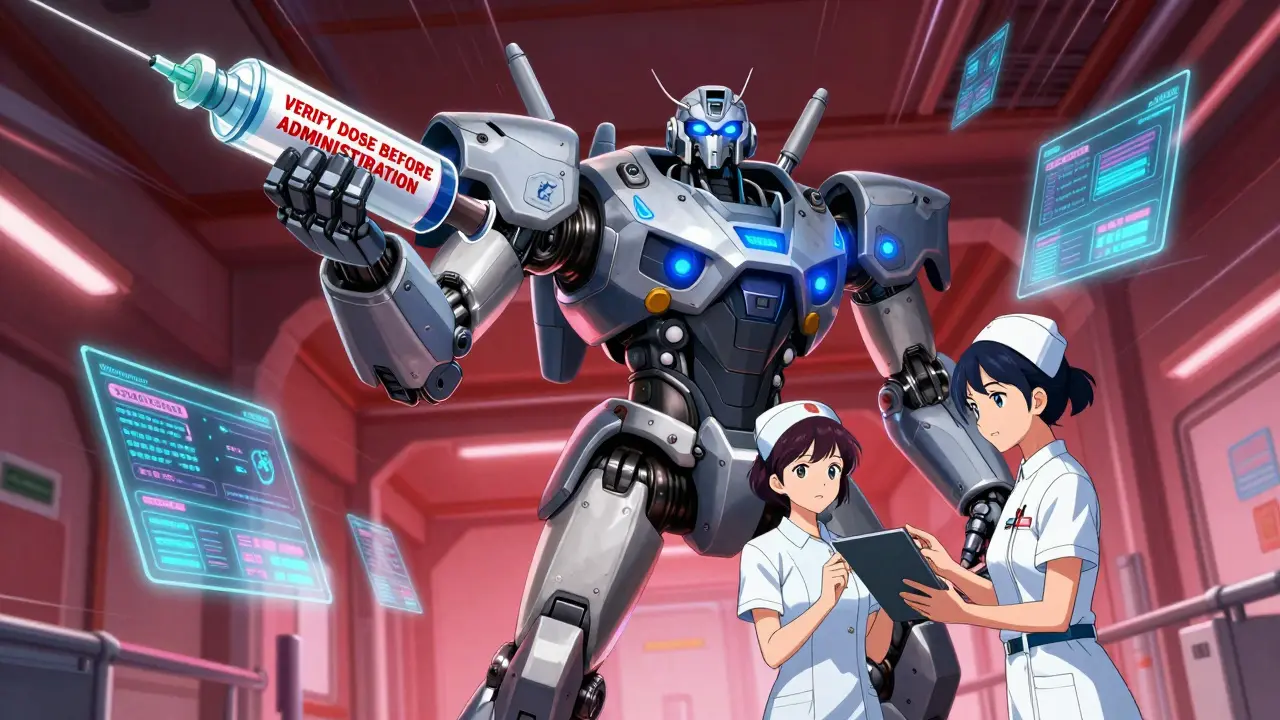
- On insulin vials: “WARNING: HIGH-CONCENTRATION INSULIN - VERIFY DOSE BEFORE ADMINISTRATION”
- On methotrexate bottles: “FOR WEEKLY USE ONLY - DO NOT ADMINISTER DAILY”
- On neuromuscular blockers: “WARNING: CAUSES RESPIRATORY ARREST - PATIENT MUST BE VENTILATED”
These aren’t suggestions. They’re mandatory labels under the ISMP 2024-2025 guidelines. If your facility uses these drugs, these exact phrases must appear on containers, electronic orders, and printed medication lists.
How to Build a Safety-Ready Medication List
Start by making a facility-specific list of high-alert medications. Don’t just copy the ISMP master list. Adjust it for your setting. A small clinic won’t use neuromuscular blockers like a hospital ICU. But it might use oral methotrexate for autoimmune conditions-so that’s your priority.
Use this three-step process:
- Identify which high-alert drugs you actually use. Talk to pharmacists, nurses, and doctors. Look at your last 6 months of medication orders.
- Document the exact safety rules for each. For insulin: double-check by two staff. For warfarin: track INR levels before each dose. For opioids: confirm pain scale and respiratory rate before giving.
- Link each alert to a physical or digital action. If you scan a barcode, the system should require a second verification before allowing the dose to be given.
Don’t rely on memory. Write it down. Print it. Post it. Make it part of the workflow-not an afterthought.
Electronic Systems: Make Alerts Work, Not Annoy
Most hospitals use electronic health records (EHRs), but many of their alerts are useless. Why? Too many. Too vague. Too easy to ignore.
A 2019 study found that when systems generate more than 15 alerts per order, clinicians start bypassing them 49% of the time. That’s not defiance-it’s exhaustion.
Fix this by:
- Only triggering alerts for truly dangerous errors (e.g., daily methotrexate instead of weekly).
- Using hard stops, not soft warnings. If someone tries to order daily methotrexate, the system should block it unless they document a valid oncology reason.
- Auto-filling correct defaults. If the drug is methotrexate, the system should default to “weekly,” not “daily.”
Also, track how often alerts are bypassed. If more than 5% of alerts are ignored without reason, investigate why. Is the alert wrong? Is the workflow broken? Is someone cutting corners?
Tracking and Measuring What Works
Documenting alerts is only half the job. You have to measure if it’s working.
Here’s what to track monthly:
- Barcode scanning compliance rate (target: 95% or higher)
- Number of alert bypasses and why they happened
- Number of medication errors involving high-alert drugs
- Staff feedback on alert fatigue
Facilities that do this see error rates drop to 4.2 per 1,000 doses. Those that don’t? 12.7 per 1,000 doses. That’s three times more mistakes.
Use audits too. Have someone shadow a nurse or pharmacist during medication administration. Watch how they use the list. Do they check the label? Do they pause before giving? Do they use the double-check system? If not, update the training.
Real Problems, Real Solutions
Not every facility can hire extra staff or buy fancy software. Rural clinics, small pharmacies, and nursing homes struggle with resources.
One rural pharmacy in Queensland cut errors by 60% without spending a dime. How? They printed out their high-alert list on laminated cards and kept one on every med cart. Nurses had to sign off each time they used one of those drugs. Simple. Visible. Accountable.
Another clinic used free FDA MedWatch alerts and posted new safety notices on their bulletin board every Monday. Staff had to read and initial them during morning huddles. No software needed.
You don’t need a $300,000 system to make safety alerts work. You need consistency, clarity, and commitment.
What’s Changing in 2025 and Beyond
The rules are getting stricter. Starting January 1, 2025, Medicare will tie hospital reimbursement to how well you document high-alert medication safety. No documentation? Lower payments.
Also, the FDA’s new Sentinel Initiative now sends automated safety alerts directly into EHRs. If a new warning comes out about a blood thinner, your system can update the alert without anyone typing a word.
And by 2027, experts predict 75% of U.S. hospitals will use AI to auto-prioritize alerts. But here’s the catch: early AI tools missed 18% of critical warnings. That’s why human oversight still matters. The system suggests. The person decides.
Common Mistakes to Avoid
- Using vague language: “Use with caution” doesn’t help. Be specific: “Verify dose with second pharmacist before administration.”
- Putting alerts only in EHRs: If a nurse grabs a vial from the shelf and the screen isn’t visible, the alert is useless.
- Not training new staff: A new nurse won’t know your list unless you show them. Make safety documentation part of onboarding.
- Ignoring staff feedback: If your team says, “We never see this alert,” investigate. It might be turned off, buried, or broken.
Final Thought: Safety Isn’t a Checklist-It’s a Culture
Documenting safety alerts isn’t about compliance. It’s about caring enough to build systems that protect people when they’re most vulnerable.
Every time you write down a warning, you’re saying: “I won’t let this happen on my watch.”
Start small. Start now. Pick one high-alert drug. Write down the exact risk. Add one safety step. Track it for a month. See if errors go down.
If they do, you’ve done more than document a safety alert. You’ve saved a life.
Sheila Garfield
January 31, 2026 AT 11:36Biggest win? We had zero insulin errors last quarter. Not because we’re saints, but because the card is right there on the cart.
Shawn Peck
February 1, 2026 AT 22:52Niamh Trihy
February 3, 2026 AT 21:21Sarah Blevins
February 4, 2026 AT 20:03Jason Xin
February 6, 2026 AT 09:12Hard stops for daily methotrexate? Yes. Please. I’ve seen two people die because someone clicked ‘next’ too fast. This isn’t bureaucracy. It’s survival.
Yanaton Whittaker
February 7, 2026 AT 01:17Kathleen Riley
February 7, 2026 AT 18:36Beth Cooper
February 8, 2026 AT 08:51Bobbi Van Riet
February 9, 2026 AT 06:05Also, new nurses? They don’t know what ‘high-alert’ even means. We started showing them a 30-second video of a guy who got insulin wrong and went into a coma. It’s brutal. But it sticks.
Holly Robin
February 10, 2026 AT 13:36Carolyn Whitehead
February 10, 2026 AT 18:33Amy Insalaco
February 12, 2026 AT 11:45