Why Medication Reconciliation After Hospital Discharge Matters
Every year, over 800,000 people in the U.S. suffer avoidable harm because their medications weren’t properly reviewed when they left the hospital. These aren’t rare mistakes-they happen because the system is rushed, overloaded, and often skips the most critical step: medication reconciliation. This isn’t just paperwork. It’s the difference between going home safely and winding up back in the ER with a dangerous drug interaction.
When you’re admitted to the hospital, your regular meds might be paused-blood thinners held before surgery, diuretics stopped if your kidneys are stressed, or diabetes drugs adjusted for hospital meals. That’s normal. But here’s where things go wrong: when you’re discharged, those changes aren’t always clearly communicated, or worse, forgotten. A 2022 study found that 42.7% of discharge errors were simple omissions-meds that were taken at home but never restarted. Another 24.6% were extra meds added in the hospital that never got taken off the list. For someone on five or more medications, that’s a recipe for disaster.
What Medication Reconciliation Actually Means
Medication reconciliation isn’t just a checklist. It’s a process where your full medication list-prescription, over-the-counter, vitamins, herbs-is compared to what’s written in your discharge papers. The goal? To catch three things: drugs you’re no longer taking but still have at home, drugs you’re now taking that shouldn’t be, and doses that got changed without clear instructions.
According to the National Quality Forum, this process cuts adverse drug events by 30% to 50%. That’s not theoretical. It’s backed by data from the Agency for Healthcare Research and Quality. Hospitals are required to do it under Medicare rules, and yet, only 65% of facilities consistently follow through at discharge, according to the American Society of Health-System Pharmacists. Why? Time. The ideal process takes 15 to 20 minutes per patient. The average time spent? Just 7.3 minutes.
Who’s Responsible? The Real Players in the Process
Many patients assume the doctor handles everything. But the truth is, medication reconciliation is a team effort-and too often, the patient is left out of the loop.
- Pharmacists are the most reliable source for catching errors. In one study, pharmacist-led discharge reviews detected 92% of discrepancies. Yet, only 127 U.S. hospitals use dedicated telepharmacy teams for this.
- Nurses often collect your home meds list on admission, but if they’re covering three units at once, mistakes happen. Reddit users report nurses skipping reconciliation because they’re overwhelmed.
- Doctors write the discharge script, but they rarely double-check it against your actual home list. A Harvard study found that 68% of discharge errors stem from not knowing what the patient was taking before admission.
- You are the most important person in this process. No one knows your meds better than you-unless you’re confused, forgetful, or too sick to speak up.
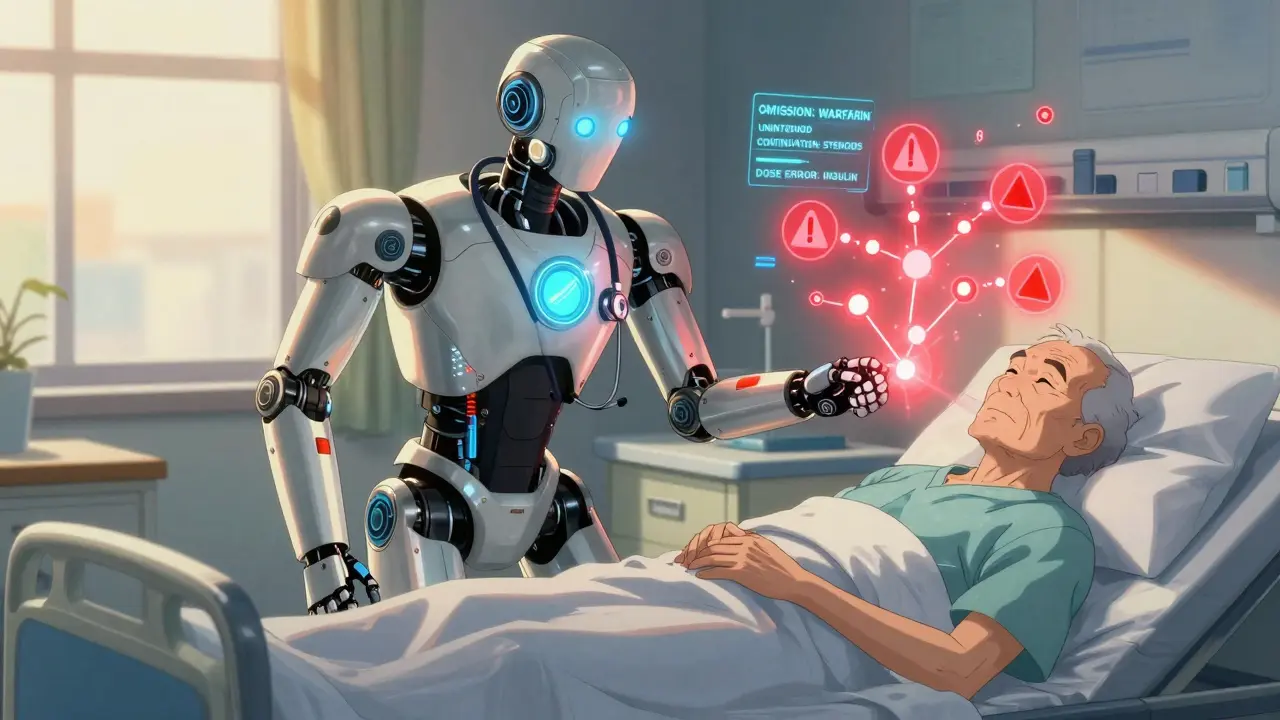
The Three Big Mistakes That Cause Interactions
After discharge, three types of errors lead to dangerous interactions. Here’s how to spot them before they hurt you.
- Omission: A medication you were taking at home was stopped in the hospital and never restarted. Common culprits: warfarin (a blood thinner), statins (cholesterol drugs), or antidepressants. One Reddit user shared how warfarin wasn’t restarted after surgery, leading to a pulmonary embolism and readmission.
- Unintended continuation: A drug given in the hospital for a short-term issue (like a steroid for inflammation) was accidentally left on your home list. This is especially risky with steroids, antibiotics, or new painkillers. The American College of Physicians found 18.7% of hospital-added meds were never removed, creating hidden interactions.
- Dosing or timing errors: Your daily aspirin changed from 81 mg to 325 mg. Your insulin dose doubled. Your blood pressure pill went from once a day to twice. These changes are often made for hospital reasons-but never explained. A 2020 study showed 11.8% of errors were frequency mismatches.
Your Action Plan: 5 Steps to Reconcile Your Meds Before You Leave
You don’t have to wait for the system to fix itself. Here’s what you can do-right now-to protect yourself.
- Bring a full list to the hospital. Before admission, write down every pill, patch, vitamin, herb, and supplement you take-including doses and times. Use a phone app, a printed sheet, or even a photo of your pill organizer. Don’t rely on memory.
- Ask for a discharge medication list in writing. At discharge, request a printed copy of your new medication regimen. Don’t accept a verbal summary. If they say, “We’ll send it to your doctor,” ask: “Can I get a copy now?”
- Compare it to your pre-hospital list. Sit down with your list and the discharge list side by side. Use a highlighter. Circle anything new, removed, or changed. If you see something you don’t recognize, ask: “Why was this added? Was it taken off my old list?”
- Ask three key questions:
- “What is this medicine for?”
- “When and how do I take it?”
- “What should I watch out for?”
- Call your pharmacist within 24 hours. Pharmacists are trained to spot interactions. Send them your discharge list and your home list. Ask: “Do these mix safely?” Most pharmacies will do this for free.
What Happens After You Get Home
Discharge isn’t the finish line. The real risk comes in the first week at home.
Medicare’s HCAHPS survey shows only 58% of patients remember clear instructions at discharge. For those on five or more meds, that number drops to 38%. That’s why follow-up matters.
- Ask your doctor if you qualify for Transitional Care Management (TCM). This is a billing code (99495 or 99496) that means someone must contact you within 48 hours and see you in person within 14 days. They must review your meds, check for side effects, and coordinate with your pharmacy. Not all doctors offer it-ask.
- If you had a stay in the ICU, your risk of medication errors is 2.3 times higher. Don’t assume you’re fine just because you’re home.
- Use a pill organizer with alarms. Set it for each dose. If you’re unsure whether to take a pill, don’t guess. Call someone.
The Technology Gap: Why Apps and AI Aren’t Enough
Hospitals are investing in AI tools that scan discharge summaries for missing meds. One Mayo Clinic system detects omissions with 94.3% accuracy. But here’s the catch: AI can’t ask you if you actually take your fish oil. Or if you stopped your blood pressure pill because it made you dizzy. Or if your daughter helps you take your meds and forgot to tell the nurse.
Technology helps. But it doesn’t replace the human conversation. The best reconciliation happens when a pharmacist sits with you, looks you in the eye, and says: “You told us you take garlic pills every day. I see them on your list. Are you still taking them?”
What to Do If Something Goes Wrong
Even with all the right steps, mistakes happen. If you feel worse after discharge-dizzy, nauseous, confused, bruising easily, or having chest pain-don’t wait. Call your doctor or pharmacist immediately. Keep a log: what you took, when, and how you felt.
If you believe a medication error caused harm, report it. Hospitals are required to track these incidents. You can also file a report with the FDA’s MedWatch program. Your voice helps fix the system.
Final Thought: Your Meds Are Your Responsibility
Medication reconciliation isn’t just a hospital policy. It’s your right. You deserve to leave the hospital knowing exactly what you’re supposed to take-and why. No one else can do this for you. You’re the only one who knows what’s in your medicine cabinet, what you’ve felt on each drug, and what you’re willing to tolerate.
Take the time. Write it down. Ask the questions. Call your pharmacist. Don’t let a rushed discharge be the reason you end up back in the hospital.
Shelby Price
February 3, 2026 AT 17:06Jesse Naidoo
February 5, 2026 AT 07:24Sherman Lee
February 6, 2026 AT 11:50Lorena Druetta
February 6, 2026 AT 12:40Zachary French
February 6, 2026 AT 13:38Coy Huffman
February 7, 2026 AT 14:33Caleb Sutton
February 7, 2026 AT 18:15Jamillah Rodriguez
February 9, 2026 AT 00:28Katherine Urbahn
February 9, 2026 AT 21:39Joy Johnston
February 11, 2026 AT 01:30