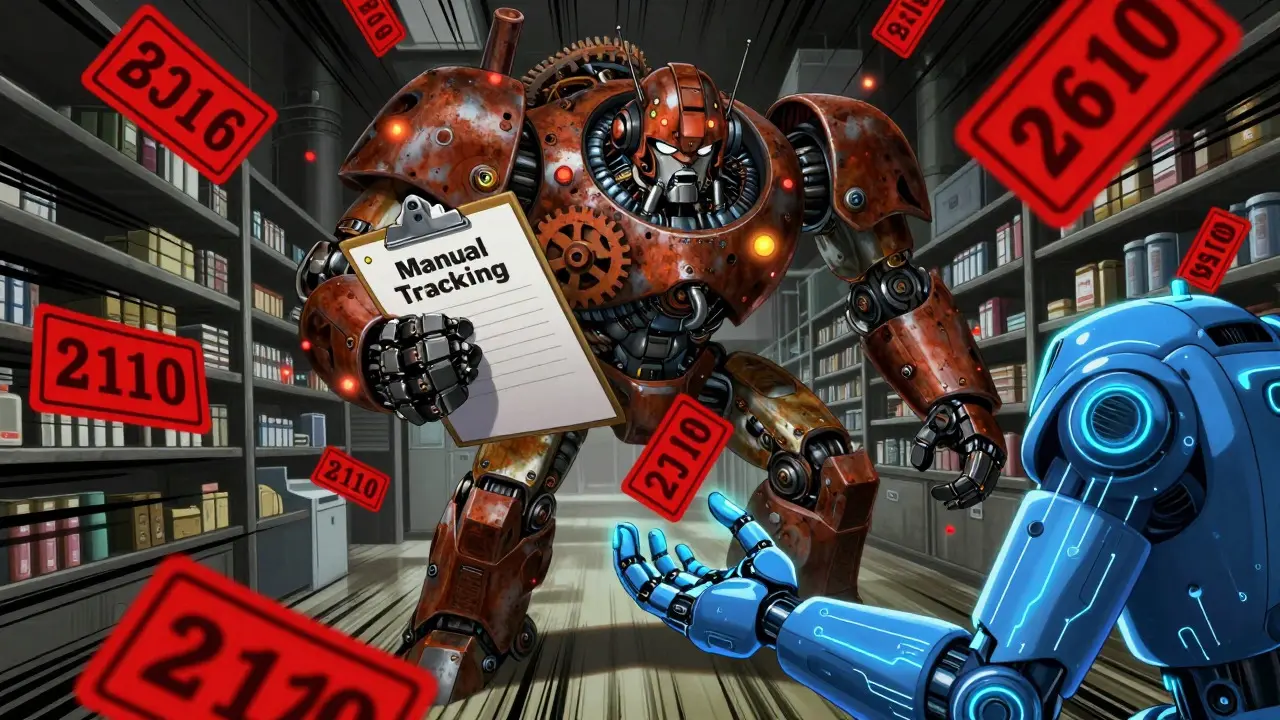
Picture this: you reach for a life-saving drug in an emergency, only to realize it expired three months ago. It’s a nightmare scenario that costs hospitals millions and, worse, risks patient safety every single day. For years, pharmacists and nurses relied on manual checks-walking down aisles with clipboards, squinting at tiny print on boxes. That method is slow, prone to human error, and frankly, outdated.
Technology has stepped in to fix this mess. From simple smartphone apps to sophisticated RFID (Radio Frequency Identification) systems, we now have tools that automatically flag expiring drugs before they ever leave the shelf. If you are managing a pharmacy, running a hospital ward, or even just trying to keep your home medicine cabinet safe, understanding these technologies is no longer optional-it’s essential for modern healthcare compliance.
Why Manual Tracking Fails (And Why You Need Tech)
Let’s be honest about the old way. Manual inventory counting is tedious. In a typical mid-sized facility, staff might spend 40 to 80 hours just tagging and checking initial inventory. During daily operations, errors creep in. Studies show that manual methods only achieve 65-75% accuracy. That means one in four medications could be miscounted or missed entirely during an expiration check.
The stakes are high. The FDA’s Drug Supply Chain Security Act and DEA regulations require strict accountability. When you miss an expiration date, you aren’t just wasting money; you’re risking regulatory fines and patient health. Technology solves this by automating the 'watchdog' role. Systems can trigger alerts when a medication is within two days of expiring, preventing it from being dispensed. This shift from reactive cleaning-up to proactive prevention is the core value proposition of modern tracking tech.
RFID Systems: The Gold Standard for Hospitals
If you are looking for speed and precision, RFID technology is currently the heavyweight champion. Unlike barcodes, which require line-of-sight scanning one by one, UHF (Ultra-High Frequency) RFID tags can read hundreds of medications simultaneously. Imagine walking past a crash cart or a fully stocked refrigerator, and the system instantly knows exactly what is inside, where it is, and when each item expires.
Leading platforms like KitCheck have adopted this approach. Over 900 hospitals use KitCheck because it achieves near 100% inventory accuracy. How does it work? Each medication package has a unique electronic tag. When you scan a bin, the reader picks up all signals at once. This process is roughly 10 times faster than manual counting. Texas Children’s Hospital, for example, uses specialized RFID systems to track 784 high-value drugs. They reported saving countless hours during recall processes and significantly reducing waste.
| Feature | RFID Systems (e.g., KitCheck) | Barcode/eMAR (e.g., eVero) | Mobile Apps (e.g., LogRx) |
|---|---|---|---|
| Scanning Speed | Instant (bulk reading) | Slow (one-by-one) | Moderate (manual entry/scan) |
| Accuracy Rate | ~100% | 65-75% | Depends on user diligence |
| Initial Cost | High ($50k-$200k+) | Low to Medium | Low (Subscription-based) |
| Best For | Hospitals, Crash Carts, ADCs | IDD Agencies, Long-term Care | EMS, Fire Rescue, Small Clinics |
| Hardware Needs | Readers, Tags, Infrastructure | Standard Computers/Tablets | Existing iOS/Android Devices |
The downside? Price and complexity. Implementing RFID isn’t cheap. Expect costs between $50,000 and $200,000 depending on facility size. You also need to retrain staff who are used to the old ways. However, the ROI is clear: hospitals report annual savings of $120,000 to $300,000 through reduced waste and improved efficiency. If you manage a large volume of high-cost drugs, RFID pays for itself quickly.
eMAR and Barcode Solutions: The Budget-Friendly Alternative
Not every facility needs-or can afford-full RFID infrastructure. This is where Electronic Medication Administration Records (eMAR) and barcode systems shine. Platforms like eVero are particularly popular in Intellectual and Developmental Disabilities (IDD) agencies and long-term care facilities. These systems rely on standard barcodes and integrate directly with pharmacy ordering systems.
Here is how it works in practice: a nurse scans a patient’s wristband and the medication barcode. The system checks the database for expiration dates, dosage compatibility, and administration history. If a drug is nearing its expiry, the system flags it. While this doesn’t give you the instant bulk-read capability of RFID, it drastically reduces errors compared to paper logs. It also provides a digital audit trail, which is crucial for passing inspections from agencies like CMS (Centers for Medicare & Medicaid Services).
The trade-off is speed. You still have to scan items individually. If you have a massive inventory, this takes time. But for smaller clinics or settings where medications are administered slowly over time, eMAR offers a robust, cost-effective solution that ensures compliance without breaking the bank.

Mobile Apps for Emergency Services and Small Practices
What if you don’t have a stationary pharmacy? Think about paramedics, fire rescue teams, or small private practices. They need mobility. This is where apps like LogRx come into play. Designed specifically for emergency services, LogRx runs on existing iOS and Android devices. No special hardware required.
Portland Fire & Rescue switched to LogRx and saw an immediate drop in administrative workload. They found it much easier to comply with DEA regulations for controlled substances. The app allows users to log narcotics, track locations, and set reminders for expiring stock. Matt Gibson from Elite EMS in the UK noted that such tools help demonstrate innovation in medicines management, going beyond basic compliance.
For small businesses, this is a game-changer. You avoid the heavy upfront costs of RFID readers. Instead, you pay a subscription fee. The limitation is that it relies on human action-you have to remember to scan and log. If staff forget, the data is incomplete. But for agile teams moving around, it’s the most practical option available today.
Automated Dispensing Cabinets (ADCs): Smart Storage
In closed-door pharmacies and operating rooms, Automated Dispensing Cabinets (ADCs) act as intelligent vaults. These aren’t just lockers; they are connected devices. When a pharmacist or nurse opens a drawer, the cabinet records who took what, when, and checks the lot number and expiration date against its internal database.
Vendors like TouchPoint Medical document that ADCs automatically log item details. This creates a seamless loop between storage and administration. If a drug is close to expiring, the ADC can prioritize dispensing those units first (First-Expiry-First-Out logic). This minimizes waste naturally. However, ADCs have a steep learning curve. Staff typically need 4 to 8 weeks to become proficient. Integration with legacy hospital software can also be tricky, sometimes causing temporary glitches during the transition period.

Implementation Roadmap: Getting Started Without the Headache
Choosing the tech is step one. Installing it is step two. Don’t underestimate the effort required here. A typical implementation timeline looks like this:
- System Assessment (2-4 weeks): Audit your current inventory, identify pain points, and choose the right vendor.
- Installation (1-3 weeks): Hardware setup for RFID or software deployment for eMAR/apps.
- Staff Training (2-6 weeks): This is critical. 62% of hospitals report staff resistance to new workflows. Address fears early. Show them how the tech saves *their* time, not just the hospital’s money.
- Integration Testing (2-4 weeks): Ensure the new system talks to your existing Electronic Health Records (EHR) and pharmacy databases.
A common pitfall is poor integration. One Midwest hospital experienced 30% tracking errors in their first quarter because their new RFID system couldn’t communicate with their legacy software. Always demand a pilot test before full rollout. Also, ensure your vendor offers strong support. KitCheck, for instance, boasts a 15-minute average response time for technical issues. In healthcare, downtime is dangerous.
Future Trends: AI and Blockchain in Pharmacy
We are standing on the brink of even smarter tracking. By 2027, Gartner forecasts that 45% of US hospitals will implement RFID medication tracking. But the real excitement lies in what comes next. Companies like Intelliguard Health are piloting AI-powered predictive analytics. Imagine a system that doesn’t just tell you a drug is expiring, but predicts *when* you’ll need to reorder based on usage patterns and expiration timelines. This prevents both shortages and overstocking.
Blockchain is also entering the conversation. While currently holding about 20% of the emerging tech market share, blockchain promises end-to-end supply chain transparency. From manufacturer to patient, every handoff is recorded immutably. This could eventually eliminate counterfeit drugs and streamline recalls. As interoperability standards improve, expect these systems to integrate deeply with EHRs, creating a unified view of patient care and medication safety.
How much does it cost to implement RFID medication tracking?
The initial investment for RFID systems typically ranges from $50,000 to $200,000, depending on the size of the facility and the number of tags and readers needed. While this seems high, hospitals often see a return on investment within a few years due to reduced waste (15-20% decrease in expired meds) and labor savings.
Is RFID better than barcode scanning for expiration tracking?
Yes, primarily for speed and accuracy. RFID can read hundreds of items simultaneously without line-of-sight, achieving ~100% accuracy. Barcodes require individual scanning and line-of-sight, resulting in lower accuracy rates (65-75%) and slower inventory counts. However, barcodes are cheaper and sufficient for smaller facilities.
Can I use a mobile app to track medications in a small clinic?
Absolutely. Apps like LogRx are designed for small clinics, EMS, and fire rescue teams. They run on standard smartphones, require no special hardware, and help with DEA compliance and expiration alerts. They are ideal for mobile environments where bulky scanners aren't practical.
How do eMAR systems help prevent expired medication administration?
eMAR systems integrate with pharmacy databases to check expiration dates in real-time. When a nurse attempts to administer a drug, the system verifies its validity. If the medication is expired or near-expiry (often flagged within 2 days), the system blocks administration or sends an alert, ensuring patient safety.
What are the main challenges in adopting medication tracking technology?
The biggest challenges are staff resistance to change, integration issues with legacy hospital software, and the initial time required for training and inventory tagging. Successful adoption requires comprehensive change management programs and phased implementation strategies to minimize disruption.