
SNRI Medication Comparison Tool
Find Your Best SNRI Match
This tool helps you compare SNRIs based on your specific symptoms and side effect tolerance. Select your criteria below to see which medications might work best for you.
Recommended SNRIs
When you’re struggling with depression, anxiety, or chronic pain, finding the right medication can feel like searching for a key in a dark room. SNRIs - serotonin-norepinephrine reuptake inhibitors - are one of the most commonly prescribed classes of antidepressants today. Unlike older drugs that only target serotonin, SNRIs work on two neurotransmitters at once: serotonin and norepinephrine. That dual action makes them especially useful for people who have both mood symptoms and physical pain. But they’re not without risks. Side effects range from mild nausea to serious blood pressure spikes and withdrawal symptoms that can hit hard if you stop too fast.
What Are SNRIs and How Do They Work?
SNRIs stand for serotonin-norepinephrine reuptake inhibitors. They block the brain’s ability to reabsorb serotonin and norepinephrine after these chemicals are released. That means more of them stay active in the spaces between nerve cells, helping signals that regulate mood, energy, and pain perception flow more smoothly.
The first SNRI, venlafaxine (sold as Effexor), hit the market in 1993. Since then, four others have been approved by the FDA: duloxetine (Cymbalta), desvenlafaxine (Pristiq), levomilnacipran (Fetzima), and milnacipran (Savella). Milnacipran is approved only for fibromyalgia, while duloxetine is approved for depression, anxiety, diabetic nerve pain, fibromyalgia, and chronic back pain. Venlafaxine is approved for depression, generalized anxiety, social anxiety, and panic disorder.
What sets SNRIs apart from SSRIs (like sertraline or fluoxetine) is their effect on norepinephrine. That’s why they’re often chosen when someone has fatigue, low energy, or physical pain along with sadness. Studies show SNRIs are more effective than SSRIs for treating nerve pain - something SSRIs rarely help with.
Key SNRIs: Venlafaxine vs. Duloxetine vs. Others
Not all SNRIs are the same. Their chemical structure affects how strongly they block serotonin versus norepinephrine reuptake - and that changes their side effect profile and best uses.
Venlafaxine is the most widely prescribed. At low doses (under 150 mg/day), it mainly blocks serotonin. But as the dose goes up, it starts strongly inhibiting norepinephrine too. This makes it effective for both depression and anxiety disorders. However, higher doses can raise blood pressure in 12-15% of users. Many patients report feeling more energized on venlafaxine than on SSRIs - but that same energy boost can make it harder to sleep. Withdrawal is a big concern: about 54% of users report severe symptoms like dizziness, brain zaps, and nausea if they miss a dose or stop abruptly.
Duloxetine is the go-to for people with both depression and chronic pain. It’s equally potent at blocking both serotonin and norepinephrine, but leans slightly toward serotonin. It’s FDA-approved for diabetic neuropathy, fibromyalgia, and chronic musculoskeletal pain - conditions where other antidepressants often fail. About 25-30% of users get nausea at first, but most say it fades after 2-4 weeks. Duloxetine users also report more sweating and dry mouth than those on other SNRIs. Weight changes are common too: many lose 5-7 pounds early on, then gain it back after months of use.
Levomilnacipran and milnacipran are more focused on norepinephrine. That makes them potentially better for fatigue and pain, but they carry a higher risk of increasing heart rate and blood pressure. They’re less commonly prescribed because they’re newer and more expensive, but they’re a good option if venlafaxine or duloxetine didn’t work or caused too many side effects.
Desvenlafaxine is the active metabolite of venlafaxine. It’s often marketed as having fewer side effects, but studies show it’s essentially the same drug with a longer half-life. It’s taken once daily and may be easier for people who forget pills.
Common Side Effects of SNRIs
Most people experience at least one side effect when starting an SNRI. These usually fade within a few weeks as the body adjusts. But some stick around - and some can be serious.
- Nausea: Happens in 25-30% of users, especially with duloxetine. Taking the pill with food helps.
- Sexual side effects: Affects 20-40% of users. Lowered libido, delayed orgasm, or inability to climax are common. In user surveys, up to 65% report this issue - often worse than with SSRIs.
- Dizziness and lightheadedness: Especially when standing up quickly. This is tied to blood pressure changes.
- Increased sweating: Seen in about 20% of duloxetine users. Can be embarrassing but usually harmless.
- Constipation and dry mouth: Reported in 15% and 30% of users respectively. More common with venlafaxine.
- Sleep problems: Insomnia is common, especially early on. Some people feel drowsy instead.
- Increased blood pressure: A real concern with venlafaxine at doses over 150 mg/day. About 1 in 8 users develop hypertension. Regular monitoring is recommended.
These side effects are why doctors start with low doses and increase slowly. Jumping to a high dose too fast almost guarantees nausea and dizziness.
Serious Risks and Warnings
SNRIs are generally safer than older antidepressants like tricyclics, but they still carry serious risks.
Serotonin syndrome is rare - about 1 in 1,000 patient-years - but it’s dangerous. It happens when too much serotonin builds up, usually because you’re taking another serotonergic drug like tramadol, migraine meds (triptans), or even St. John’s wort. Symptoms include confusion, rapid heart rate, high fever, muscle rigidity, and seizures. If you notice these, get help immediately.
Bleeding risk is another hidden danger. SNRIs reduce serotonin in platelets, which affects blood clotting. If you’re on blood thinners like warfarin or aspirin, or if you’re scheduled for surgery, your doctor needs to know you’re taking an SNRI. Nosebleeds, bruising, or unusual bleeding gums are signs to watch for.
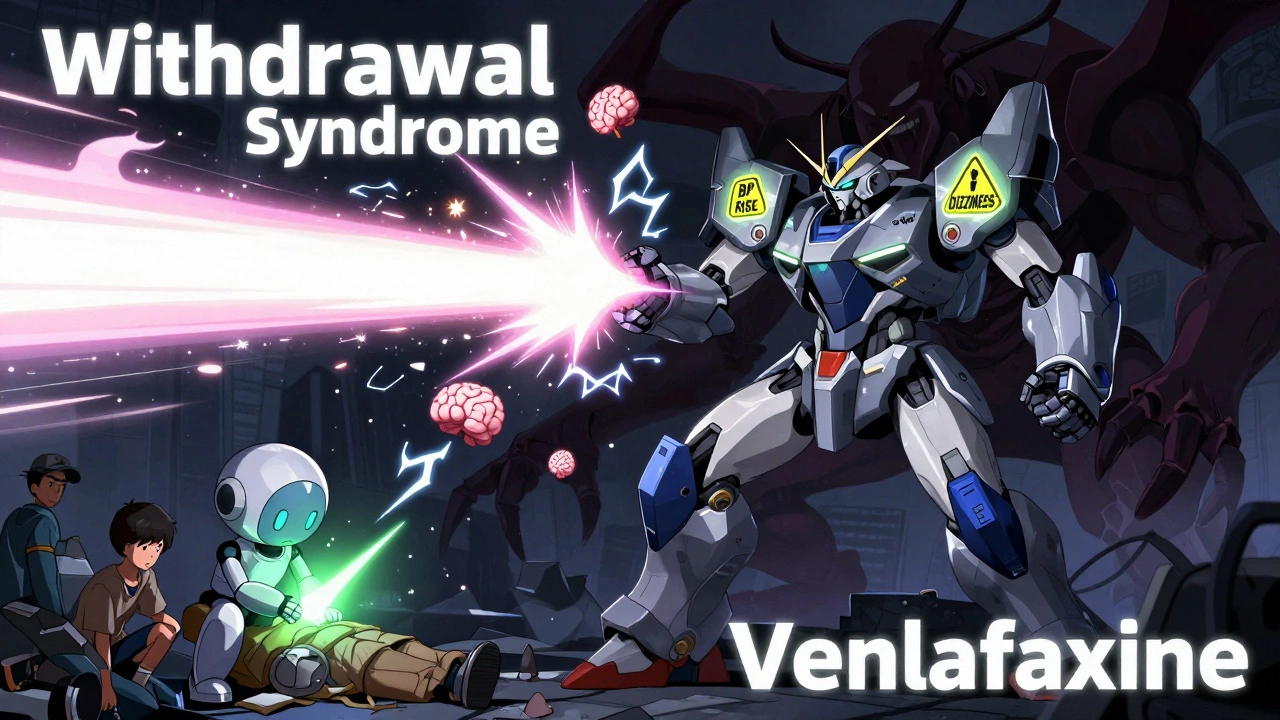
Discontinuation syndrome is the biggest problem for many users. If you stop suddenly, you might get brain zaps (electric shock sensations), dizziness, vomiting, anxiety, insomnia, or flu-like symptoms. Up to 50% of people experience this if they quit cold turkey. The solution? Taper slowly over 2-4 weeks, even if you feel fine. Most doctors follow this guideline - 78% of prescribers do, according to a 2022 JAMA survey.
Tramadol is sometimes mentioned as an SNRI. It’s not an antidepressant, but it does block serotonin and norepinephrine reuptake. It’s also an opioid, so it carries risks of addiction, respiratory depression, and seizures - especially if mixed with other SNRIs. Don’t combine it with venlafaxine or duloxetine unless your doctor specifically says it’s safe.
How SNRIs Compare to Other Antidepressants
SNRIs aren’t the only option. Here’s how they stack up:
| Feature | SNRIs | SSRIs | TCAs |
|---|---|---|---|
| Targets | Serotonin + Norepinephrine | Serotonin only | Serotonin + Norepinephrine + others |
| Best for pain? | Yes - proven for neuropathy, fibromyalgia | Usually not | Sometimes - but more side effects |
| Sexual side effects | High (20-40%) | High (20-40%) | High (30-50%) |
| Cardiac risk | Low (except BP rise with venlafaxine) | Very low | High - can cause arrhythmias |
| Anticholinergic effects | Mild (dry mouth, constipation) | Mild | Severe - blurred vision, urinary retention |
| Withdrawal risk | High - especially venlafaxine | Moderate | High |
SNRIs are often preferred over TCAs because they’re safer for the heart and don’t cause extreme dry mouth or urinary problems. Compared to SSRIs, they’re more likely to help with energy and pain - but not necessarily better for pure depression.

What Patients Really Say
Real-world experiences vary. On patient forums and review sites like Drugs.com:
- 72% of SNRI users say their mood improved significantly.
- 68% report more energy than they had on SSRIs.
- 65% report sexual side effects - the most common complaint.
- 54% of venlafaxine users describe the "venlafaxine cliff" - severe withdrawal after missing even one dose.
- 45% of duloxetine users say nausea faded after 3 weeks.
- 37% of duloxetine users lost weight at first, then gained it back.
Many people say SNRIs changed their lives - finally able to get out of bed, go to work, or play with their kids. But others quit because the side effects were worse than the depression.
Starting and Stopping SNRIs: What to Expect
If your doctor prescribes an SNRI, here’s what usually happens:
- Start low: Venlafaxine begins at 37.5 mg/day; duloxetine at 30 mg/day. This helps avoid nausea and dizziness.
- Wait 4-6 weeks: Antidepressants take time. Don’t give up if you don’t feel better right away.
- Monitor blood pressure: If you’re on venlafaxine over 150 mg/day, check your BP every 2-4 weeks.
- Don’t stop suddenly: Even if you feel great, taper over 2-4 weeks. Ask your doctor for a schedule.
- Watch for interactions: Avoid other serotonergic drugs unless cleared by your doctor.
Generic venlafaxine costs $4-8 a month in the U.S. Duloxetine is more expensive - even after losing patent protection, it still brought in $1.2 billion in U.S. sales in 2022. That shows how many people rely on it.
What’s Next for SNRIs?
Research is ongoing. As of late 2023, 47 clinical trials are testing SNRIs for PTSD, ADHD, and menopausal hot flashes. A new SNRI called LY03015 is in Phase III trials, aiming for a more balanced effect on serotonin and norepinephrine - possibly reducing side effects like blood pressure spikes.
Scientists are also looking at how SNRIs affect inflammation in the brain. Microglia - immune cells in the brain - may be calmed by these drugs, which could explain why they help with pain and depression beyond just neurotransmitters.
The global SNRI market is growing at 4.7% a year. As more people live longer with chronic pain and depression, these drugs will stay in high demand.
SNRIs aren’t magic. But for many, they’re the difference between staying stuck and finding a way forward. The key is knowing your body, working with your doctor, and giving the medication time - while watching for signs it’s not working or is causing harm.
Do SNRIs cause weight gain?
Some people lose weight at first - especially on duloxetine - then gain it back after several months. Others gain weight slowly over time. It’s unpredictable. Weight changes are more common with long-term use than short-term. If weight gain becomes a problem, talk to your doctor about switching or adjusting your dose.
Can I drink alcohol while taking SNRIs?
It’s best to avoid alcohol. SNRIs can make you drowsy or dizzy, and alcohol makes those effects worse. Alcohol also increases the risk of liver damage and can worsen depression over time. Even a few drinks can interfere with your progress.
Are SNRIs addictive?
SNRIs aren’t addictive in the way opioids or benzodiazepines are. You won’t crave them or get high. But your body can become physically dependent. Stopping suddenly causes withdrawal symptoms - brain zaps, nausea, anxiety - which can feel like addiction. That’s why tapering slowly is critical.
How long does it take for SNRIs to work?
Most people notice small improvements in energy or sleep within 1-2 weeks. But full relief from depression or anxiety usually takes 4-8 weeks. For pain, it can take up to 6 weeks. Don’t stop too early - give it time.
What if SNRIs don’t work for me?
It’s common for the first antidepressant to not work. If an SNRI doesn’t help after 8-12 weeks, your doctor may switch you to another SNRI, an SSRI, or a different class like bupropion. Some people need to try 2-3 meds before finding the right one. Therapy, exercise, and sleep habits also play a big role - meds alone aren’t always enough.
Can I take SNRIs during pregnancy?
Some SNRIs are considered low-risk during pregnancy, but none are risk-free. Venlafaxine and duloxetine have been studied more than others. Untreated depression also carries risks. Talk to your OB-GYN and psychiatrist - they’ll weigh the benefits of treatment against potential risks to the baby.
Abhi Yadav
December 3, 2025 AT 19:27Julia Jakob
December 4, 2025 AT 11:44Robert Altmannshofer
December 5, 2025 AT 05:22Kathleen Koopman
December 5, 2025 AT 13:41Nancy M
December 5, 2025 AT 23:29gladys morante
December 6, 2025 AT 15:43David Ross
December 7, 2025 AT 17:53Craig Ballantyne
December 8, 2025 AT 14:14Victor T. Johnson
December 9, 2025 AT 18:01Nicholas Swiontek
December 10, 2025 AT 23:36Robert Asel
December 11, 2025 AT 04:22Rachel Nimmons
December 11, 2025 AT 10:08