
For years, taking a daily low-dose aspirin was like brushing your teeth - something you did just to stay healthy. Doctors recommended it. Friends swore by it. Pharmacies sold it for pennies. But today, that advice has flipped. If you’ve never had a heart attack, stroke, or stent, and you’re thinking about popping an aspirin every morning to prevent one, you might be doing more harm than good.
Why the Rules Changed
The science behind aspirin and heart health isn’t new. Back in the 1980s, studies showed that people who took daily aspirin had fewer heart attacks. That led to decades of blanket recommendations. But those early trials didn’t fully account for the cost: bleeding. Not just a little nosebleed - major internal bleeding that can land you in the hospital or even kill you. By 2022, the U.S. Preventive Services Task Force (USPSTF) did a full reset. They looked at over a dozen large studies involving more than 100,000 people. What they found was clear: for most adults over 60, the risk of bleeding from aspirin outweighs the tiny chance it might prevent a first heart attack or stroke. The numbers? For every 1,000 people over 60 taking aspirin daily for a year, there are 1.6 extra major bleeding events but only 0.9 fewer heart attacks. That’s not a win. That’s a loss. The American College of Cardiology and American Heart Association followed suit. Their 2019 guidelines said aspirin shouldn’t be used routinely for primary prevention. By 2025, that’s become standard practice - not just advice, but the new baseline.Who Definitely Should Not Take Aspirin Daily
If you fall into any of these groups, stop. Don’t wait for your next appointment. Ask your doctor about stopping - but don’t restart without clear guidance.- Adults 60 and older - This is the biggest group. The USPSTF gives a clear Grade D recommendation: do not start. The bleeding risk climbs with age. Your stomach lining thins. Your blood doesn’t clot as easily. Even if you feel fine, your body is more vulnerable.
- People with a history of stomach ulcers - About 4% of U.S. adults have had a peptic ulcer. If you’re one of them, aspirin can trigger a recurrence. That’s not a minor upset stomach - it’s internal bleeding that may need surgery.
- Those on blood thinners or NSAIDs - If you take warfarin, apixaban, ibuprofen, or naproxen regularly, adding aspirin is like pouring gasoline on a fire. One 2018 Medicare study found 18.3% of adults 65+ were already on one of these drugs. Combining them triples the bleeding risk.
- People with uncontrolled high blood pressure - High BP puts stress on blood vessels. Aspirin makes them more likely to rupture. The risk of brain hemorrhage goes up 38% with daily aspirin use.
- Anyone with unexplained bruising or bleeding - If you notice blood in your stool, frequent nosebleeds, or bruises that show up for no reason, don’t assume it’s just aging. It could be aspirin doing damage.
Who Might Still Benefit - But Only With Caution
There are exceptions. But they’re narrow, and they require hard data, not guesswork.- Adults 40-59 with 10%+ 10-year heart disease risk - This isn’t about feeling risky. It’s about numbers. Use the ACC/AHA Pooled Cohort Equations (your doctor can run this). If your score is 10% or higher - meaning you have a 1 in 10 chance of a heart attack or stroke in the next decade - aspirin might help. But only if your bleeding risk is low.
- People with high coronary calcium scores - A CT scan showing calcium buildup in your heart arteries (CAC score over 100) is a strong signal of hidden disease. One 2023 study found people with scores above 300 had a 19% lower risk of heart events with aspirin. But this isn’t a free pass. You need a cardiologist to weigh the trade-offs.
- Diabetics aged 40-70 with high risk - The 2025 AHA/ACC diabetes guidelines say aspirin may be considered if your 10-year ASCVD risk is 15% or higher and you have no bleeding risks. But even then, it’s not automatic. Lp(a) levels above 50 mg/dL may make aspirin more useful - but testing for that isn’t routine yet.
Here’s the catch: even if you fit one of these groups, you still need to talk to your doctor. No algorithm replaces a conversation. Your preferences matter. If you’re terrified of heart disease, you might accept a higher bleeding risk. If you’ve had a bad stomach reaction before, you might say no - even if the math says yes.

The Real Problem: Confusion and Fear
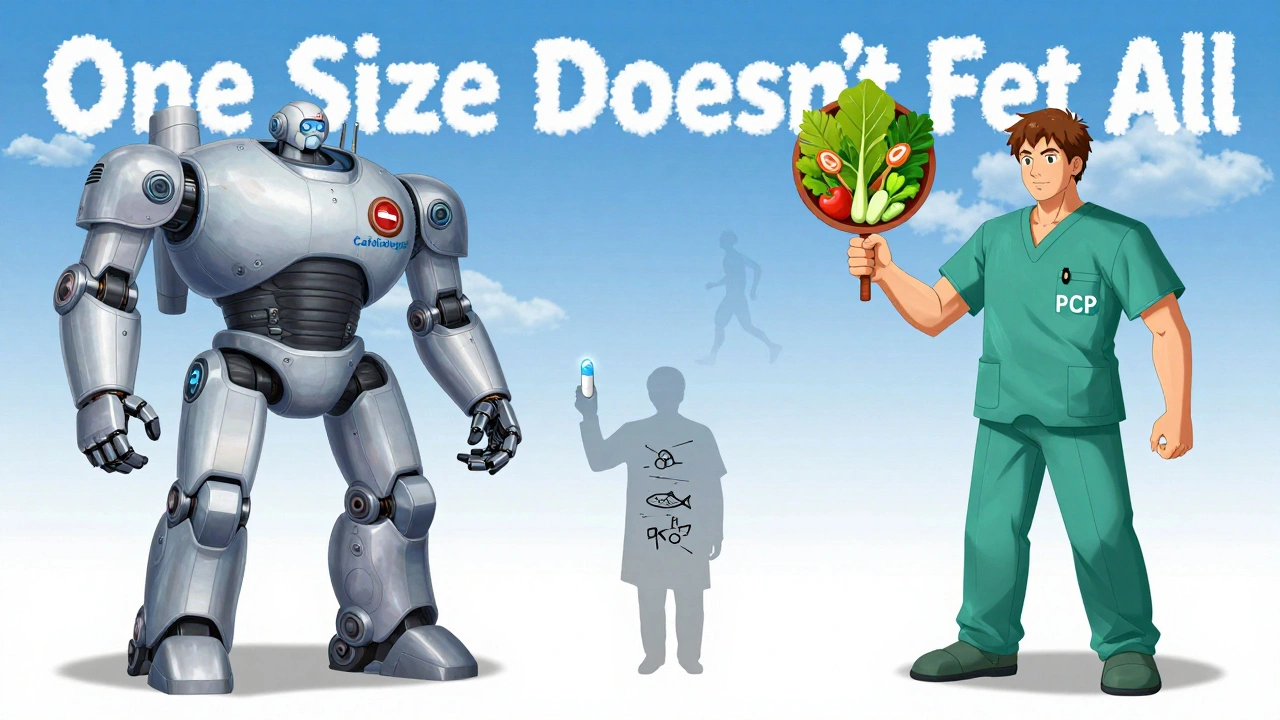
Despite the guidelines, many people are still taking aspirin - and not because they’re informed. They’re doing it out of habit, fear, or conflicting advice. A 2023 Mayo Clinic survey found 41% of adults 60+ continued daily aspirin after the 2022 guidelines came out. Why? They said: “I don’t want to stop something that might be protecting me.” That’s understandable. But it’s also dangerous. Meanwhile, doctors are divided. Cardiologists are more likely to keep aspirin going for high-risk patients. Primary care doctors - who see the most patients - are more likely to stop it. A 2023 JAMA study found 57% of patients reported getting conflicting advice. One patient told Reddit: “My cardiologist said keep it. My PCP said stop. I’m confused.” This isn’t just about pills. It’s about trust. When guidelines shift, patients feel abandoned. But the truth is, medicine isn’t broken - it’s getting smarter. We used to treat everyone the same. Now we know: one size doesn’t fit all.What to Do If You’re Already Taking Aspirin
If you’ve been on daily aspirin for years - especially if you’re over 60 - don’t quit cold turkey. Talk to your doctor. But here’s what you should ask:- What’s my 10-year risk of heart disease? (Ask for the exact number.)
- Do I have any bleeding risk factors? (Ulcers? Medications? High BP?)
- Has my risk changed since I started this? (Many people started aspirin in the 2000s. Their risk profile has changed since.)
- Is there a better way to lower my risk? (Exercise, statins, blood pressure control - these often do more than aspirin.)
Most people can stop aspirin safely. But if you’ve had a stent, bypass surgery, or previous heart attack - that’s secondary prevention. Aspirin is still essential there. Don’t confuse the two.
The Bigger Picture: Prevention Isn’t About Pills
Aspirin was never meant to be the centerpiece of heart health. It was a backup plan. The real power lies in what you do every day.- Move - 150 minutes of walking or cycling a week cuts heart disease risk by 30%.
- Eat - Swap processed carbs for vegetables, nuts, and fish. That’s more effective than any pill.
- Control blood pressure and cholesterol - Statins have proven benefits for high-risk people, with far less bleeding risk than aspirin.
- Don’t smoke - Smoking increases heart attack risk 2-4 times. Quitting cuts it in half within a year.
Aspirin might help a few people. But lifestyle changes help almost everyone. And they don’t come with a warning label.
What’s Next?
The future of prevention is personal. Researchers are now studying genetic markers that predict who responds to aspirin - and who doesn’t. One trial, called ASPRIN, is tracking 15,000 people with high coronary calcium scores to see if aspirin helps them specifically. Results won’t come until 2028. For now, the message is simple: if you’re healthy and haven’t had a heart event, don’t start aspirin. If you’re already on it, talk to your doctor. Don’t assume it’s helping. Don’t assume it’s harmless. And don’t let fear make the decision for you.The best medicine isn’t a pill you swallow every morning. It’s a conversation you have with your doctor - and the choices you make every day after.
Should I stop taking aspirin if I’m over 60?
Yes, if you’re over 60 and haven’t had a heart attack, stroke, or stent, you should stop. The 2022 USPSTF guidelines say the risk of major bleeding - including stomach and brain bleeds - outweighs the small benefit in preventing first heart events. Don’t quit cold turkey; talk to your doctor first, but don’t keep taking it without a clear reason.
Is aspirin still good for people with diabetes?
It might be - but only for certain people. The 2025 AHA/ACC guidelines say low-dose aspirin may be considered for adults with diabetes aged 40-70 who have a 10-year heart disease risk of 15% or higher and no bleeding risks. But it’s not automatic. If your Lp(a) levels are high or your coronary calcium score is over 100, your doctor might recommend it. For most diabetics without these markers, lifestyle changes and statins are better options.
What if my doctor still recommends aspirin?
Ask why. Request your 10-year CVD risk score and your bleeding risk factors. If your doctor says you’re an exception because of a high calcium score or family history, ask for the evidence. The guidelines changed because the data changed. If your doctor isn’t using updated tools like the Pooled Cohort Equations or HAS-BLED score, it’s worth getting a second opinion.
Can I take aspirin occasionally for pain instead of daily?
Yes. Occasional use for headaches, muscle pain, or fever is safe for most people and doesn’t carry the same bleeding risks as daily use. The danger comes from taking it every day - even just one baby aspirin - without a medical reason. If you’re using it for pain, you’re not using it for prevention. That’s fine.
Are there alternatives to aspirin for heart protection?
Absolutely. Statins are far more effective at reducing heart attacks in high-risk people, with a much lower bleeding risk. Blood pressure control, regular exercise, quitting smoking, and eating more vegetables and less sugar do more than aspirin ever could. For people with high cholesterol or diabetes, these are the real first-line defenses. Aspirin was never meant to replace them.
What’s the difference between primary and secondary prevention?
Primary prevention means taking aspirin to prevent a first heart attack or stroke in someone who’s never had one. Secondary prevention means taking it after you’ve already had a heart attack, stroke, stent, or bypass surgery. For secondary prevention, aspirin is still strongly recommended. The guidelines only changed for people who haven’t had a heart event yet.
Aman deep
December 12, 2025 AT 01:45man i started takin aspirin after my dad had a mild one back in 2010 and never thought twice about it... just figured it was like vitamins or somethin. now i’m 63 and read this and my stomach just dropped. guess i gotta call my doc before i keep chuggin these little white pills like candy.
Jimmy Kärnfeldt
December 12, 2025 AT 01:59it’s wild how medicine keeps changing its mind. one decade it’s ‘take it daily,’ next it’s ‘don’t touch it unless you’re bleeding out.’ i think the real takeaway here is that we stopped treating people like data points and started treating them like humans. that’s progress, even if it’s messy.
Eddie Bennett
December 13, 2025 AT 19:56my grandpa’s on aspirin and he’s 72. he says his doc told him to keep it because his dad died of a heart attack at 68. but he also has a history of ulcers and takes ibuprofen for his knees. so... what’s the real call here? i’m just tryna help him not die.
Vivian Amadi
December 15, 2025 AT 19:11so let me get this straight-after 40 years of telling people to take aspirin, doctors are now saying ‘oops, our bad’? and now you want us to trust you again? this is why people don’t believe doctors anymore.
Ariel Nichole
December 17, 2025 AT 13:21i love how this post breaks it down without shaming anyone. i used to take aspirin for headaches and thought i was being ‘proactive.’ now i just walk more and eat more greens. feels better anyway.
Taylor Dressler
December 19, 2025 AT 11:55the ACC/AHA Pooled Cohort Equations tool is publicly accessible and free. if you're over 40 and unsure, plug in your numbers: age, cholesterol, BP, smoking status, diabetes. if your 10-year risk is below 10%, aspirin does more harm than good. if it's above 10% and you have zero bleeding risks, it *might* be worth discussing. no guesswork. just data.
Aidan Stacey
December 20, 2025 AT 03:16aspirin was never the hero. it was the sidekick. the real MVPs? walking 30 minutes a day, sleeping 7 hours, not eating sugar like it’s oxygen. we turned a band-aid into a cure-all. now we’re paying for it with stomach bleeds and confusion. time to go back to basics.
Courtney Blake
December 21, 2025 AT 09:27why do we even need guidelines? why can’t we just let people die if they’re dumb enough to take pills they don’t need? it’s not rocket science. if you’re not sick, don’t take medicine. end of story. 🤦♀️
Lisa Stringfellow
December 21, 2025 AT 17:31the fact that 41% of people over 60 are still taking aspirin after the guidelines proves we’re not ready for science. we’re ready for comfort. we want to believe a pill fixes everything. it doesn’t. it just makes you bleed.
Kristi Pope
December 21, 2025 AT 19:59my mom stopped aspirin last year after reading this same article. she’s 68, no heart issues, no ulcers, just old habits. now she walks every morning, drinks green tea, and says she feels lighter. no pills. just life. 🌿