Pediatric Excipient Safety Checker
Check if excipients in children's medications are safe for your child based on age and weight. This tool helps identify potentially dangerous ingredients like alcohol, sorbitol, and benzyl alcohol.
When you give your child medicine, you expect it to help-not hurt. But what if the problem isn’t the drug itself, but the invisible ingredients mixed in to make it taste better, last longer, or flow easier? These are called excipients, and for babies and young kids, some of them can be dangerous-even deadly.
What Are Excipients, and Why Do They Matter for Kids?
Excipients are the non-active parts of a medicine. They’re the sugar, the alcohol, the thickener, the preservative. In adult pills, they’re harmless. But children aren’t small adults. Their livers can’t break down toxins like adults can. Their kidneys flush out waste slower. Their skin is thinner. Their bodies are still building themselves from scratch.
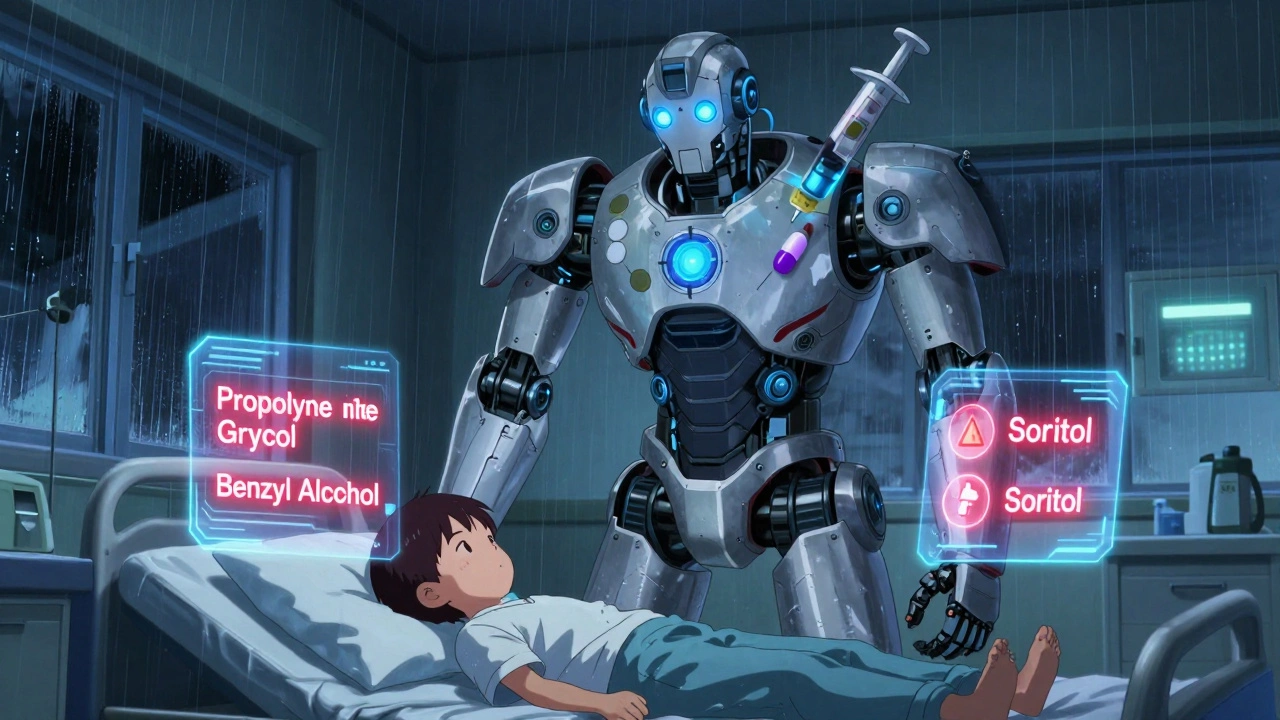
That’s why a substance that’s safe for a 70-kilogram adult can overwhelm a 2-kilogram newborn. A 2022 study in Scientific Reports found that 92% of neonates in a Danish hospital received at least one medication containing propylene glycol-a common alcohol-based excipient. The average daily dose? 18.7 mg/kg. That’s above the safety threshold for infants.
And here’s the kicker: most parents-and even many doctors-don’t know these ingredients are in the medicine. Labels rarely spell them out in plain language. The FDA and EMA have been pushing for better labeling since 2003, but enforcement is patchy. So the risk stays hidden.
Alcohol in Kids’ Medicine: More Than Just a Taste
Propylene glycol and ethanol show up in a lot of pediatric meds. Lorazepam? 80% propylene glycol. Esmolol? 25%. Phenobarbital? Up to 70%. These aren’t accidental. They’re used because they dissolve the active drug well and keep it stable.
But in infants, especially preemies, propylene glycol doesn’t get metabolized properly. It builds up. And when it does, it can cause:
- CNS depression (lethargy, poor feeding)
- Seizures
- Low blood pressure
- Heart rhythm problems
- Acute kidney injury
- Hemolysis (red blood cells breaking apart)
A 2015 study in the Journal of Pediatric and Neonatal Individualized Medicine tracked eight preterm babies under 1,200 grams who got a liquid iron supplement called E-Ferol, which contained benzyl alcohol and other alcohols. All eight developed a fatal syndrome: liver enlargement, kidney failure, fluid in the belly, and low platelets. Three died.
Topical use is risky too. A baby with a bad diaper rash has broken skin. Apply a cream with propylene glycol? The body absorbs it like a sponge. One case report described a 4-month-old who went into respiratory failure after daily use of a topical steroid with 25% propylene glycol.
Sorbitol: The Sweet Trap
Sorbitol is a sugar alcohol. It’s in chewable vitamins, liquid antibiotics, cough syrups. It tastes sweet, doesn’t cause cavities, and helps thicken the liquid. Sounds harmless, right?
Wrong. In kids, especially under age 2, sorbitol isn’t absorbed well in the gut. It pulls water into the intestines. Result? Severe diarrhea, bloating, cramps. In a child who’s already sick or dehydrated, this can spiral fast.
And it’s not just stomach trouble. Some kids develop allergic-like reactions: rashes, joint pain, eczema flare-ups. One 2021 review linked sugar alcohols to metabolic acidosis-when the body gets too acidic-which can lead to organ stress and even coma in extreme cases.
Worse, many liquid meds use sorbitol as a filler because it’s cheap and easy to work with. A 2023 study found that 31% of all pediatric prescriptions contained at least one excipient flagged as risky. Sorbitol was in 18% of those.
Alternatives exist: starch, cellulose powder, erythritol. But manufacturers rarely switch unless forced. Why? Reformulating costs money. And unless a child has a visible reaction, no one notices.
Benzyl Alcohol: The Silent Killer in Neonates
Benzyl alcohol is the most dangerous of the three. It’s used as a preservative in injectables, eye drops, and some oral liquids. In adults, it’s fine. In newborns? It can kill.
The FDA issued a black box warning in 2007 after seven neonates died from benzyl alcohol toxicity. All had been given medications with high concentrations of the compound. The cause? Metabolic acidosis, low blood pressure, and respiratory failure. Their bodies couldn’t break it down. It built up like poison.
Even small amounts matter. A single vial of injectable lidocaine can contain 10 mg of benzyl alcohol per mL. A 3-kg newborn getting 5 mL? That’s 50 mg. The safe limit for neonates is 10 mg/kg/day. That’s 30 mg max. One dose exceeded it.
Benzyl alcohol is also in some topical anesthetics like benzocaine. The Pediatric Pharmacy Association’s 2025 KIDs List says: Avoid benzocaine in children under 2. Why? It can cause methemoglobinemia-a condition where blood can’t carry oxygen. Symptoms: blue lips, confusion, rapid breathing. Death can follow in hours.
And it’s not just benzyl alcohol. Benzalkonium chloride (BAC), another related compound, is in nasal sprays and eye drops. It can damage the lining of the nose and eyes, especially in infants with sensitive tissues. One study showed it triggered severe rhinitis in 12% of infants using BAC-containing drops for more than a week.
Why Are These Ingredients Still in Use?
If we know this is dangerous, why hasn’t it been fixed?
Because the system is broken.
Most pediatric medicines are just adult pills crushed or liquids diluted. No one tested them on babies. No one checked the excipient levels for tiny bodies. The FDA’s Best Pharmaceuticals for Children Act and the Pediatric Research Equity Act helped, but they focus on the active drug-not the filler.
Pharmaceutical companies don’t have to prove excipient safety for kids. Only the active ingredient. So they use what’s cheap, available, and works for adults.
A 2022 survey of hospital pharmacists found that 78% struggled to find age-appropriate formulations. So they compounded meds themselves-sometimes mixing adult solutions with unknown concentrations of alcohol or sorbitol. Sixty-three percent did this weekly.
Even the databases meant to help are incomplete. The STEP database, created by the European Paediatric Formulation Initiative, lists safety data for 250 excipients. But for neonates? Only 12% have enough data to say if it’s safe.
What Can Parents and Caregivers Do?
You can’t control what’s in the medicine. But you can ask the right questions.
- Ask for the full ingredient list. Don’t take “it’s just a flavoring” as an answer. Request the full excipient list from the pharmacist.
- Check for alcohol, sorbitol, or benzyl alcohol. Look for these names on the label: propylene glycol, ethanol, benzyl alcohol, sorbitol, glycerin, polyethylene glycol.
- Ask if there’s an alcohol-free version. Many antibiotics now come in sugar-free, alcohol-free suspensions. Ask for them.
- Report adverse reactions. If your child gets lethargic, has diarrhea after starting a new liquid med, or turns blue after using a topical numbing gel-tell your doctor. File a report with your country’s drug safety agency.
- Use the KIDs List. The Pediatric Pharmacy Association’s 2025 KIDs List is free online. It flags 20+ excipients to avoid in kids under 2. Print it. Keep it by the medicine cabinet.
Some hospitals now have pediatric formulation specialists who can create custom, excipient-free versions. Ask if your hospital offers this service.
The Future: Is There Hope?
Yes. Slowly, things are changing.
The European Commission’s 2023 proposal for a revised Paediatric Regulation will require full excipient safety dossiers for all age groups by 2026. The FDA’s 2023 draft guidance pushes for more pediatric-specific formulations. The STEP database is getting updates. Three new excipients targeting alcohol toxicity are in development.
But progress is uneven. The International Pharmaceutical Excipients Council’s Pediatric Excipient Risk Assessment Tool (PERAT) exists-but only 32% of big pharma companies use it.
Until regulations catch up, the burden stays on parents, nurses, and pharmacists to spot the danger. And that’s not fair. Children deserve medicines designed for them-not adult drugs with a sweetener slapped on.
The next time you pick up a liquid antibiotic or a cough syrup for your child, look closer. That clear liquid isn’t just medicine. It’s a cocktail. And some of the ingredients? They’re not harmless. They’re hidden risks. Knowing what they are could save a life.
Is alcohol in children’s medicine always dangerous?
Not always, but it can be-especially in newborns and preemies. Propylene glycol and ethanol are metabolized slowly in infants, and even small amounts can build up to toxic levels. A dose safe for a 5-year-old may be dangerous for a 2-week-old. The risk increases with repeated doses, IV use, or in babies with kidney or liver issues.
Can sorbitol cause long-term damage in kids?
Sorbitol doesn’t cause permanent organ damage, but it can trigger severe dehydration, electrolyte imbalances, and metabolic acidosis in young children. Repeated episodes can delay recovery from illness and lead to hospitalization. Chronic use may also alter gut bacteria, which could affect immune development. Avoid long-term use in kids under 2.
Why isn’t benzyl alcohol banned in all children’s medicines?
It’s banned in some products, like topical anesthetics for kids under 2. But it’s still allowed in injectables and eye drops because alternatives are harder to formulate and more expensive. The FDA requires warnings, but doesn’t require elimination. Until manufacturers are forced to reformulate, benzyl alcohol remains in use-especially in off-label and compounded meds.
How do I know if my child’s medicine has harmful excipients?
Check the full ingredient list on the label or ask the pharmacist for the “inactive ingredients.” Look for: propylene glycol, ethanol, benzyl alcohol, sorbitol, glycerin, polyethylene glycol. If you see any of these, ask if there’s an alcohol-free or sugar-alcohol-free alternative. The Pediatric Pharmacy Association’s KIDs List is a free, reliable guide.
Are there safe alternatives to these excipients?
Yes. For sweetening: erythritol, stevia, or sucrose (in moderation). For thickening: starch, cellulose powder, or dehydrated calcium hydrogen phosphate. For preservation: citric acid, sodium benzoate (in low doses), or sterile single-dose packaging. Many newer pediatric formulations now use these safer options. Ask your pharmacist for them.
Emmanuel Peter
December 4, 2025 AT 08:52Let me tell you something - this whole thing is a scam. Big Pharma doesn’t care if your kid’s liver turns to mush as long as the label says ‘pediatric-friendly.’ They’ve been dodging excipient regulations since the 80s. The FDA? A rubber stamp. You think they’d ban benzyl alcohol in neonates? Nah. They’d rather let parents Google ‘baby blue lips’ after giving them a cough syrup. And don’t get me started on how pharmacists just compound adult meds like it’s a cooking show. Someone’s making bank off this. It’s not negligence - it’s profit.
Ashley Elliott
December 5, 2025 AT 21:52I’m a pediatric nurse, and I see this every week. I’ve had to pull a bottle off the shelf because the parent didn’t know it had propylene glycol - the baby was preterm, 1.8kg, and already on three IV meds. I had to call the pharmacy for an alcohol-free version. It took 4 hours. And the worst part? The prescriber didn’t even check the ingredients. We’re not talking rare cases - this is routine. Parents need to ask for the full list. Always. And if they say ‘it’s just an inactive ingredient,’ ask them why they’re not reading the label themselves.
Chad Handy
December 7, 2025 AT 14:00Look, I get it - you’re scared. But let’s not turn every medicine into a villain. Alcohol-based excipients are used because they work. They stabilize, they preserve, they dissolve. If you remove them, you get shelf-life issues, inconsistent dosing, and more waste. And yes, preemies are vulnerable - but so are adults with liver disease. The problem isn’t the excipients - it’s the lack of individualized dosing and monitoring. We need better pharmacokinetic models for neonates, not panic-driven bans. Reformulation is expensive, and if you’re going to demand safer options, be ready to pay for them. You can’t have both cheap meds and perfect safety - it’s physics, not conspiracy.
Augusta Barlow
December 8, 2025 AT 03:27Have you noticed that every time someone publishes something about dangerous excipients, the same five companies suddenly release ‘new’ alcohol-free formulas? Coincidence? I don’t think so. This is all orchestrated. The FDA, the AAP, the STEP database - they’re all funded by pharma. The ‘KIDs List’? A marketing tool to make parents feel like they’re in control while the real players move the goalposts. Benzyl alcohol is banned in some products? Sure. But only after lawsuits. And who pays for those lawsuits? You. The system is rigged. They want you to think you’re saving your kid by reading labels - but they already know you won’t. They count on your exhaustion.
Joe Lam
December 9, 2025 AT 10:18Wow. So you’re telling me that the same people who spent decades pushing ‘off-label’ use of adult drugs on kids now want us to believe they’re suddenly concerned about excipients? Please. This is performative outrage. You want change? Stop buying liquid antibiotics from CVS. Demand formulations from companies that actually test on children - not just ‘adults, then scale down.’ And if you’re not willing to pay $50 for a 10mL bottle of properly formulated amoxicillin, stop complaining. You’re part of the problem. The market rewards cheap. You want safe? Pay for it. Or shut up.
Karl Barrett
December 10, 2025 AT 08:08There’s a deeper epistemological rupture here. We’ve externalized risk onto the most vulnerable - infants - because our regulatory framework is built on the myth of the ‘scaled adult.’ We treat pediatric pharmacology like a mathematical proportion, when it’s actually a biological mosaic. Excipients aren’t inert; they’re bioactive modifiers with nonlinear effects in developing systems. The failure isn’t just regulatory - it’s ontological. We’ve lost the capacity to see children as qualitatively different, not quantitatively smaller. Until we redesign our pharmacological paradigm from the ground up - not just swap out sorbitol for erythritol - we’re just rearranging deck chairs on the Titanic.
George Graham
December 11, 2025 AT 16:07I just want to say thank you for writing this. My daughter was hospitalized at 3 months because of a liquid iron supplement - we didn’t know it had benzyl alcohol. She was fine, but it scared the hell out of us. I spent weeks learning every excipient name, calling pharmacists, printing KIDs List copies. It’s exhausting. But if one parent reads this and asks for the ingredient list before giving their kid medicine? That’s worth it. You’re not alone in this. We’re all just trying to keep our kids safe in a system that forgets they exist.
John Filby
December 12, 2025 AT 12:35Just checked my kid’s amoxicillin - yep, sorbitol. 😔 I asked the pharmacist for the sugar-free version and they handed me a different bottle without even asking. It’s crazy how easy it is to miss this stuff. I’m gonna print the KIDs List and tape it to the fridge. Also, anyone know if the CVS brand ‘Kids Cold & Flu’ has alcohol? I’m too scared to open it now.
jagdish kumar
December 13, 2025 AT 00:57Children are not small adults. But doctors act like they are. The system is broken. And nobody cares until it’s their child.
Emmanuel Peter
December 13, 2025 AT 17:31Oh please. George Graham’s post is so sweet it’s nauseating. You think ‘thank you’ fixes a broken system? Wake up. This isn’t about one parent’s trauma - it’s about corporate capture. The same people who told us thimerosal was safe are now selling ‘alcohol-free’ as a premium feature. That’s not care - that’s branding. And the FDA approved it. So yes, I’m angry. And no, I won’t be polite about it. If you want to save kids, stop thanking people and start suing companies.