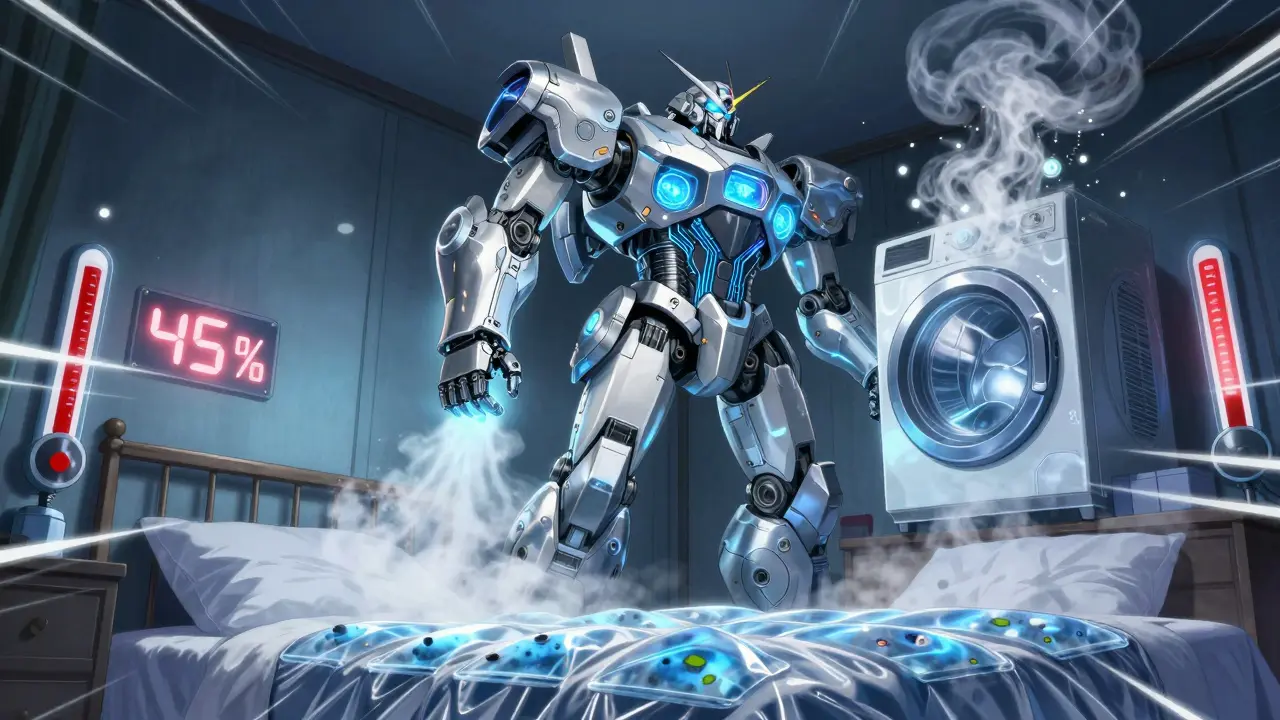
Why Dust Mites Are Making Your Allergies Worse
You wake up every morning with a stuffy nose, itchy eyes, or a cough that won’t quit. You’ve tried antihistamines, changed your pillow, even switched to hypoallergenic sheets-but nothing sticks. The real culprit? Dust mites. These tiny bugs aren’t visible to the naked eye, but they’re living in your mattress, pillows, and blankets right now, feeding on your dead skin cells. And their poop? That’s what triggers your allergies.
According to the Mayo Clinic, dust mites are the most common year-round indoor allergen. In Australia, where humidity stays high for much of the year, especially in places like Sydney, mite populations thrive. Studies show that 20% of people with allergies are directly affected by dust mites. And if you sleep 8 hours a night in a bed full of them? You’re getting your biggest daily dose of allergens while you’re unconscious.
How Dust Mites Survive (And How to Starve Them)
Dust mites don’t drink water. They don’t need to. They pull moisture from the air. That’s why humidity is the #1 factor in controlling them. When the relative humidity drops below 50%, they start to dry out. At 45% or lower? They can’t survive more than a few days.
Most homes in Australia hover between 55% and 70% humidity-perfect for mites. A simple digital hygrometer, placed near your bed, tells you the truth. If it’s reading above 50%, you’re feeding them. You don’t need a fancy system. A basic dehumidifier in the bedroom, set to 45%, cuts mite populations by 90% in just two weeks. That’s more effective than any spray, vacuum, or expensive mattress cover alone.
Temperature matters too. Dust mites like it warm-between 20°C and 25°C. Keep your bedroom cooler, around 20°C. It won’t make you shiver, but it will make it harder for mites to live.
The Bedding Routine That Actually Works
Washing your sheets weekly sounds basic. But most people wash in cold or warm water-and that doesn’t kill mites. You need hot water. Exactly 54.4°C (130°F). At that temperature, every single mite dies. Cold water removes some allergens, but leaves the bugs alive. Warm water (30-40°C) kills only 75%. Hot water? 100%.
Don’t just wash your sheets. Wash your pillowcases, duvet covers, and even blankets. If you can’t wash them at 130°F (like a wool comforter), put them in the dryer on high heat for 15 minutes. Heat kills mites too. Freezing stuffed toys or pillows for 24 hours works as a backup, but it doesn’t remove the allergens-just the bugs. You still need to vacuum afterward.
Use a washing machine that’s not overloaded. Fill it no more than half full. Too many items means the water can’t circulate properly. Use regular detergent-no need for special “allergy” formulas. The heat and agitation do the work.
Mattress and Pillow Encasements: The Right Kind
Not all mattress covers are created equal. Cheap ones from discount stores often have pores bigger than 10 micrometers. Dust mites are about 200 micrometers wide-but their allergens are tiny. They can slip through gaps larger than 10 micrometers. Look for products labeled “allergen-impermeable” with a pore size of 10 micrometers or less. These are tested to survive 10,000 abrasion cycles-meaning they won’t tear after a few months.
Put encasements on your mattress, box spring, and pillows. Seal them completely. Zip them shut. Don’t skip the box spring-it’s a mite factory. These covers don’t kill mites. They trap them. And since they can’t get out, they starve. Combined with humidity control, encasements can reduce allergen levels by 80-90%.
Avoid those “breathable” covers that claim to be “hypoallergenic.” If they don’t specify pore size, they’re not effective. Spend the extra $50-$75 per item. It’s the only bedding upgrade that gives you real, measurable relief.
What to Do About Carpets, Rugs, and Upholstery
Carpets are dust mite graveyards. They trap skin flakes, moisture, and heat. If you have wall-to-wall carpet in your bedroom, removing it is the single most effective thing you can do. Hard floors-wood, tile, vinyl-cut mite allergens by 90%. If you can’t remove carpet, replace it with washable rugs you can clean weekly.
Upholstered furniture? Same problem. Leather or vinyl sofas are easier to clean. If you love your fabric couch, vacuum it weekly with a HEPA-filter vacuum. But here’s the catch: HEPA vacuums alone only reduce allergens by 60-70%. They help, but they don’t fix the root cause. Without humidity control, mites come back fast.
When vacuuming, go slow-about one foot per second. Rushing through means you’re not pulling allergens out of the fibers. Use a vacuum with a sealed system so allergens don’t blow back into the air. Brands like Miele, Dyson, or Shark with HEPA filters work. Skip the cheap ones-they’re just moving dust around.
What Doesn’t Work (And Why You’re Wasting Money)
There’s a whole industry selling “miracle” dust mite sprays, essential oils, and plant-based powders. Some claim to kill mites. Others say they “neutralize allergens.” Let’s be clear: most don’t deliver.
Tannic acid sprays? They reduce allergens by 50-60%, but only for a few weeks. And they leave a sticky residue. Plant-based powders like Dr. Killigan’s Dust to Dust? They work better-up to 92% reduction in lab tests-but you still need to vacuum them up afterward. They’re not a standalone fix.
Essential oils? Lavender, tea tree, eucalyptus? They smell nice, but they don’t kill mites. No peer-reviewed study proves they reduce allergen levels. Same with UV light wands and ozone generators. They’re marketed as “scientific,” but they’re not backed by real evidence.
The only proven methods are: humidity control, hot water washing, encasements, and HEPA vacuuming. Everything else is noise.
Putting It All Together: A Simple Weekly Plan
You don’t need to overhaul your life. Just follow this routine:
- Monday: Wash all bedding in water at 54.4°C (130°F). Dry on high heat.
- Tuesday: Vacuum mattress, pillows, and nearby floor with HEPA vacuum. Go slow.
- Wednesday: Wipe down hard surfaces with a damp cloth. Dust mites don’t like moisture-they hate being wiped away.
- Thursday: Check humidity with your hygrometer. If it’s above 50%, turn on the dehumidifier.
- Friday: Vacuum upholstered furniture and curtains.
- Saturday: Open windows for cross-ventilation if outdoor humidity is lower than indoors.
- Sunday: Rest. No cleaning. Let your body recover.
This takes about 90 minutes a week. That’s less time than scrolling through social media. And the payoff? Fewer sneezes, better sleep, less reliance on medication.

Costs, Tools, and What to Buy
Setting up a dust mite-free bedroom doesn’t have to break the bank. Here’s what you actually need:
- Digital hygrometer (±2% accuracy): $25-$40. You need to know your humidity. Guessing won’t cut it.
- Dehumidifier (for bedroom): $150-$250. Look for one that can handle 15-20L per day. Smaller units work if your room is under 15m².
- HEPA vacuum: $180-$300. Buy one with a sealed system. Avoid bagless models unless they’re HEPA-certified.
- Bedding encasements (mattress, 2 pillows): $150-$250. Look for 10-micron pore size and machine-washable.
Total upfront cost: $350-$500. That’s less than one year’s worth of allergy meds. And it lasts for years.
Real Results From Real People
One user on Reddit, ‘DustMiteWarrior’ from Melbourne, said: ‘I spent $300 on a dehumidifier and encasements. My morning sneezing stopped in 10 days. I haven’t used my inhaler in 8 months.’
Another, from Sydney, told a local allergy group: ‘I tried everything-sprays, oils, expensive sheets. Nothing worked until I turned on the dehumidifier. I didn’t even know my bedroom was at 68% humidity.’
These aren’t outliers. They’re the people who followed the science, not the ads.
What’s Next? The Future of Dust Mite Control
Scientists are working on new tools-like CRISPR to reduce mite populations, or advanced sprays that last for months. But those are years away. Right now, the best solution is simple: control humidity, wash bedding hot, cover your mattress, and vacuum properly.
As global temperatures rise and humidity increases, dust mites will become even more common. The good news? You don’t need to wait for new technology. You can fix this today-with tools you can buy now.
When to Call a Professional
If you’ve tried everything-humidity control, hot washing, encasements, HEPA vacuuming-and your symptoms haven’t improved after 6-8 weeks, it’s time to see an allergist. You might have another trigger: pet dander, mold, or cockroach allergens. Or your home’s ventilation system might be pulling in outside allergens. A professional can do skin or blood tests and recommend targeted solutions.
Also, if your home has water damage, leaks, or poor insulation, humidity control might need HVAC help. Many Australians in older homes need a professional assessment to install proper ventilation or dehumidification systems.
Teresa Marzo Lostalé
December 27, 2025 AT 15:53Turned on the dehumidifier last night and already feel less like a zombie. Thanks for the nudge, I needed this.
ANA MARIE VALENZUELA
December 28, 2025 AT 16:06Bradly Draper
December 29, 2025 AT 13:23Gran Badshah
December 30, 2025 AT 06:42Ellen-Cathryn Nash
December 31, 2025 AT 10:54Also, stop using fabric couches. It's basic hygiene.
Samantha Hobbs
January 2, 2026 AT 08:30Nicole Beasley
January 3, 2026 AT 10:24sonam gupta
January 3, 2026 AT 21:00Julius Hader
January 4, 2026 AT 23:23Hakim Bachiri
January 5, 2026 AT 20:12Celia McTighe
January 5, 2026 AT 21:19Ryan Touhill
January 5, 2026 AT 21:21