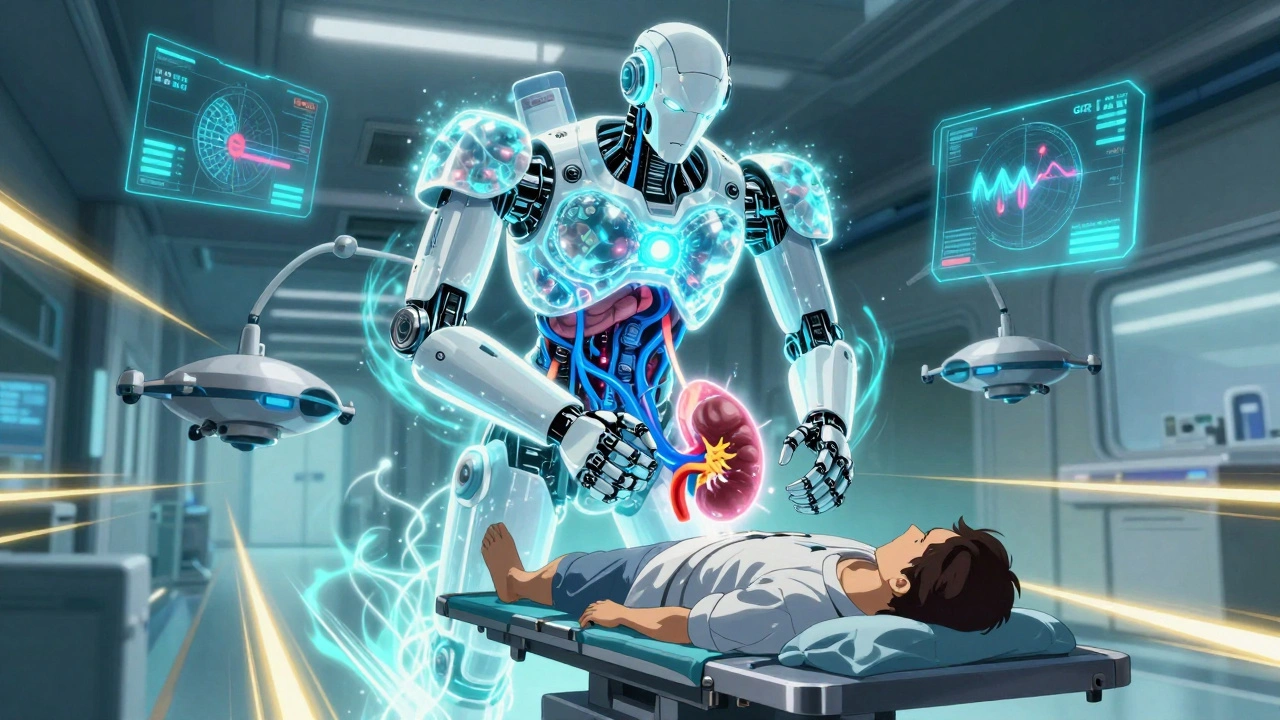
What Is a Kidney Transplant and Why Does It Matter?
A kidney transplant is when a healthy kidney from a donor replaces a failing one. It’s not just a treatment-it’s often the best chance to get your life back. People with end-stage renal disease (ESRD), where kidneys work at 15% or less of normal capacity, usually face two options: dialysis or a transplant. Dialysis keeps you alive, but it’s exhausting. You’re tied to a machine for hours, several times a week. A transplant gives you freedom-more energy, better sleep, fewer dietary restrictions, and a much higher chance of living longer. Studies show that transplant recipients have an 85% chance of surviving five years, compared to just 50% for those on dialysis.
Who Is Eligible for a Kidney Transplant?
Not everyone with kidney failure qualifies. Transplant centers have strict rules because the surgery is serious, and lifelong care is required. The main requirement is end-stage renal disease, usually defined by a glomerular filtration rate (GFR) of 20 mL/min or lower. Some centers, like Mayo Clinic, may consider patients with a GFR up to 25 mL/min if their kidney function is dropping fast or if they have a living donor ready.
Age isn’t a hard cutoff. While some centers, like Vanderbilt, see age 75+ as a red flag, others like UCLA don’t rule anyone out based on age alone. Instead, they look at overall health. A healthy 80-year-old with strong heart and lung function might be a better candidate than a 60-year-old with diabetes and heart disease.
Body weight matters too. Obesity increases surgical risks and the chance of transplant failure. Mayo Clinic won’t transplant anyone with a BMI over 45. Vanderbilt considers BMI over 35 a warning sign and over 45 an absolute barrier. Why? Extra weight strains the new kidney and makes surgery harder. Studies show obese patients have a 35% higher risk of surgical complications and a 20% higher chance of losing the transplant within five years.
What Disqualifies Someone From Getting a Transplant?
Some conditions make a transplant too risky to even consider. Active cancer is one. If you’ve had cancer, you usually need to be in remission for at least two to five years, depending on the type. Transplant drugs weaken your immune system, which could let cancer come back strong.
Uncontrolled infections are another dealbreaker. If you have an ongoing infection like tuberculosis or hepatitis B with active virus in your blood, you must treat it first. Same with HIV-unless your viral load is undetectable and your CD4 count is above 200, you won’t qualify.
Substance abuse is a hard no. If you’re using alcohol, opioids, or street drugs regularly, transplant centers won’t move forward. They need to know you’ll take your medications every day. Mental health matters too. Severe untreated depression, psychosis, or dementia can interfere with your ability to follow the strict post-transplant routine.
Heart and lung health are critical. If you have severe pulmonary hypertension-where the pressure in your lung arteries is above 70 mm Hg-you’re not a candidate. Same with needing oxygen all the time because of COPD. Your heart must be strong enough to handle surgery. An ejection fraction below 35-40% usually means you’re too high-risk.

The Transplant Evaluation Process: What to Expect
Getting approved isn’t a quick checkup. It’s a deep dive. You’ll go through blood tests, urine tests, imaging scans, and heart tests like echocardiograms and stress tests. You’ll be screened for viruses like HIV, hepatitis, and CMV. Tissue typing is done to match your immune system with a donor’s.
Pyschological and social evaluations are just as important. Can you manage a daily pill schedule? Do you have someone to help you get to appointments? Do you have stable housing and reliable transportation? Penn Medicine and Nebraska Medicine both require a designated care partner-someone who can help you remember meds, drive you to checkups, and call your doctor if something’s wrong.
For older patients, frailty is measured using simple tests: how fast you walk, how strong your grip is, whether you’ve lost weight without trying, and how active you are. If you score high on frailty, your chances of recovery drop. Centers use this to decide if you’re likely to survive the surgery and thrive afterward.
What Happens During the Surgery?
The surgery takes about 3 to 4 hours. You’re under full anesthesia. The surgeon places the new kidney in your lower belly, connects its blood vessels to your arteries and veins, and attaches the ureter (the tube that carries urine) to your bladder. Your own kidneys are usually left in place unless they’re causing pain, infection, or high blood pressure.
The new kidney often starts working right away. But sometimes, especially with kidneys from deceased donors, it takes a few days to kick in. About 20% of deceased donor transplants need temporary dialysis after surgery. That doesn’t mean it failed-it just means it needs a little more time to wake up.
Living donor transplants have the best outcomes. The kidney comes from someone healthy, often a family member or friend, and is transplanted before the donor’s kidney stops working. This means less time on the waiting list and a kidney that’s in perfect condition. Living donor kidneys last longer on average-85% are still working after five years, compared to 78% for deceased donor kidneys.
Life After Transplant: Medications and Monitoring
After transplant, you’ll take immunosuppressants for life. These drugs stop your body from attacking the new kidney. The standard combo includes a calcineurin inhibitor (like tacrolimus), an antiproliferative drug (like mycophenolate), and a steroid (like prednisone). Some people get extra drugs at first to prevent early rejection.
These meds save your kidney-but they come with side effects. You might gain weight, get high blood sugar, have high blood pressure, or be more prone to infections and skin cancer. That’s why regular checkups are non-negotiable. In the first month, you’ll be seen weekly. Then monthly for the next few months. After that, every three months. And once a year, forever.
Doctors monitor your kidney function through blood tests (creatinine, eGFR), urine tests, and sometimes biopsies. They also check for signs of rejection, which can happen without symptoms. Early detection is key. Most rejections can be reversed if caught in time.

Long-Term Success: What You Can Do
Sticking to your meds is the biggest factor in long-term success. Missing even one dose can trigger rejection. Use pill organizers, set phone alarms, and keep a written schedule. Don’t stop or change your meds without talking to your transplant team.
Diet and exercise matter too. Eat less salt, less sugar, and less processed food. Stay active-walking, swimming, or light strength training helps control blood pressure, weight, and mood. Avoid smoking and limit alcohol. Protect your skin from the sun because immunosuppressants increase skin cancer risk.
Stay up to date on vaccines. You can’t get live vaccines (like MMR or shingles), but you can and should get flu shots, pneumonia vaccines, and COVID boosters. Your transplant team will guide you on what’s safe.
What’s New in Kidney Transplantation?
Technology is improving outcomes. The Kidney Donor Profile Index (KDPI) helps match kidneys to recipients based on donor age, health, and other factors. A high-KDPI kidney might come from an older donor or someone with high blood pressure, but studies show even these kidneys give patients a better life than staying on dialysis.
Researchers are working on ways to reduce or eliminate lifelong immunosuppression. Clinical trials at Stanford and the University of Minnesota are testing protocols to train the immune system to accept the new kidney without drugs. If successful, this could change everything.
Donor kidneys from people who died after circulatory death (DCD) are now used more often. These kidneys used to be seen as risky, but better preservation techniques have made them safer and more reliable.
Final Thoughts: It’s Not Just a Surgery
A kidney transplant isn’t a cure. It’s a new beginning that demands commitment. You’ll need to take pills every day, see your doctor regularly, and make healthy choices for the rest of your life. But for most people, the trade-off is worth it. You get back your time, your energy, and your independence. If you’re eligible, it’s the best path forward-not just to survive, but to live.
Kaitlynn nail
December 10, 2025 AT 22:19Michelle Edwards
December 12, 2025 AT 04:48Doris Lee
December 13, 2025 AT 07:35Michaux Hyatt
December 14, 2025 AT 06:06Frank Nouwens
December 15, 2025 AT 07:01Queenie Chan
December 16, 2025 AT 03:37Aileen Ferris
December 17, 2025 AT 08:43Raj Rsvpraj
December 17, 2025 AT 19:40Neelam Kumari
December 18, 2025 AT 08:58Rebecca Dong
December 18, 2025 AT 18:41Sarah Clifford
December 19, 2025 AT 03:42Michaux Hyatt
December 20, 2025 AT 08:20