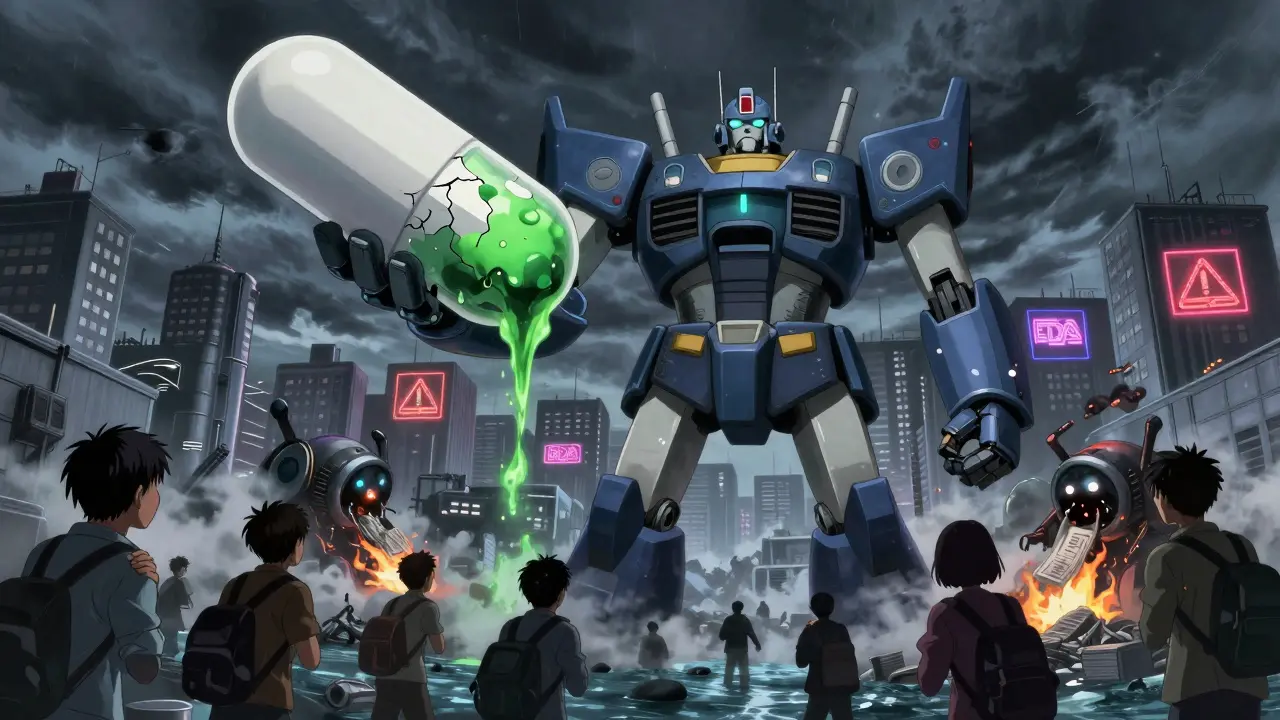
When you pick up a generic pill at the pharmacy, you expect it to work just like the brand-name version. But behind that simple promise lies a complex, often broken system. In 2022 alone, generic drug quality issues led to over 3,900 recalls in the U.S., many tied to problems in overseas manufacturing plants. These aren’t minor flaws-they’re life-threatening risks. Patients have suffered strokes, heart attacks, and treatment failures because their medication didn’t dissolve properly, contained toxic impurities, or simply didn’t work at all.
What Goes Wrong in Generic Drug Manufacturing?
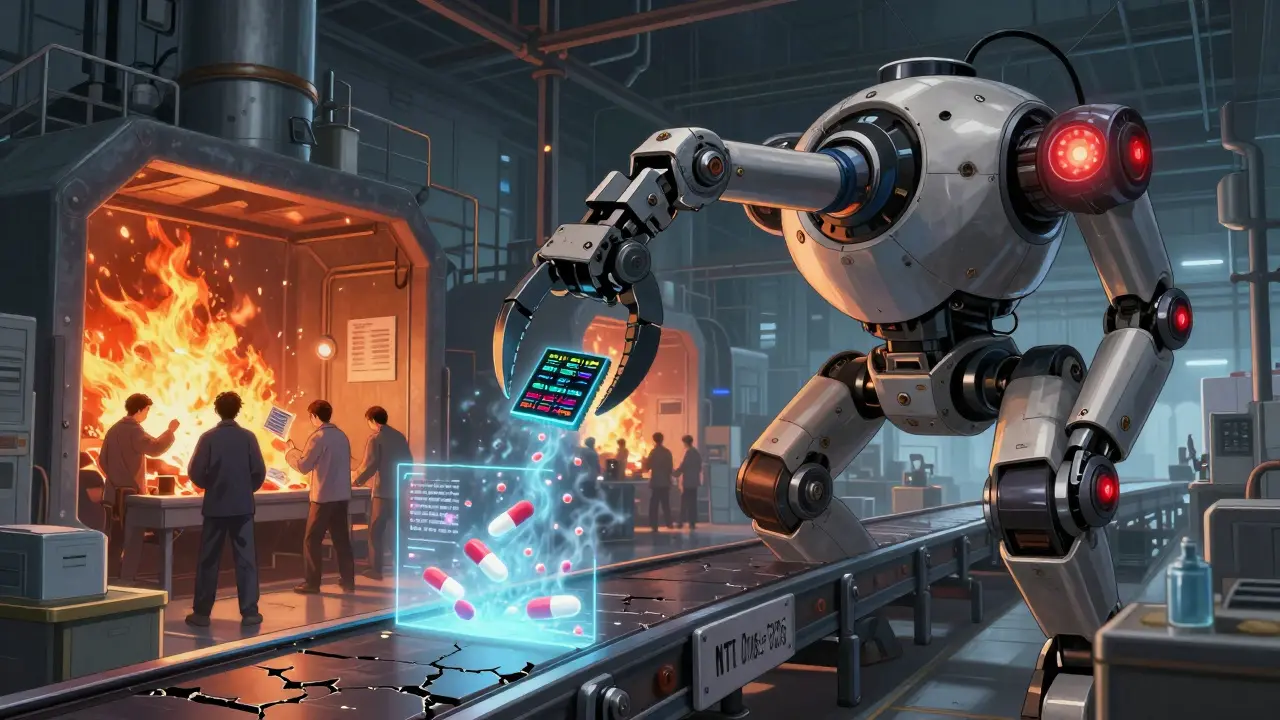
The core issue isn’t that generic drugs are inherently bad. It’s that many factories-especially outside the U.S.-cut corners to stay profitable. The FDA requires all drugmakers to follow Current Good Manufacturing Practices (cGMP), but compliance isn’t consistent. Common failures include:- Inadequate quality control: Labs don’t test batches properly. One Indian plant was caught destroying quality records during an FDA inspection.
- Uncontrolled impurities: Nitrosamines like NDMA, known carcinogens, showed up in blood pressure meds like valsartan. These formed during chemical reactions that weren’t monitored.
- Poor packaging: Moisture and heat ruin pills. In 12.3% of FDA observations, packaging failed to protect drugs from degradation.
- Weak stability data: Manufacturers skip long-term testing. If a pill degrades after 18 months but they only tested for 12, patients get ineffective medicine.
- Bad documentation: 41.7% of inspection failures involve fake or missing records. Some plants use the same batch number for different products.
These aren’t rare mistakes. In 2022, 18.7% of FDA Form 483 observations-official notices of violations-were about flawed testing methods. That means inspectors found labs using unreliable tools or skipping critical steps.
Why Are Foreign Plants More Problematic?
About 80% of the active ingredients in U.S. drugs come from China and India. But inspections tell a troubling story. In 2022, Chinese facilities had 28.6% more violations per inspection than U.S. plants. Indian facilities had 19.3% more. Why?The FDA can’t just show up unannounced overseas. Due to diplomatic rules, they must give foreign plants advance notice. That gives them time to clean up, hide records, or even stage fake production lines. A 2023 study in Circulation found generic drugs made in India caused 23.7% more severe side effects than those made in the U.S.
And the FDA barely scratches the surface. In 2016, the Government Accountability Office found nearly 1,000 foreign plants had never been inspected. Even today, the agency inspects only about 13% of foreign facilities each year-even though 73% of finished drugs are made abroad.
Who Gets Hurt?
It’s not just statistics. Real people suffer.- One hospital pharmacist surveyed in 2022 said 67% of their team had seen a generic drug fail to work-43% of those cases involved Indian-made products.
- Patients on Drugs.com gave Zhejiang Huahai’s valsartan a 3.2-star rating. Reviews said things like “my blood pressure didn’t drop” or “I felt dizzy all day.”
- The FDA’s adverse event database recorded 1,842 reports linked to quality issues between 2019 and 2022. One Impax Labs nitroglycerin tablet had 14.3% of those reports because it didn’t dissolve fast enough-critical for heart attack patients.
- In Gujarat, India, an inspector saw an employee pouring acid into a trash can full of quality control documents. That’s not negligence. That’s sabotage.
Some drugs are riskier than others. Narrow Therapeutic Index (NTI) drugs-like warfarin, lithium, and tacrolimus-have a tiny window between effective and toxic doses. FDA data shows NTI generics caused 37% of all complete response letters (CRLs) in 2022. That means the agency rejected approvals because they couldn’t prove the generic matched the brand. Harvard research found tacrolimus generics varied 28.4% more in blood levels than the brand version. That’s not a small difference-it’s dangerous.
Why Doesn’t the FDA Do More?
The FDA is stretched thin. In 2022, they issued 147 warning letters for cGMP violations-up 28.5% from the year before. But they can’t be everywhere. The agency only tests 0.02% of imported drug shipments in labs. That’s 1 in 5,000. They rely on manufacturers’ self-reported data. As former FDA deputy commissioner Dr. Helen Winkle put it: “They don’t test the product. They trust the paperwork.”Costs are another barrier. FDA user fees for generic applications jumped 63% from 2018 to 2023. But the agency’s budget for foreign inspections hasn’t kept pace. The 2022 FDA User Fee Reauthorization added $56.7 million to boost inspections-but even that only aims to raise foreign visits from 1,200 to 1,800 by 2027. That’s still less than one inspection per facility every five years.
Meanwhile, the European Medicines Agency (EMA) took a different path. Since January 2023, they’ve done unannounced inspections on all foreign suppliers. The result? A 41.2% spike in critical findings. The message is clear: surprise inspections catch real problems.
The Business of Cheap Drugs
Generic drugs saved the U.S. healthcare system $313 billion in 2022. But that savings comes at a cost. Between 2018 and 2022, generic drug prices dropped 18.3% per year. Manufacturers responded by slashing quality budgets by 22.7%. Training, testing, and documentation are the first things to go.Only 23.8% of generic makers have fully adopted Quality by Design (QbD)-a system that builds safety into the process from day one. Implementing QbD costs $2.7 million per plant and takes 18 to 24 months. Most can’t afford it. So they keep doing the same old shortcuts.
The market is also consolidating. The top 10 generic makers now control 58.4% of the U.S. market. That means fewer players, more pressure to cut costs, and less competition to drive quality. When the only thing that matters is price, quality becomes a luxury.
What’s Changing? What Can You Do?
There’s some progress. The FDA’s 2023-2027 plan says they’ll focus inspections on high-risk facilities. They’re also requiring 100% more stability data and 75% more bioequivalence testing for complex generics. That’s a start.But the real change has to come from awareness. If you’re on a critical medication-like blood thinners, seizure drugs, or heart medications-ask your pharmacist:
- Where is this generic made?
- Is there a brand-name alternative?
- Has this batch been recalled before?
Don’t assume all generics are equal. Some are. Many aren’t. If your medication suddenly stops working-or you feel worse after switching-tell your doctor. Report it to the FDA’s MedWatch system. One report won’t change the system. But thousands might.
The truth is simple: cheap medicine isn’t always safe. And when your health is on the line, you deserve more than a bargain.
Are all generic drugs unsafe?
No, not all generic drugs are unsafe. Many are manufactured to high standards and work just as well as brand-name versions. The issue is that quality varies widely depending on the manufacturer and facility. Some U.S.-based and European plants produce reliable generics. The risk comes from facilities with poor oversight, especially those that avoid inspections or cut corners to lower costs.
How can I tell if my generic drug is from a problematic factory?
You can’t always tell just by looking at the pill. But you can check the FDA’s Drug Shortage Database or recall notices. If your drug was recalled recently, the notice will list the manufacturer and location. You can also ask your pharmacist for the manufacturer’s name and look up recent FDA warning letters online. If it’s made in China or India and has a history of violations, ask if a different version is available.
Why do pharmacies keep selling drugs from bad manufacturers?
Pharmacies buy from distributors who source the cheapest available product. Generic drugs are sold as interchangeable commodities, so price often wins over quality. Unless a drug is recalled or flagged by the FDA, pharmacies have no legal obligation to choose a higher-quality version-even if it costs more. Some hospitals and large health systems now require stricter sourcing, but most retail pharmacies don’t.
What should I do if my generic medication isn’t working?
If you notice a change in how your medication works-like increased symptoms, side effects, or no effect at all-contact your doctor immediately. Don’t assume it’s your condition worsening. Ask your pharmacist to check the lot number and manufacturer. Report the issue to the FDA’s MedWatch program. You can also request a brand-name version if it’s medically necessary. Sometimes, switching to a different generic from another manufacturer helps.
Is there a list of bad generic drug manufacturers?
The FDA doesn’t publish a public blacklist, but it does issue warning letters that are public record. You can search FDA.gov for warning letters by company name. Companies like Zhejiang Huahai, Intas Pharmaceuticals, and Lannett have been cited multiple times. If your drug is made by one of these, ask your doctor or pharmacist if there’s a safer alternative. Keep in mind, even reputable companies can have bad batches-so always monitor how you feel.
Next Steps: What You Can Do Today
- Check the lot number on your prescription bottle. Look it up on the FDA’s recall site.
- Ask your pharmacist: “Is this made in the U.S., EU, or another country?”
- If you’re on a critical drug (blood thinners, epilepsy meds, immunosuppressants), ask your doctor if a brand-name version is covered by your insurance.
- Sign up for FDA drug recall alerts via email.
- Report any unusual side effects or treatment failures to MedWatch-your voice helps force change.
Generic drugs saved billions-but not at the cost of your health. Stay informed. Ask questions. Don’t accept silence as an answer.
Brian Furnell
December 21, 2025 AT 16:18Let’s be clear: the FDA’s inspection regime is a farce. They’re relying on self-reported data from facilities that have been caught falsifying records-multiple times. The 0.02% testing rate? That’s not oversight; it’s negligence dressed up as bureaucracy. And don’t get me started on the advance-notice inspections abroad-why not just mail the warning letter and call it a day? If you’re going to regulate pharmaceuticals, you need to inspect like you mean it: unannounced, random, and with teeth. Otherwise, we’re just playing Russian roulette with our cardiovascular meds.
Siobhan K.
December 22, 2025 AT 18:26So let me get this straight-we’re trusting life-or-death medication to factories that destroy quality control documents in trash cans, and the FDA’s response is to increase their budget by $56.7 million over five years? That’s like giving a drunk driver a new steering wheel and calling it a safety upgrade. The EMA’s unannounced inspections worked because they removed the element of theater. We need the same. No more warnings. No more ‘improvement plans.’ Just shut down the violators and prosecute the executives. This isn’t a compliance issue-it’s a criminal one.
Christina Weber
December 23, 2025 AT 08:20There is a grammatical error in the original post: ‘They don’t test the product. They trust the paperwork.’-this should be ‘They don’t test the product; they trust the paperwork.’ Additionally, the phrase ‘41.7% of inspection failures involve fake or missing records’ is statistically misleading without a confidence interval. The entire argument hinges on flawed data presentation. If we’re going to discuss public health risks, we must demand precision-not sensationalism.
Cameron Hoover
December 24, 2025 AT 02:18I used to take a generic blood pressure med made in India. One batch made me feel like I was being slowly suffocated-like my lungs were filled with wet cotton. I switched back to the brand and immediately felt like a human again. I didn’t report it. I just stopped taking it. But now I know I’m not alone. Thousands of people are suffering in silence because they don’t know the difference between a bad batch and their own body failing. We need to stop treating medicine like toilet paper.
Jay lawch
December 24, 2025 AT 03:38This is all a Western conspiracy. The U.S. and Europe fear that India and China are becoming pharmaceutical superpowers. They fabricate these ‘violations’ to protect their own bloated, overpriced pharma cartels. Did you know that the FDA has been pressured by big pharma to delay approvals for Indian generics? The ‘nitrosamines’? Manufactured in labs by corporate scientists to scare the public. The real scandal is that Americans pay $100 for a pill that costs 50 cents to make-while blaming the Global South for their own greed. Wake up. This isn’t about safety. It’s about profit control.
Cara C
December 24, 2025 AT 12:13If you’re on a critical medication, don’t panic-just advocate. Talk to your pharmacist. Ask for the manufacturer name. Check the FDA’s warning letter database. It’s not hard. And if you’ve had a bad experience, report it. One report might not change anything, but 10,000? That’s a tsunami. I’ve seen people get switched to a different generic and suddenly feel like themselves again. It’s not about being paranoid-it’s about being informed. You have power. Use it.
Michael Ochieng
December 24, 2025 AT 20:13My cousin works at a major U.S. pharmacy chain. They’re forced to stock the cheapest generic available-no matter who made it. If a drug’s not recalled, it’s fair game. The system is rigged. But here’s the thing: we’re all complicit. We choose the $4 generic over the $40 brand because we’re told it’s ‘the same.’ But it’s not. And we’re the ones paying the price-with our health. We need to stop treating medicine like a commodity and start treating it like the lifeline it is.
Dan Adkins
December 25, 2025 AT 21:30It is my professional opinion, based on empirical analysis of FDA documentation and global supply chain dynamics, that the systemic failure in pharmaceutical oversight is not attributable to foreign manufacturing per se, but rather to the structural inadequacies of U.S. regulatory capture and the commodification of healthcare. The FDA’s budgetary constraints are a symptom, not a cause. The root issue lies in the privatization of public health infrastructure. Until we re-nationalize drug approval and production, we will continue to witness these preventable tragedies. The solution is not more inspections-it is a fundamental restructuring of the healthcare economy.
Orlando Marquez Jr
December 26, 2025 AT 12:39Thank you for this comprehensive and meticulously documented analysis. The data presented-particularly regarding NTI generics and the 37% CRL rate-is both alarming and necessary. I would respectfully suggest that this post be shared with the House Committee on Energy and Commerce and the Senate HELP Committee. The evidence supports immediate legislative action to mandate unannounced inspections, increase bioequivalence testing thresholds, and establish a public database of approved manufacturers with transparency ratings. The stakes are too high for incrementalism.