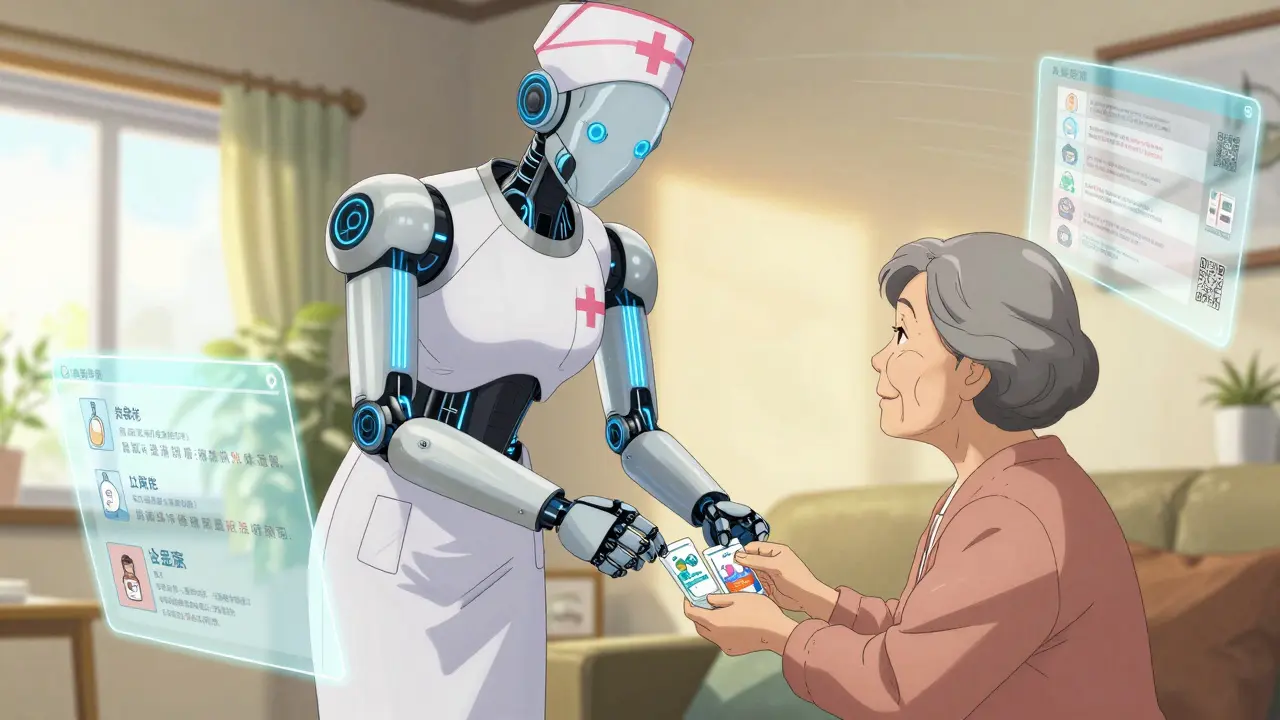
Managing multiple medications at home can be overwhelming-especially for older adults juggling prescriptions for blood pressure, diabetes, arthritis, and more. Missed doses, wrong times, drug interactions, and confusion over instructions are common. But you don’t have to do it alone. Home health services for medication management are designed to help seniors take their medicines safely, on time, and with confidence.
What Home Health Medication Management Actually Does
Home health services for medication management aren’t just about handing out pills. They’re a full system: someone comes to your home, checks your list of medications, makes sure nothing’s duplicated or conflicting, and helps you take them correctly. This isn’t just helpful-it’s life-saving.According to MedPro’s 2022 analysis, nearly 30% of all adverse events in home care come from medication errors. That’s one in three incidents that could’ve been avoided. Home health nurses and aides use proven methods to cut that risk by 60% compared to self-management.
They start by creating a complete, up-to-date medication list. This includes:
- Brand and generic names of every drug
- Dosage and how often to take it
- Why each medication was prescribed
- Known side effects or interactions
- The doctor who wrote each prescription
This list gets shared with every provider involved in your care-your cardiologist, your pharmacist, your primary doctor. That stops one doctor from prescribing something that clashes with another’s prescription.
Tools That Make Medication Easier
Most people don’t realize how much simple tools can reduce mistakes. Pill organizers aren’t just convenient-they’re proven to cut errors by up to 45%, according to the Caregiver Action Network.Companies like Phoenix Home Care use a system called WellPack: individual daily pouches labeled with the time and day. No more sorting 20 pills into a box every Sunday. Each pouch has everything you need for that time-morning, afternoon, evening, bedtime. It’s visual, simple, and hard to mess up.
Digital tools help too. Smartphone apps with alarms and reminders improve adherence by 35%. Some newer apps even require a fingerprint scan or face recognition before allowing a dose to be marked complete. That prevents someone else from accidentally taking your meds.
For those with vision problems or language barriers, many agencies now include large-print charts and QR codes that link to video instructions in 17 languages. One caregiver in Sydney told me her mother, who speaks Mandarin, finally understood her blood thinner instructions after watching a video in her native language.
Who Qualifies for These Services?
If you’re on Medicare, you might already qualify for free home health medication management-but only if you meet specific criteria. You must:- Be homebound (leaving home takes a major effort or medical risk)
- Need skilled nursing or therapy services
- Have a doctor’s order for home health care
Medicare Part A covers these services, but only for intermittent visits-not daily help. So if you need someone to come every morning to hand you your pills, Medicare won’t pay for that full-time.
That’s where private home care agencies come in. Companies like Clarest charge $20-$40 per hour for medication management. It’s not cheap, but for many families, it’s cheaper than a hospital readmission. One study found that medication management prevents about $1,200 in avoidable hospital costs per patient each month.
Medicare Advantage plans are starting to cover more continuous support, including devices that track when pills are taken. Check with your plan-they might be offering more than you think.
How It Works: A Step-by-Step Process
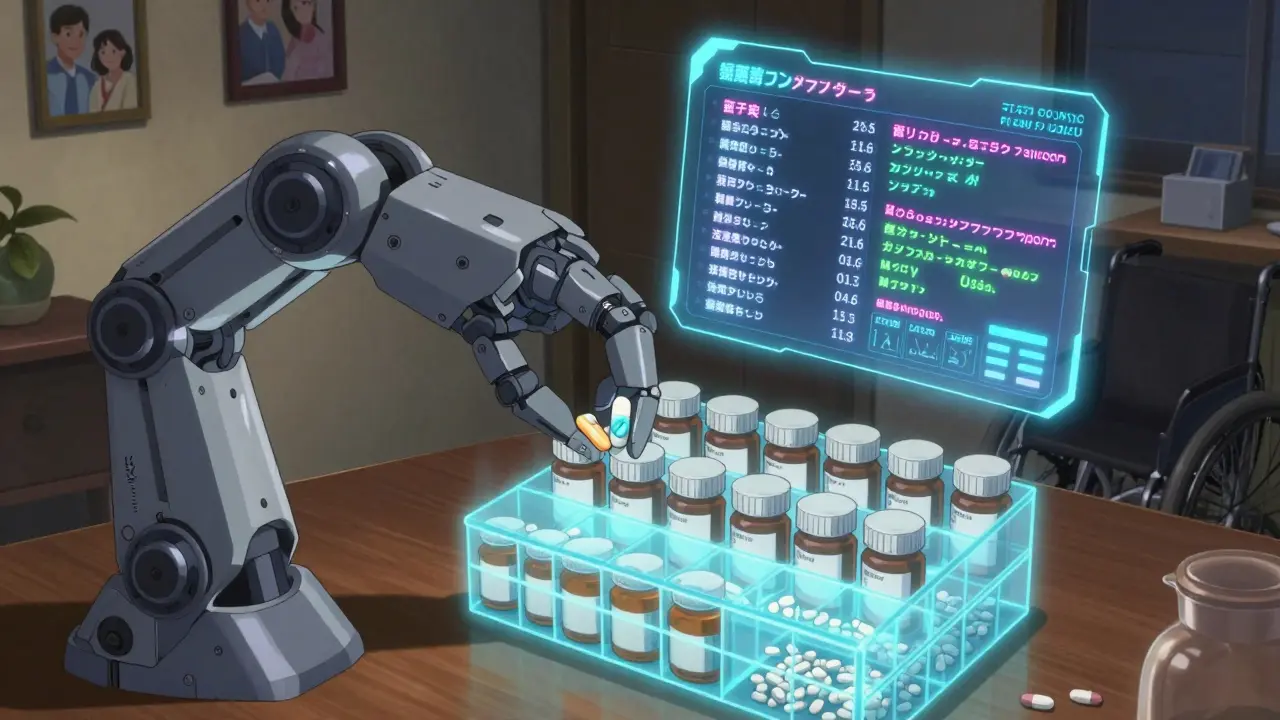
When you sign up for home health medication services, here’s what happens:- Initial assessment: A nurse reviews all your prescriptions, over-the-counter meds, and supplements. They look for duplicates, outdated drugs, or risky combinations.
- Medication reconciliation: They compare your current list with what your doctors ordered. If there’s a mismatch-like a discontinued drug still on your list-they fix it before you take it.
- Organization: Your meds are sorted into daily pouches or a pill box. Labels are clear, large, and in your preferred language.
- Training: The nurse teaches you or your caregiver how to use the system. They use the “teach-back” method: you explain it back to them to prove you understand.
- Follow-up: Visits continue weekly or biweekly. They check for side effects, adjust schedules if needed, and update your list after any doctor visit.
For simple regimens-three or fewer meds-you’ll likely need just 2-3 visits. For complex cases-eight or more meds, including injectables or time-sensitive drugs-you may need 6-8 sessions to get it right.
Real Results, Real Stories
Mary K. from Ohio started using Phoenix Home Care’s WellPack system after her mother missed nearly a third of her doses. Within two weeks, missed doses dropped to under 5%. “It wasn’t magic,” she said. “It was just being organized.”On the flip side, John T. from Reddit shared a scary story: his father had a dangerous interaction between blood thinners because two different doctors prescribed them without knowing the other had done the same. The ER visit cost $8,000-and could’ve been avoided if someone had reviewed all his meds together.
A Clarest survey of 500 caregivers found that 78% saw better adherence with professional help. But 42% still struggled with coordinating between multiple specialists. That’s why medication reconciliation isn’t optional-it’s essential.
What Doesn’t Work
Home health services aren’t perfect. They don’t handle every kind of medication issue. For example:- Psychiatric meds that need daily dose adjustments (like lithium or antipsychotics) often require a pharmacist or psychiatrist’s direct involvement.
- Agencies can’t override a doctor’s prescription-even if they spot a problem. They can only flag it and ask the doctor to review.
- Staff shortages are real. In 2023, 28% of home health nursing positions in Australia were vacant. That means delays in visits or rushed appointments.
Also, not all agencies follow the rules. CMS requires medication reconciliation during every care transition-like after a hospital stay. But only 65% of agencies do it consistently. Ask your provider: “Do you check my meds every time I come back from the hospital?”

How to Get Started
If you or a loved one needs help:- Ask your doctor for a referral to a Medicare-certified home health agency. They can’t refuse if you meet the criteria.
- If you need daily help, contact private agencies. Compare pricing, services, and staff training.
- Bring your current medication list to the first visit-include bottles, prescriptions, and any supplements.
- Ask if they use digital tools, large-print charts, or multilingual support.
- Confirm they document all changes within 24 hours, as required by CMS.
Don’t wait until there’s a crisis. The best time to set this up is right after a hospital discharge-when the risk of error is highest.
What to Watch Out For
- Don’t let someone else manage your meds without oversight. Even family members can make mistakes. - Don’t assume “I’ve been taking this for years” means it’s still safe. Your body changes. Your other meds change. What worked last year might not be right now. - Don’t skip follow-ups. If your nurse says they’ll check back in two weeks, make sure they do. - Don’t ignore side effects. Dizziness, confusion, nausea-these aren’t just “old age.” They could be drug reactions.Medication management isn’t about control. It’s about freedom. Freedom to stay at home. Freedom to avoid the ER. Freedom to live without fear of a pill mistake.
Can Medicare pay for daily medication help at home?
Medicare Part A covers home health medication management only if you’re homebound and need skilled nursing care intermittently. It does not cover daily, round-the-clock help. For daily assistance, you’ll need to pay out-of-pocket or use a private home care agency.
What’s the difference between a home health nurse and a home care aide for medication?
A home health nurse is a licensed professional who can assess your meds, spot interactions, adjust schedules with a doctor’s order, and document changes. A home care aide can remind you to take your pills and hand them to you, but cannot open bottles, change doses, or make clinical decisions. For complex regimens, you need a nurse.
How often should my medication list be reviewed?
Your list should be reviewed every time you see a new doctor, after any hospital stay, or at least every three months. Home health agencies are required to reconcile your meds during care transitions, but you should also ask your pharmacist to review it quarterly.
Can I use a pill organizer if I have trouble swallowing pills?
Yes, but make sure the pills can be safely crushed or opened. Some medications, like extended-release capsules, must be swallowed whole. Ask your pharmacist or home health nurse before putting any pill in a crushable organizer. They can suggest alternatives like liquid forms or patches.
What if I miss a dose? Should I take two next time?
Never double up unless your doctor says so. Missing a dose is common, but doubling up can be dangerous-especially with blood thinners, heart meds, or insulin. Call your home health nurse or pharmacist immediately. They’ll tell you what to do based on the specific drug.
Do home health services handle over-the-counter meds and supplements?
Yes, and they should. Many serious drug interactions come from supplements like St. John’s Wort, fish oil, or vitamin K-not just prescription drugs. Your home health provider needs to know everything you’re taking, even if you think it’s “just a vitamin.”
Next Steps: What to Do Today
- Gather all your pill bottles and supplements in one place. - Write down every medication: name, dose, time, reason. - Call your doctor and ask for a referral to a home health agency. - If you’re paying privately, ask agencies: “Do you use medication reconciliation? Do you update lists within 24 hours?” - Set a reminder to review your meds every three months-even if nothing seems wrong.Medication management isn’t about being dependent. It’s about being safe. And with the right support, you can stay in your home-healthy, independent, and in control.
Russell Thomas
December 29, 2025 AT 18:06Oh wow, so now we’re paying someone to remind Grandma not to swallow her blood pressure pill like a gumball? Next they’ll send a nanny to make sure she doesn’t lick the TV remote. I’ve seen my uncle take 17 pills a day and still forget his own name-this system sounds like a glorified pill-pusher service for people who can’t adult.
Joe Kwon
December 31, 2025 AT 02:24Medication reconciliation is a critical component of care continuity, especially in polypharmacy scenarios where drug-drug interactions can trigger adverse events at a rate of ~30%. The WellPack system leverages just-in-time delivery protocols and visual cueing theory to reduce cognitive load-this isn’t just convenience, it’s clinical risk mitigation. Kudos to agencies implementing standardized med reconciliation workflows per CMS guidelines.
Nicole K.
January 1, 2026 AT 22:51This is why people shouldn’t be allowed to live alone if they can’t even remember to take their pills. It’s not rocket science. If you’re too old or lazy to manage your own meds, maybe you shouldn’t be living independently. My aunt took her meds like clockwork until she died at 92-no fancy pouches, no apps, just discipline. This whole thing feels like coddling.
Fabian Riewe
January 2, 2026 AT 21:48Big fan of the WellPack system-I’ve used it for my mom since last fall. She had 12 meds and kept mixing up the times. Now she just grabs the pouches like snacks. The best part? She actually feels more in control. No more panic at 3 a.m. wondering if she took the blue pill. Also, the QR code videos in Spanish helped her sister, who’s her main caregiver, finally get it right. Low-tech, high-impact.
Amy Cannon
January 3, 2026 AT 10:39It is truly remarkable how the integration of multilingual visual aids and digital reminders can significantly enhance medication adherence among elderly populations with linguistic or sensory limitations. In my own experience, my grandmother, who is of Jamaican descent and speaks patois, benefited immensely from a video instruction in Creole-something that was not only culturally appropriate but also clinically effective. The notion that medication management is merely logistical is a profound misconception; it is, in fact, an act of dignity, autonomy, and compassionate care.
Himanshu Singh
January 4, 2026 AT 13:43Great post! I live in India and we dont have much of this service here, but my dad takes 8 meds and i use a simple pill box with labels. We also set phone alarms. I think this is doable even without fancy systems. Just need someone to care and check in. Hope this reaches more people.
Jasmine Yule
January 5, 2026 AT 05:34Stop pretending this is just about convenience. This is about preventing preventable deaths. I’ve seen too many elderly people end up in the ER because someone didn’t catch that their new blood thinner clashed with their fish oil. If you think this is overkill, you haven’t held someone’s hand while they’re coding because a pharmacist didn’t cross-check their meds. This isn’t coddling-it’s survival. 💯
Greg Quinn
January 6, 2026 AT 10:34There’s something quietly profound about the idea that taking a pill isn’t just a biological act-it’s a ritual of self-preservation. We treat medication like a chore, but for many, it’s the only thing standing between them and chaos. The real tragedy isn’t the missed dose-it’s the assumption that independence means doing everything alone. Sometimes, the most autonomous thing you can do is let someone help you remember you’re still alive.
Lisa Dore
January 8, 2026 AT 07:30Just wanted to add: if you’re reading this and thinking ‘my parent won’t let me help,’ start small. Bring them coffee, sit with them while they open their pillbox, and ask ‘what’s this one for?’ No pressure. No lectures. Just presence. That’s how trust builds. And trust is what makes medication management work-not the pouches or the apps. It’s the human moment before the pill goes in.