
Have you ever found an empty slot in your pill organizer on Tuesday morning and realized you might have already taken that dose? Or worse, did you accidentally take two doses because the instructions were confusing? You are not alone. Medication errors at home are shockingly common, contributing to roughly 5% to 41% of hospital admissions among older adults. That is a staggering number for something that should happen only in clinical settings. The financial toll is equally heavy, costing the healthcare system between $37.6 billion and $50 billion annually. But here is the good news: you can build a no-mistake system right now, using a mix of simple habits and modern technology.
The Foundation: A Complete and Current List
Before buying any gadgets or apps, you need one thing: an accurate inventory. Dr. Jennifer Gunter, a CDC medication safety advisor, calls keeping an up-to-date medication list the single most important step patients can take. This isn't just about your prescription bottles. It includes over-the-counter pain relievers, vitamins, herbal supplements, and even topical creams. Why? Because interactions don't care if a drug has a prescription label. A common antihistamine mixed with certain blood pressure meds can cause dangerous dizziness or falls.
Create this list yourself or ask a pharmacist to help. Include the drug name, dosage, frequency, and the prescribing doctor's name. Keep a digital copy on your phone and a printed copy in a visible spot, like on the refrigerator. Update it immediately after every doctor's visit or pharmacy change. This master list becomes the source of truth for your entire safety system.
Why do I need to include vitamins and OTC drugs in my list?
Many over-the-counter medications and supplements interact with prescription drugs. For example, St. John’s Wort can reduce the effectiveness of heart medications, and NSAIDs like ibuprofen can increase bleeding risk when taken with blood thinners. An incomplete list hides these risks from your doctors and pharmacists.
Choosing Your Tools: From Basic Boxes to Smart Tech
Once your list is solid, you need a delivery system. The old-school plastic weekly pill organizer costs $5-$25 and works well if you are highly independent and take only one or two pills daily. However, it offers no reminders and no way to verify if you actually took the pill. If you forget to fill the box on Sunday night, Monday becomes a guessing game.
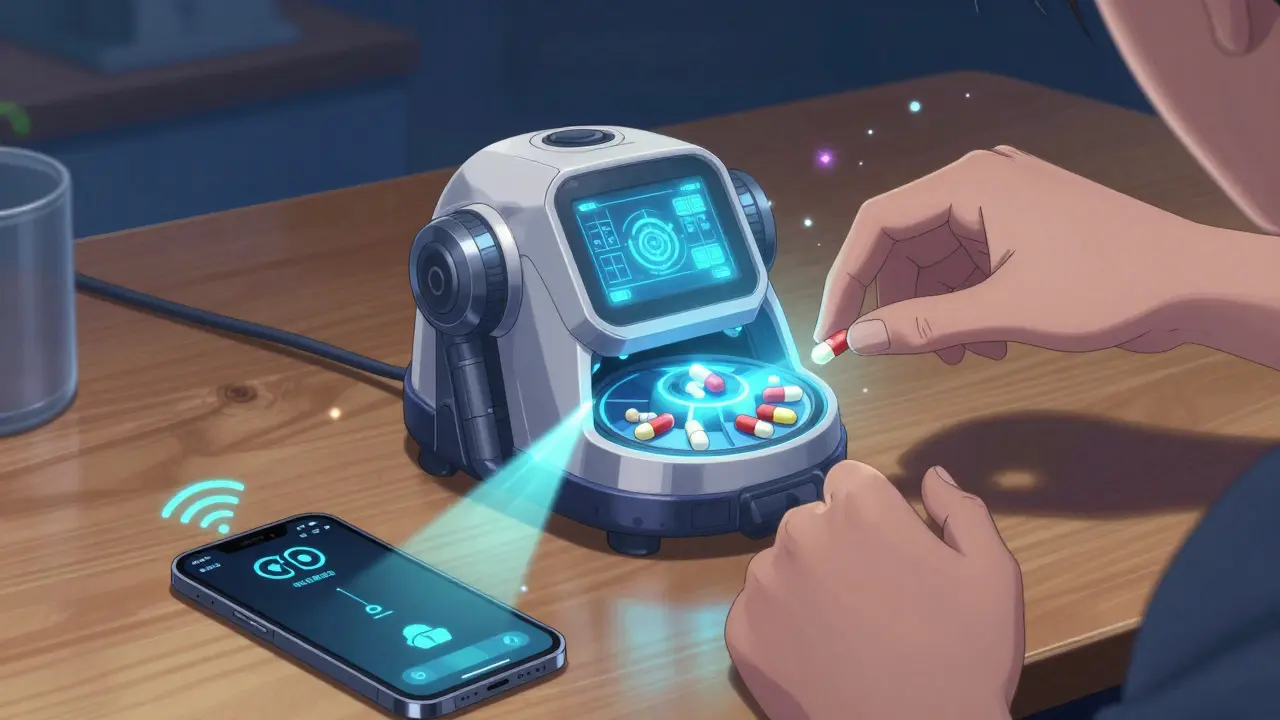
For more complex regimens, Smart medication dispensers are electronic devices that store and release medications at preset times with audio and visual alerts. Devices like Hero or those studied in NIH-funded research use multidose pouches loaded by a pharmacy or caregiver. These systems feature touch screens and connect to Wi-Fi, allowing family members to receive real-time notifications if a dose is missed. Studies show adherence rates jump to 98% with these tools, compared to 93%-97% with standard methods. The trade-off is cost: expect to pay $150-$300 upfront plus monthly service fees ranging from $15-$50.
If you prefer a digital approach without hardware, platforms like HomeMeds are digital platforms designed for healthcare professionals to conduct remote medication assessments and manage patient inventories. HomeMeds uses smartphone cameras to recognize medication labels, cutting assessment time by 50%. While primarily aimed at clinicians, its data accuracy helps ensure that the care plan sent to you is correct. For patients, this means fewer errors in the instructions they receive.
Setting Up the System: Step-by-Step
Implementing a new system feels overwhelming until you break it down. Follow these steps to set up your environment:
- Conduct a full audit: Gather every bottle, box, and tube. Compare them against your master list. Discard expired medications safely. This takes 20-30 minutes but prevents duplicate dosing.
- Simplify the regimen: Ask your doctor if any medications can be consolidated. Reducing dose times by even one instance can significantly lower error risk. On average, successful simplification reduces dose times by 23%.
- Select the right technology: If you have vision issues or memory lapses, choose a smart dispenser with large buttons and loud alarms. If you are tech-savvy and want flexibility, a digital app with photo recognition might suffice.
- Configure alerts: Set reminders 15 minutes before the actual dose time. This buffer allows you to prepare water or food if required. Ensure notifications go to both you and a trusted family member or caregiver.
- Test the workflow: Run a dry run for a week. Check how easy it is to refill the dispenser or update the app. Identify friction points early.
Technical requirements vary, but most smart systems need Wi-Fi connectivity and a smartphone running iOS 12+ or Android 8+. HIPAA-compliant platforms may add 20 minutes to setup for security protocols, which is worth it for protecting your health data.
Overcoming Common Pitfalls
Even the best systems face challenges. One major issue is managing medication changes. When a doctor adjusts a dose, the system must be updated immediately. According to Ennoble Care, each change takes 15-30 minutes to process correctly. If you rely on a smart dispenser, you often need professional assistance to reprogram it. Delaying this update is a prime cause of errors.
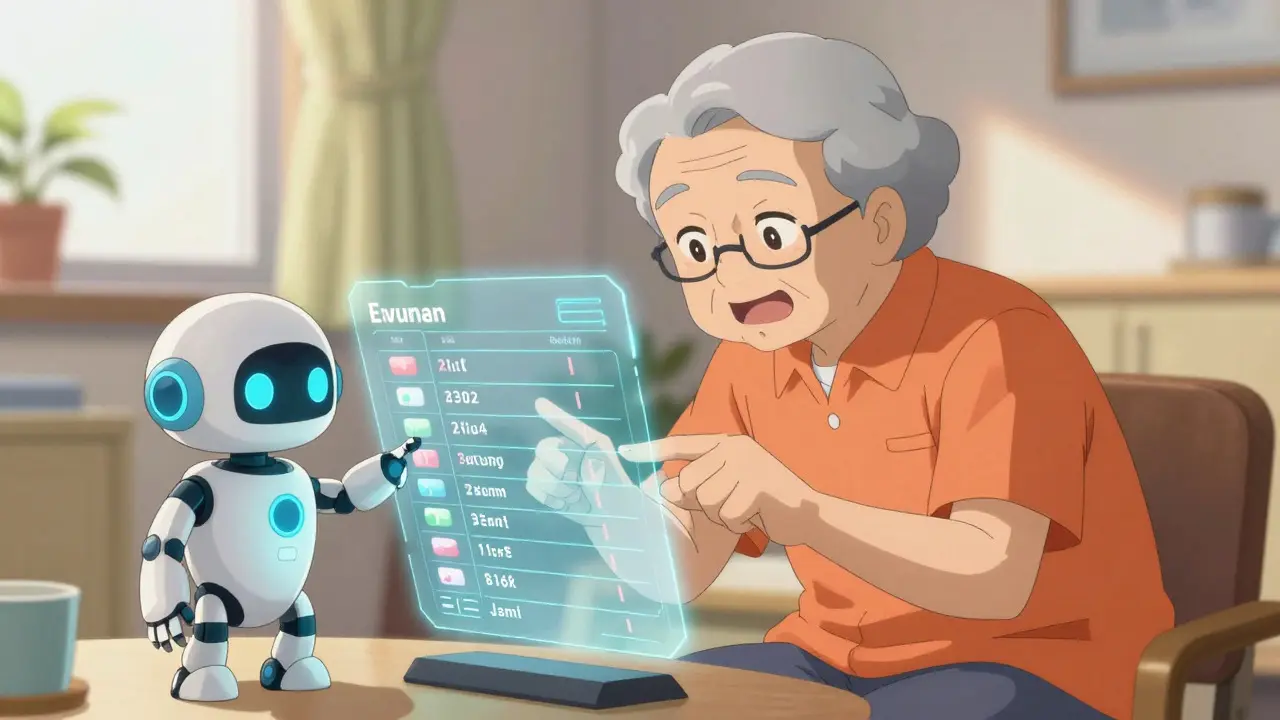
Another hurdle is usability for older adults. Continuum Care analysis found that 32% of patients on regimens with more than four daily dose times struggled with current dispensing technology. Visual impairments affect 42% of older users, making small text or dim screens problematic. Look for devices with high-contrast displays and voice activation. Johns Hopkins is currently developing voice-activated dispensers for visually impaired users, signaling where the industry is heading.
Don't underestimate the learning curve. Forty-one percent of dissatisfied users cited difficulty mastering the technology as their main frustration. Involve a family member or home health aide in the initial training. Regular follow-ups every 30-90 days help reinforce habits and address new questions.
The Human Element: Why Technology Isn't Enough
Dr. Sarah Chen, a geriatric pharmacologist, warns that technology alone cannot solve medication safety issues. Patient education and regular reviews remain essential. Think of your smart dispenser as a co-pilot, not the pilot. You still need to understand why you are taking each medication and what side effects to watch for.
Engage your pharmacist. They are experts in drug interactions and can review your list quarterly. Many pharmacies offer free medication therapy management services. Additionally, involve caregivers in the loop. In 76% of successful cases, caregiver engagement was a key factor. Whether it's a spouse, adult child, or hired aide, having someone who knows the system doubles your safety net.
Cost vs. Benefit: Is It Worth It?
The upfront cost of smart systems seems high, but consider the alternative. Medication-related hospital admissions cost billions annually. Every dollar invested in medication safety programs yields $4.30 in avoided healthcare costs, according to the AARP Foundation. Beyond finances, there is the value of independence and peace of mind. Knowing your loved one is taking their heart medication correctly allows everyone to sleep better at night.
Insurance coverage is improving. As of 2024, 63% of Medicare Advantage plans offer some form of home medication management support. Check with your provider to see if they cover smart dispensers or digital platform subscriptions. Even partial reimbursement can make advanced technology accessible.
Future Trends to Watch
The landscape is evolving rapidly. By 2027, 68% of premium systems will incorporate AI-driven medication interaction checks, automatically flagging dangerous combinations before they reach you. Biometric verification, such as fingerprint or facial recognition, is projected to appear in 45% of systems by 2028, ensuring the right person takes the right pill. Interoperability remains a challenge; currently, only 32% of home systems integrate with electronic health records. Expect this to improve as CMS incorporates more medication management metrics into quality reporting.
Consolidation is also likely. Gartner forecasts that 40% of current medication management startups will be acquired by larger healthcare tech companies by 2027. This could lead to more robust, integrated platforms but potentially higher prices. Stay informed about these shifts to make the best choices for your household.
Final Checklist for a No-Mistake Home
- Maintain a master medication list including all prescriptions, OTCs, and supplements.
- Choose a tool that matches your complexity level and physical abilities.
- Set up automated reminders with buffers for preparation.
- Involve a caregiver or family member in monitoring and updates.
- Schedule quarterly reviews with your pharmacist.
- Keep devices charged and connected to Wi-Fi.
- Update the system immediately after any medical appointment.
Building a no-mistake system requires effort, but the payoff is safer, healthier days ahead. Start with the list, upgrade your tools gradually, and never stop communicating with your healthcare team.
How much does a smart medication dispenser cost?
Smart dispensers typically range from $150 to $300 for the device itself. Most require a monthly subscription fee between $15 and $50 for cloud storage, alerts, and customer support. Some insurance plans may cover part of this cost.
Can I use a smart dispenser if I live alone?
Yes, many people living alone use these devices successfully. The key is setting up alerts for a trusted friend or neighbor. Also, ensure you have a backup power source or keep the device plugged in near an outlet you check regularly.
What happens if my medication schedule changes?
You must update your system immediately. For smart dispensers, this often requires contacting the provider or using their app to reprogram the doses. For manual organizers, simply adjust the compartments. Always verify the new schedule with your pharmacist.
Are digital platforms like HomeMeds safe for personal data?
Reputable platforms comply with HIPAA regulations, ensuring your health data is encrypted and secure. Look for certifications and read privacy policies carefully. Secure systems may take slightly longer to set up but protect your information effectively.
How often should I review my medication list?
Review your list every time you start or stop a medication, and at least quarterly with your pharmacist. Annual comprehensive reviews with your primary care physician are also recommended to assess necessity and potential interactions.
Marc-Alexandre Rizzo
August 14, 2026 AT 00:03I've been trying to get my dad on board with this whole smart dispenser thing for months, and it’s like pulling teeth. He insists his memory is fine until he asks me three times in one hour if he took his morning pills. The part about the 'master list' being the source of truth really hit home though. We have a chaotic mess of bottles on our kitchen counter that looks more like a pharmacy explosion than an organized system. I think we’re going to start with just getting that list together before we drop any cash on gadgets. It’s crazy how much mental load just keeping track of interactions takes when you aren't a pharmacist.
Simon-Pierre Bouchard
August 14, 2026 AT 04:59Oh look, another article telling us that technology will solve all our problems if we just pay enough monthly fees. Because clearly, what elderly people need most is another device connected to their Wi-Fi that can be hacked by a teenager in Belarus. But sure, let's trust these 'smart' boxes instead of just remembering to swallow a pill. Maybe next they'll sell us AI-powered water glasses that judge us if we don't drink enough while taking our meds.
Saher Ghattas
August 14, 2026 AT 17:47The real issue isn't the dispensers or the apps; it's the pharmaceutical industrial complex pushing polypharmacy down our throats. Why do we even need four different medications for basic maintenance? It's a control mechanism disguised as healthcare. These smart devices are just surveillance tools to ensure compliance with a broken system. The data collected from these 'HIPAA-compliant' platforms ends up selling your health profile to insurance algorithms anyway. Wake up.
Ella Mentry
August 15, 2026 AT 19:14Ugh, why is nobody talking about the emotional toll this takes on caregivers? I spend half my day texting my mom to check if she took her heart medication, and she gets defensive every single time. It’s exhausting! You’d think after twenty years of marriage, she’d respect my anxiety levels. And don’t get me started on the cost-$50 a month? For what? A plastic box that beeps? I feel like I’m paying for privilege just to keep her alive without having a nervous breakdown myself. Someone needs to fix the human element because the tech is useless if the person using it hates it.
Alli Crumley
August 16, 2026 AT 18:54It is fascinating how society has outsourced basic cognitive functions to machines. :/ The reliance on external validation for such a simple act as ingestion suggests a profound decay in personal responsibility. One must consider the philosophical implications of delegating life-sustaining actions to algorithms. Are we truly living if our existence is regulated by push notifications? The jargon-heavy nature of these solutions obscures the fundamental truth: we are becoming dependent on systems we do not understand. This is not safety; it is domestication.
John Divers
August 17, 2026 AT 08:45The point about simplifying regimens is often overlooked. Many patients take medications prescribed by specialists who rarely communicate with each other. Consolidating doses reduces friction. A simpler system is inherently safer. Technology should support this reduction, not complicate it. The goal is clarity, not complexity.
Traci Bobbitt
August 18, 2026 AT 19:37Look, I tried those fancy smart dispensers last year and they were a total nightmare. The Wi-Fi kept dropping, the app crashed every time I tried to update a dose, and customer service was nonexistent. In the end, I went back to a $5 weekly organizer and set alarms on my phone. Sometimes the old ways work best because they don't break down when the internet goes out. Don't waste your money on over-engineered solutions unless you absolutely have to.
Michelle Alavaski
August 19, 2026 AT 04:30It is imperative to scrutinize the data privacy policies of these so-called secure platforms. The notion that consumer-grade hardware can adequately protect sensitive medical information is laughable at best and negligent at worst. Furthermore, the interoperability issues mentioned are symptomatic of a fragmented industry driven by profit rather than patient welfare. Until there is a unified standard enforced by regulatory bodies, these systems remain precarious vulnerabilities in our personal security infrastructure. Proceed with extreme caution.
Veronica Agbanyim
August 19, 2026 AT 06:55There is a moral obligation here that extends beyond individual convenience. When we fail to manage our health responsibly, we burden the collective system. However, blaming individuals for systemic failures is also unjust. The article rightly points out the staggering costs of hospital admissions due to errors. If we view medication adherence as a civic duty, perhaps we would invest more in community-based support rather than just buying expensive gadgets. It’s about dignity and autonomy, not just avoiding bills.
jackie healey
August 19, 2026 AT 15:46As a pharmacist, I cannot stress enough the importance of the quarterly review! It is amazing how many patients come in with expired meds or duplicates they forgot about. Please, please ask your pharmacist to help you create that master list. They love doing it! And yes, include the vitamins and OTCs; St. John's Wort is a notorious culprit for interactions. We are here to help you navigate this maze, so utilize that resource. It is free and incredibly valuable!
Anna Salamon
August 19, 2026 AT 18:16This resonates deeply with my experience caring for my grandmother. She lived alone, and the fear of her missing a dose was constant. Setting up alerts for a neighbor made a huge difference in our peace of mind. It wasn't just about the pills; it was about knowing someone else had her back. The human connection aspect is vital. Technology facilitates the care, but people provide the comfort. Keep that balance in mind as you build your system.
Morikeoluwa Ayodeji
August 20, 2026 AT 06:03Let’s get this right folks! Simplicity is key. You don’t need the most expensive gadget if you don’t use it. Start with the audit. Throw out the old stuff. Make the list. Then decide if you need the tech. I’ve seen too many people buy the shiny object and forget the basics. Stay consistent, stay informed, and don’t hesitate to ask for help. Your health is worth the effort. Let’s crush those medication errors together! 💪
Fenton Quinn
August 21, 2026 AT 04:21The buffer time for preparation is a small detail with significant impact. Rushing leads to errors. Allowing fifteen minutes creates a ritual around the dosage. Rituals anchor behavior. Consider the psychological benefit of a calm, deliberate process versus a frantic scramble. Efficiency is not always speed; sometimes it is steadiness. Reflect on your own routine and where friction exists. Address that friction first.